
 Photo by Daria Kobayashi Ritch
Lindsey Jordan is sculpting a small, clay ashtray as she talks about her mercurial writing process. “The ‘writing every day’ thing is the most insane bullshit,” she says, her eyes trained on her hands, which are intently kneading the small earthen ball in front of her.
Over her last decade making music as Snail Mail, Jordan has developed a number of creative superstitions. For a while, she couldn’t write in an apartment, because she was too self-conscious of annoying her neighbors; or she could only work on songs in six month-long, toiling increments. Before she made 2021’s Valentine, she thought she could only write in her parents’ house, as she had as an adolescent musical upstart. When she found herself back home during COVID, she wrote the album’s beloved title track, seemingly confirming her hunch. “Which made it worse,” she says.

The creative obsession forced her to land on a new writing technique for her latest record, Ricochet. Out March 27, she composed the album musically before she wrote any lyrics. “I just wasn't ready,” she says about putting words to her music. “I knew the feelings, [but] not really what [the album’s] going to be about."
Ricochet arrives five years after Valentine and a period that found Jordan settling into a more contemplative adulthood, after she transformed teenage industry buzz into a now decade-long stint as one of indie rock’s new gen’s Best in Class. Equal parts diarist and poet, Jordan is uniquely able to express the feeling of ache, be it romantic or existential. Whereas earlier albums vibrated with an expressive, sometimes howling pain, Ricochet comes out like a sigh. It expresses the resigned feeling that life, and pain, inevitably drags on.
She wrote the record largely in her new home in suburban Greensboro, North Carolina, where she moved two years ago from New York City. “I read that Kim Deal interview where she's like, ‘If you are in a band and you don't put your money into a house eventually, you're an idiot,’” she says. “I found a place that was cheap, peaceful and not too far from a good airport. I'm happy as a clam.”
Her main local companions are her neighbors, but longtime girlfriend, New York band Momma’s Etta Friedman, visits often. She’s reluctant to discuss her locale too closely, for fear of “fan home invasion,” she says with a half-laugh.
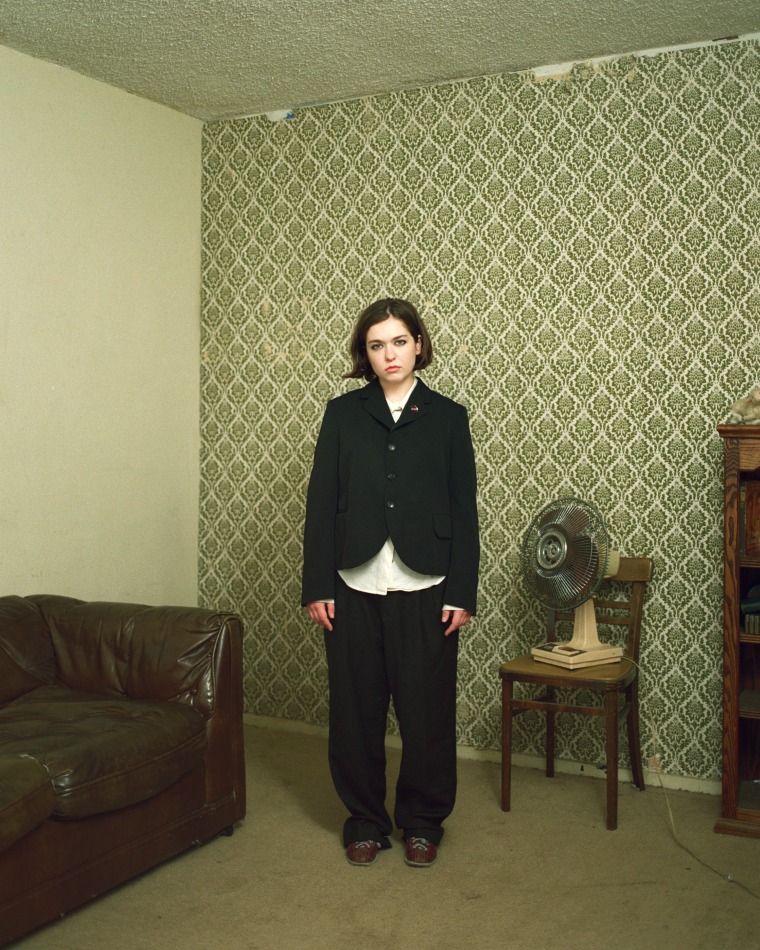 Photography by Daria Kobayashi Ritch
One can hear her life’s quiet solitude on Ricochet. Her earlier works, like 2016’s Habit or 2018’s Lush, were emotionally immediate. Ricochet is still just as moving but it has a level of remove. Its primary topics are life and death, inspired by a viewing of Charlie Kaufman’s 2008 existential inflected tragicomedy, Synecdoche, New York. The movie and its focus on mortality, she says, flared a new spiral of obsessive thinking around the impermanence of life.
Jordan, who grew up Catholic, says that a lot of her younger pain and obsession was wrapped in the need to constantly confess. Having been away from the church for a long time now has provided some relief, but it also meant that certain daunting questions — like what happens when one dies — remain anxiously unanswered. “Now it's like, I don't know,” she says of the afterlife.
Soon, normal activities, like spending time with friends, became prohibitively difficult. She imagined friends dying as she spent time with them. Fear of death even crept in while she was playing shows, as she repeatedly imagined having to end touring due to old age.
Jordan struggled to find a way to express these grim feelings in a way that wasn’t forebodingly dark. “I think nihilism is really lame and useless,” she says. Per her intent, the album doesn’t feel heavy, but rather searching. Co-produced by her and Aron Kobayshi-Ritch, also a member (and producer) of Momma, the record sounds clean and classy, even as she’s posing the eternal questions plainly, like on album single “My Maker,” where she sings, “Another year gone by /What if nothing matters? / Waitin' 'round to die/ To see what happens after.”
The album’s sound brings to mind the big studio rock of the ‘90s, like the Goo Goo Dolls or even The Cranberries, with strings and lush textures, driving drums, and an almost pop momentum. Jordan says the 1995 post-grunge ballad “Glycerine” by Bush and Avril Lavigne were strong references.
Part of the record’s sleek quality is also Jordan’s voice. For longtime fans, she almost sounds like a different singer, with a new falsetto and a refurbished croon replacing what was once an expressive yelp. It’s the result of her undergoing surgery in 2021 to remove her vocal polyps. She got the diagnosis right before she was set to tour Valentine; the procedure put her out of commission for three months and she had to push everything back. “For an entire month, I literally couldn't emit sound,” she says. She had to learn how to talk and sing again, and discovered through her vocal therapist that she’d had vocal polyps since puberty (they were even audible in her early music).
She’s giddy about the new voice, though: “I love having a crazy high range. It's awesome. It feels random as fuck.”
When we speak, Jordan hasn’t shared the record with many people yet, and she’s uncertain how this album's sound — more restrained, perhaps colder, but still deeply expressive — will resonate with the indie crowd. She says that she’s already readying herself for the onslaught of criticism and “mean stuff” people will say about the music. “But I've gotten to a place where I'm like, I’m pretty good at making records,” she says. “Here it is.”
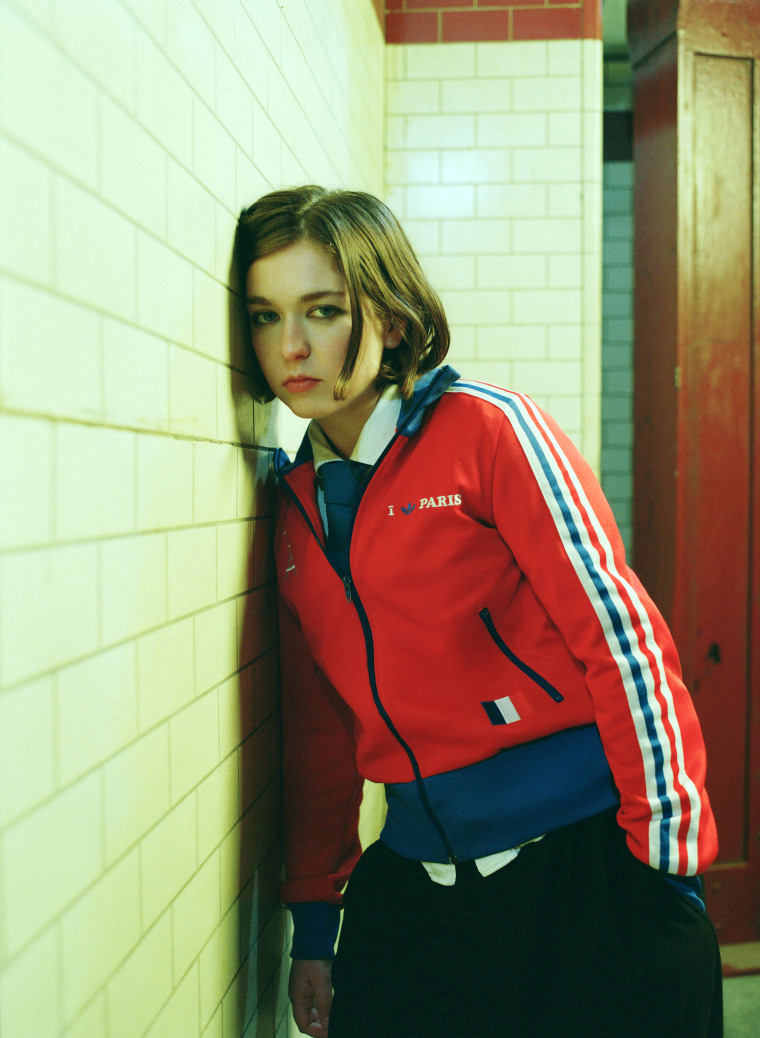 Photo by Daria Kobayashi Ritch