Eli won’t stop being Eli
The pop singer talks co-signs from Zara Larsson, Demi Lovato, and ADÉLA, selling out shows, and wrestling with her new-found fame.



Eli is visibly overwhelmed on-stage at her sold-out New York City show. After releasing her debut, Stage Girl, in October 2025, the Los Angeles-based singer (and Gen F alum) has been making her American Idol dreams come true with a successful headlining tour that’s brought tears, squeals and concert wide singalongs. A day after the show, at The FADER office, Eli seems overjoyed by not just the size and intensity of her crowd, but how “connected” she feels to the largely trans and queer audience supporting her. “Everybody’s such a ki,” she says. “So fun, and cool.”
The run of dates has successfully transformed the Massachusetts native’s digital buzz into IRL fervor. Beyond her civilian adorers, she’s had a number of celebrity guests at her concerts: Demi Lovato, ADÉLA, Zara Larsson, and Madison Beer have all appeared as special “Girl Of Your Dream” guests at her L.A. one-woman show. “It feels really really special to be seen by these women that I love,” Eli says. “Some [of them] raised me, some are starting to raise me.”

Now that her dreams are becoming reality, Eli is facing just exactly what fame means. “As I get older I realized that [I believed that] fame meant [I could be] myself ... that being myself [would be] allowed because I’m famous,” she says. “I thought, If I could be a star then I can finally bring a girl home as a girl myself on Thanksgiving. Or I could finally be like, ‘Hey mom and dad, I’m trans.’” Her unique outlook on fame is understandable for a small town girl who saw pop stars as emblematic of bright light dreaming.
Ahead, read our conversation with Eli about manifesting stardom, what fame means to her, and getting sage pop advice from Zara Larsson.

The FADER: What’s it like to see all these people coming out for your shows?
Eli: It feels like I am dissociating in some weird, beautiful way. I’m used to opening for someone, or convincing my two friends to come to a show. This is the first time that I’ve not only been playing for a crowd of people that came to see me, but a crowd that has been singing back to every song, putting their hands in the air, screaming, crying. There’s beautiful gay couples and beautiful people. I can’t even focus on the lyrics. I just keep stopping in the middle of the song and talking to people. I’m trying to figure out what it means to perform for an audience that is there for me.
Your audience really seems like “your people,” and that doesn’t always happen. How do you think you developed such a tight knit community?
I just leaned in hard into what I love. I feel really safe and really supported and attracted to everyone… I know you can’t say that. I don’t mean attracted in the non-platonic way, just connected.
I went to [the bar] Carousel after [the show] with the band. I went out to smoke a cigarette and I looked over at these girls and they were super striking and stunning, I was like, “Damn, I really want to talk to them.” I wanted to be friends with them. I was about to work up the courage, and then they looked at me, they were like, “We were just at the show.” It's just a perfect example of feeling like I’m in a room full of people that I think are cooler than me, and it’s such an honor that they would include me in their orbit.
Last night, you talked about going to NYU and dropping out, and then moving to LA. Was that all in pursuit of pop star dreams?
I think so. I’m trying to unpack this deep, insane, borderline not-okay need to be famous. As I get older I realized that fame to me has meant being myself, or being unapologetically honest and it being allowed because I’m famous. I thought, If I could be a star then I can finally bring a girl home as a girl myself on Thanksgiving, or I could finally be like, ‘Hey mom and dad, I’m trans.’”
Last year, you began to post these elaborate videos with “Marianne” and were just really ramping up your world building. It felt like you were willing your career into existence, and it was a distinct turning point. What do you attribute that turn to?
The turn was transness. I was finally feeling like I was in my body and allowing myself to show up truthfully and seek medical help. To go from being suicidal to then being like, “Oh my god, I’m myself.” For the first time ever I know what it’s like to have a gut feeling, I know what it’s like to trust a voice in my head, to feel present because I’m not dysphoric. All the like the wigs, polka dots, sequins, lace gloves, and beads [I used in my videos], these childhood aesthetics started representing this grit and aspiration.
Can you tell me about getting signed?
I was signed before [my transition]. That was very destabilizing. I suddenly was experiencing the reality of an industry that’s based on opinions. I just felt kind of like, Oh my god, am I about to be locked away and not able to release music and achieve my dreams? For a second it really felt like that. I had “Marianne” for seven months and it wasn’t being put out. I was like, “This feels like my voice is being stopped.” It felt like I gave my voice away to capitalism.
How did the song eventually get out?
By focusing on the only thing that I could control: which is being myself. It just kind of lined up. I asked myself “Okay, what am I trying to do here? What is the good thing about this [situation]?” I feel drawn to these songs that I write and these trans, queer narratives and I asked myself “Okay, what can I control?” And I thought, “I can control being grateful for when one person on the internet comments who is like, ‘This is cool, I want to listen to this.’” It’s about that connection. So I just was spamming [social media with videos of ‘Marianne’] and then finally the label was like, “Wow, we love this song, let’s put it out.”
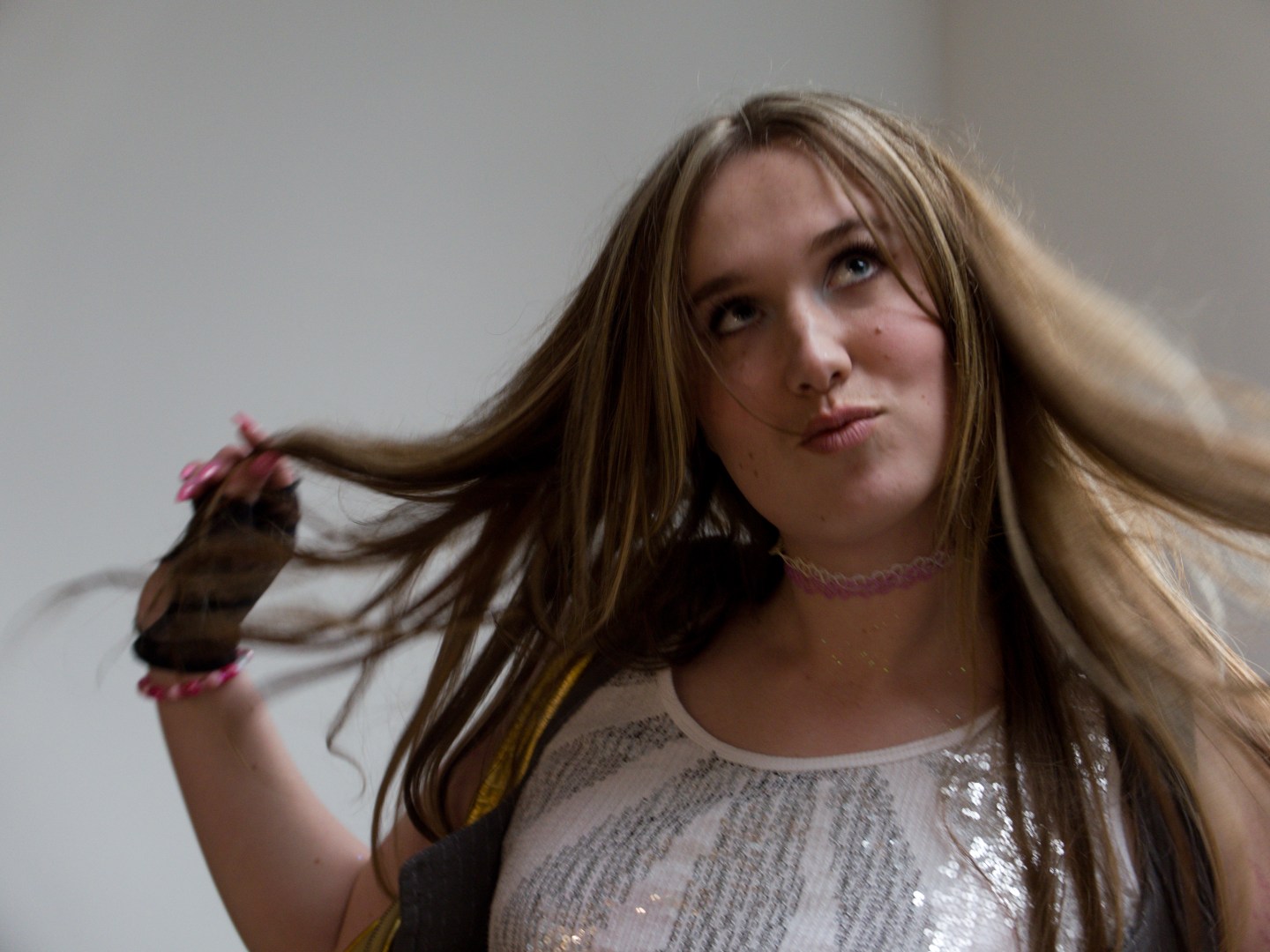
You made this beautiful show, this beautiful little play, and you had all these fabulous popstars — like Demi Lovato, ADELA, Zara Larsson, and Madison Beer — come to support your show. What's it like to be in community with these women?
It makes me very emotional. I grew up being like I don’t know if I’ll ever be able to be like the pop girls that saved my life. I remember watching the Honeymoon Avenue Ariana Grande tour videos and being like, “I’ll never get to wear that bedazzled tutu and feel beautiful and feminine and sing my girly heart.” There are all these different profoundly feminine energies in the pop music I love, and now through the trans experience and the freedom of it I’ve gotten to be accepted by people that I admire. They were willing to take time out of their insane pop girl schedule. I’m doing a fraction of what Zara Larsson is doing right now and I texted her last week and I was like, “How the fuck are you doing this? Like I’m not okay.”
Zara coming out during my theatrical one-woman show that’s talking about being a fan of music and wanting to have the microphone. And she agreed to be a part of the story when she came out when I was singing “Girl Of Your Dreams” … it was this moment of the magical fairy godmother of pop stardom coming out and giving me her blessing.
