These photos capture the secret lives of New York City’s wildlife
An interview with photographers Jacqueline Emery and David Lei about photographing the owls and coyotes of the city.


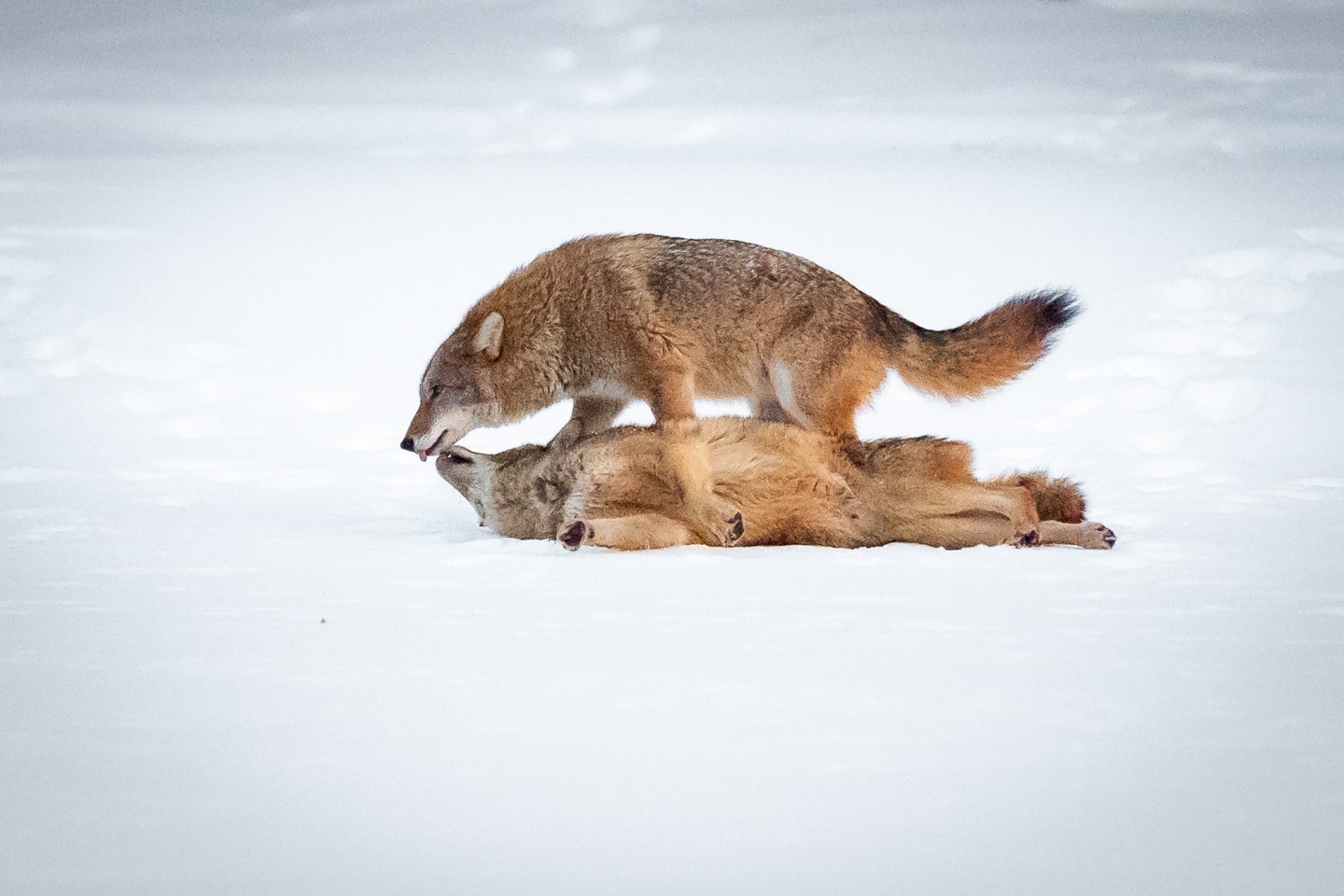 Romeo and Juliet, Central Park coyotes.
David Lei
Romeo and Juliet, Central Park coyotes.
David Lei
Though the concrete jungle’s best-known fauna might be pigeons and rats, New York City shelters a greater breadth of urban wildlife than one might presume. Jacqueline Emery and her partner David Lei know this better than most: the duo have spent more than half a decade birding and photographing in Central Park and beyond.
The pair — who daylight as an English chair at SUNY and real estate investor, respectively — first came to fame with their photographs of Flaco the owl, the beloved Eurasian eagle-owl who made a home at the Central Park Zoo after being released by an unknown vandal in 2023 and who later died in 2024. Lei and Emery photographed Flaco on more than 150 occasions, with their sharp and intimate shots of the bird published in the Smithsonian, New York Times, and in their own book Finding Flaco: Our Year with New York City’s Beloved Owl.
Lately, I’ve found myself enchanted by their photographs of Romeo and Juliet, a mated coyote pair that have lived in Central Park for several years now. “They made this beautiful coyote music. We’d been wanting to hear coyotes howl in Manhattan for so long,” Emery says of the animals. “That’s one of my top wildlife experiences in Central Park.”
In addition to snapping photos, lately, Emery and Lei have taken on an advocacy role by informing the general public about the minimal risk coyotes pose to humans and pushing for the Mayor to ban the use of rodenticide.
Ahead, we spoke to Emery and Lei about shooting Romeo and Juliet, and how humans can best co-exist with urban wildlife.

The FADER: Can you tell me about the first time you saw the coyotes?
JACQUELINE EMERY: This is before we actually met, funny enough, we were both on the same bird walk. The group got split up and the group that was in the back actually saw a coyote by Belvedere Castle, and my interest was piqued immediately, like, damn, I wish I had been in the back of the group so I could have seen it. We think that was the first known sighting. [Juliet’s] official arrival is early 2019, but it’s possible that she had been in the park even earlier than that.
The first time I actually saw her was March 2019. I was in the ramble with a friend, and I looked up and I saw this very large canid running through the middle of the ramble. At first I thought, wow, that's a beautiful German Shepherd, and then as I took a closer look, I realized, no, that's a wild animal – that's the coyote!
It was such a brief sighting I didn't even have time to hit record on my cell phone, but I was immediately struck by her beauty and her agility. She was running over rocks as if nothing was there.
 Central Park coyote.
Jacqueline Emery
Central Park coyote.
Jacqueline Emery
 Romeo, the Central Park coyote.
Photo by Jacqueline Emery
Romeo, the Central Park coyote.
Photo by Jacqueline Emery
DAVID LEI: I didn't see her for the first time until 2021. I was out in the park late at night observing a snowy owl that visited Central Park [...] At night she'd visit the North Meadows and surrounding environment, and she would perch on the baseball field backstops. While watching her, the coyote showed up.
I panned my camera down, saw her — she slinked off pretty fast, so it was just a very brief view. And then the next week she ran right past us in the same area too. Later that year, a birder found her sleeping on a rock ledge overlooking the lake, and that became one of her only known spots where she could be seen.
It wasn't until February 2024 that we finally saw Romeo for the first time. We were at the composting area of the park, observing a pair of long-eared owls late at night, and the two of them showed up. We didn't initially know what we were seeing, because one was dramatically smaller than the other. There had been rumors — “maybe there are pups or a whole family” — but we subsequently established that it’s just Romeo and Juliet, and there’s just a size difference.
 Romeo and Juliet, the Central Park coyotes.
David Lei
Romeo and Juliet, the Central Park coyotes.
David Lei
How did you guys actually meet and connect as photographers?
EMERY: David and I met following Barry the barred owl. She arrived in Central Park in October of 2021, so early on in the pandemic, and unfortunately she was hit by a conservancy vehicle and died. But during the 10 months that she lived in the park, she really brought together a community. People who had never birded before took up birding because they were fascinated by her, and she was a very charismatic and cute barred owl.
And so David and I met while observing her. There was a small group of us who would meet almost every night to watch her fly out of her roost and hunt. And I wanted to be able to capture her behavior in the dark. I took a night photography class that was helpful, and David has shared a lot of his knowledge with me. I'm always learning from him.
Is there a go-to approach to shooting wildlife and getting a compelling shot?
LEI: Sometimes we want high resolution detailed photos of the subject so that people can see all the little hairs and whiskers on Romeo and Juliet's faces. And sometimes it's a lot more interesting to see them with the lights of the skyline in the background or passing by people who are oblivious to them being there.
 Flaco the owl.
Jacqueline Emery
Flaco the owl.
Jacqueline Emery
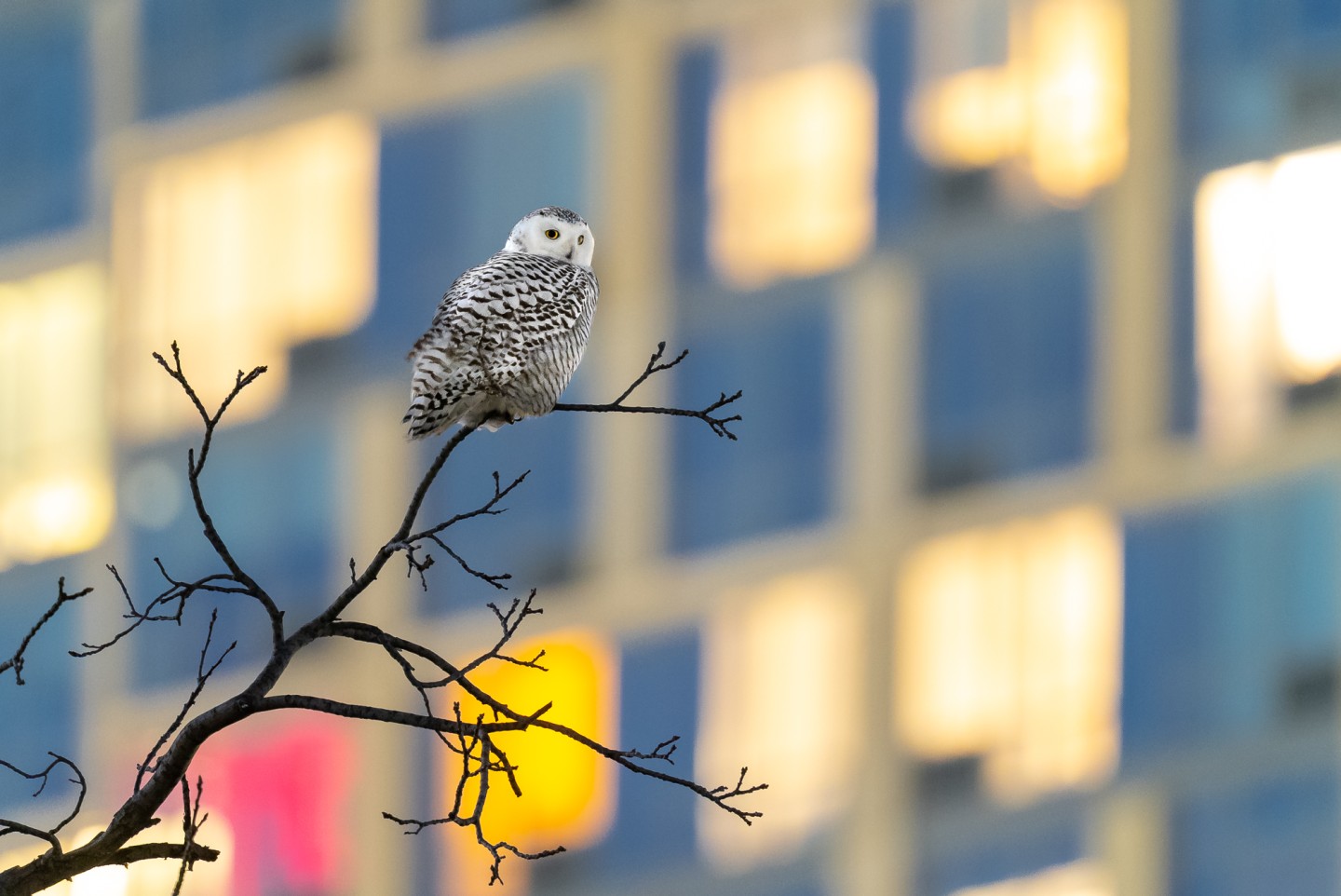 Central Park snowy owl.
David Lei
Central Park snowy owl.
David Lei
 Central Park barn owl.
Jacqueline Emery
Central Park barn owl.
Jacqueline Emery
The average person doesn't necessarily think about wild animals when they think about a place like New York City. Could you give our readers some context on urban wildlife coexisting with people in such close proximity?
EMERY: The coyotes are the first mated pair in Manhattan, which is tremendous. In 2016, the Parks Department changed its policy to allow coyotes to remain in public parks, and Juliet was the first to our knowledge to benefit from that. When we're out photographing the coyotes, we're very mindful of the hazards that they face, and we try our best to advocate for them. If we see an off-leash dog running around chasing them, which happens often, we will ask the owner to please leash the dog and explain why. And then in our social media posts, presentations, a couple of articles, they’re all about coexistence. The very simple strategies that New Yorkers can take to ensure that the coyotes continue to thrive in Central Park. And one of those is if you come upon a coyote, give the coyote space, view it from a respectful distance and leash your dog or dogs.
LEI: We’re also concerned about rodenticides; given our history with the owls and other birds of prey, it's very top of mind. Barry was found to have high levels of rodenticides in her system when she was struck by the maintenance vehicle, and that may have impaired her flight skills and ability to avoid danger.
Flaco also had high levels of rodenticides. He primarily died from pigeon herpes virus, which is a natural cause of death for Eurasian eagle owls interestingly enough, [since] pigeons are native to Europe. So that was a strange dynamic that this released bird somehow died of natural causes from natural prey in New York City. But he still did have that unnatural cause of rodenticides – and we've seen the coyotes sniffing at bait boxes, hunting rats near bait boxes, that sort of thing. So that's become part of our advocacy as well.
How would you recommend regular people wanting to get involved with photographing the city's wildlife begin?
LEI: People can get some amazing stuff with their cellphone and binoculars just by watching the animals on their own terms. Not stressing them [and] prolonging the duration of how long you can watch them.
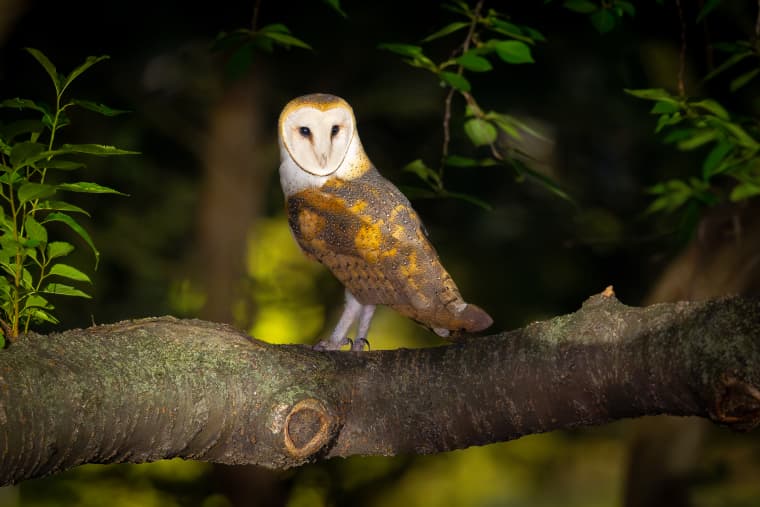 Central Park barn owl.
David Lei
Central Park barn owl.
David Lei
 Central Park barn owl.
David Lei
Central Park barn owl.
David Lei
 Central Park Great Horned Owl.
David Lei
Central Park Great Horned Owl.
David Lei
 Central Park Long Eared Owl
David Lei
Central Park Long Eared Owl
David Lei
 Central Park Long Eared Owl
Jacqueline Emery
Central Park Long Eared Owl
Jacqueline Emery
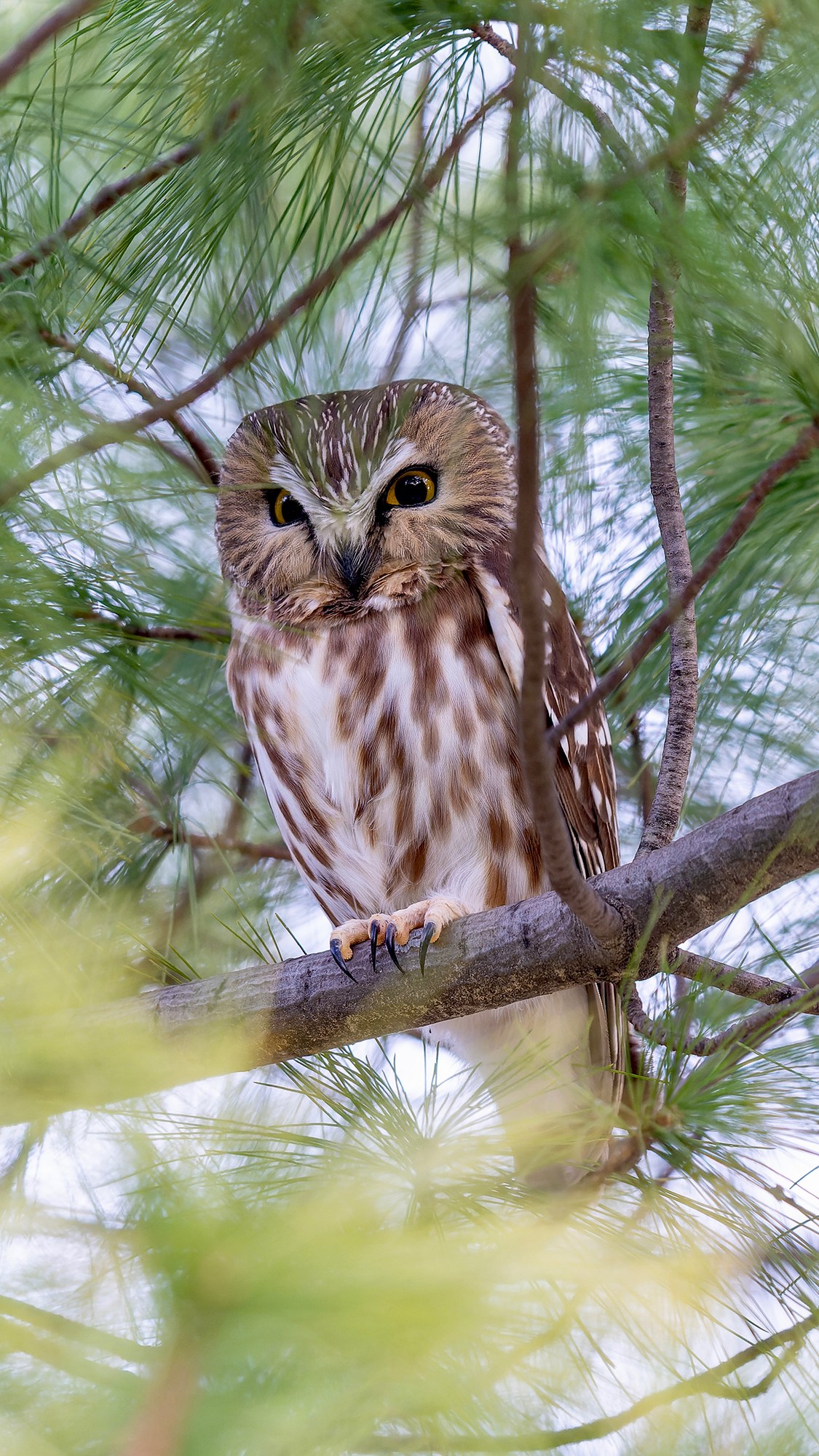 Central Park Northern Saw Whet
Jacqueline Emery
Central Park Northern Saw Whet
Jacqueline Emery
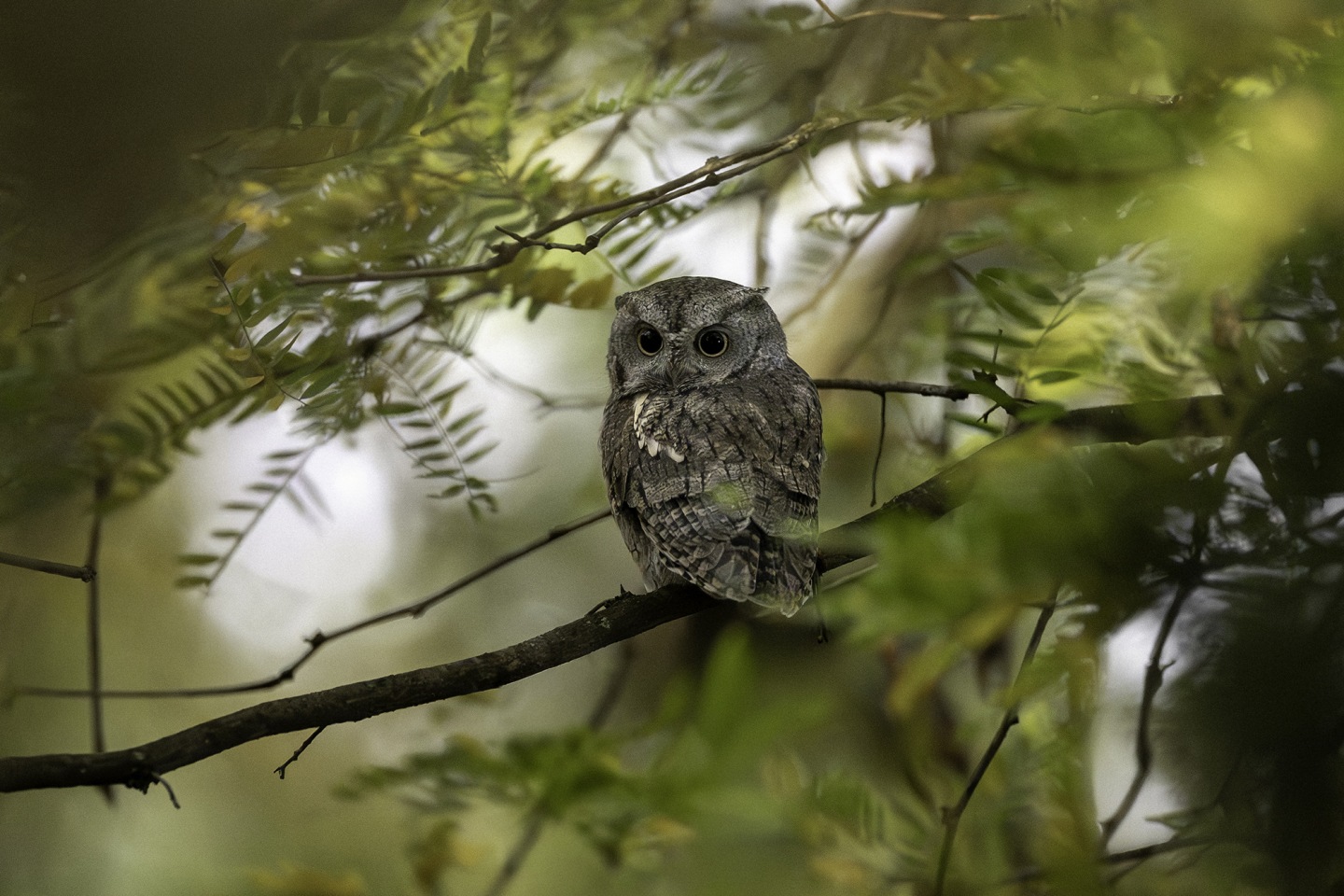 Eastern Screech Owl in Central Park
Jacqueline Emery
Eastern Screech Owl in Central Park
Jacqueline Emery
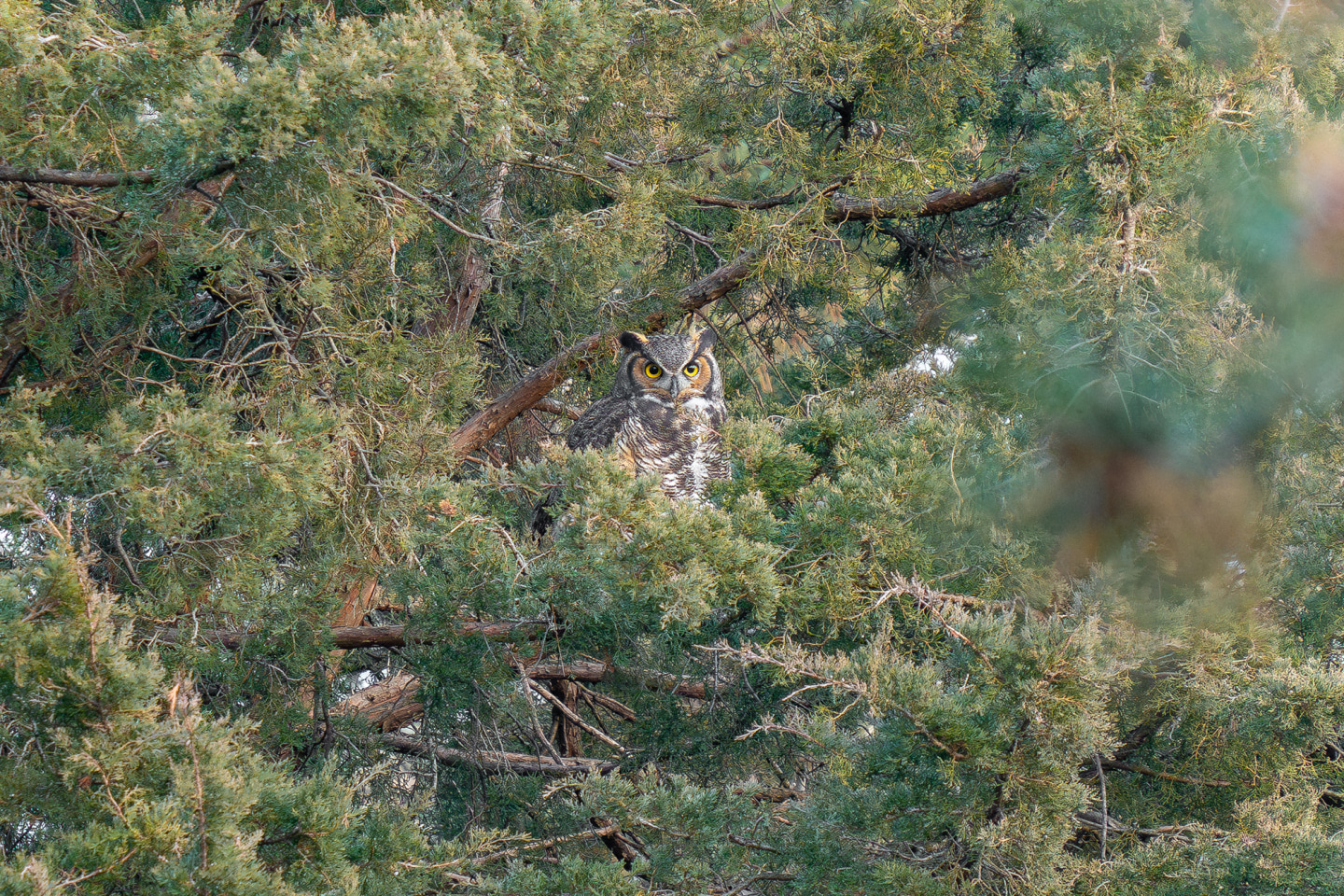 Gerald the Great Horned Owl.
Jacqueline Emery
Gerald the Great Horned Owl.
Jacqueline Emery