Courtesy of HBO
Neighbors is a show about people who live next door to each other in the same way Stevie Wonder is someone who plays piano.
Yes, the new hit HBO docuseries explores the often contentious dynamics of living in close proximity through real neighbor pairings across the U.S. — from Simi Valley, California to Bloomfield, New Jersey — but the show’s true focus is on collective neuroses as they spiral out of control.
Neighbors is produced by A24 and Central Pictures (Josh Safdie, Ronald Bronstein, and Eli Bush), and introduces directors Harrison Fishman and Dylan Redford to their broadest audience yet. In the late 2010s the duo, along with casting director Harleigh Shaw and Fishman's younger brother, Sam, connected through a film fellowship program in Miami where the seeds for Neighbors were sowed.
“Sam had this whole interest in neighbor dispute stuff,” Redford told The FADER over a recent video call. The duo began making found footage compilations of neighborly disputes which turned into staged, Karen-style videos about sharing space and living life publicly. Eventually, they were given the opportunity to formalize the concept into a TV show.
The interpersonal conflicts on Neighbors give way to a strange intimacy in the series’ first season. As each episode hones in on a different set of neighbors in the U.S., a distinct pattern emerges: each neighbor is both obsessed with, yet despises the other person. Watching Neighbors often feels like stumbling into an alternate radio scanner of the country: instead of public safety dispatches, the viewers are dropped into the middle of a spiritual war that seems totally resolvable from an outsider’s perspective. It makes you wonder: just how many neighborhood disputes are taking place in America at any given moment?
Ahead, Neighbors directors Harrison Fishman and Dylan Redford, as well as casting guru and producer Harleigh Shaw, discuss finding their subjects on Craigslist, how interpersonal feuds can escalate, and what they learned about property ownership.
 Courtesy of HBO
 Directors Harrison Fishman and Dylan Redford.
Courtesy of HBO
Directors Harrison Fishman and Dylan Redford.
Courtesy of HBO
The FADER: How do you think COVID affected the relationship between neighbors? Do you think the backdrop of the pandemic influenced what Neighbors became? Or is this just the American right to property rearing its head?
HARRISON FISHMAN: The videos that Sam [Fishman] was finding and inspired us to make [our] fake videos existed before COVID. But I do think it inflamed those disputes even more. Everyone was confined to their homes, which became their world even more than they once were. [COVID] also just inflamed social interaction — even the small constraint of “you need to wear a mask,” “you have to be six feet apart,” “you have to stay in your own space.”
The story in our show set in Montana is such a great example because those people moved to the middle of nowhere to get away from people because of the pandemic. But [our older dispute videos] felt like a prophecy that became true. More people were starting to hold each other accountable in this way we could’ve never imagined.
In your staged dispute videos, characters record each other with these lo-fi, mid-2000s digital point and shoots. And then in Neighbors some of the subjects are using similar devices. Why do you think they were using that instead of, say, their iPhones?
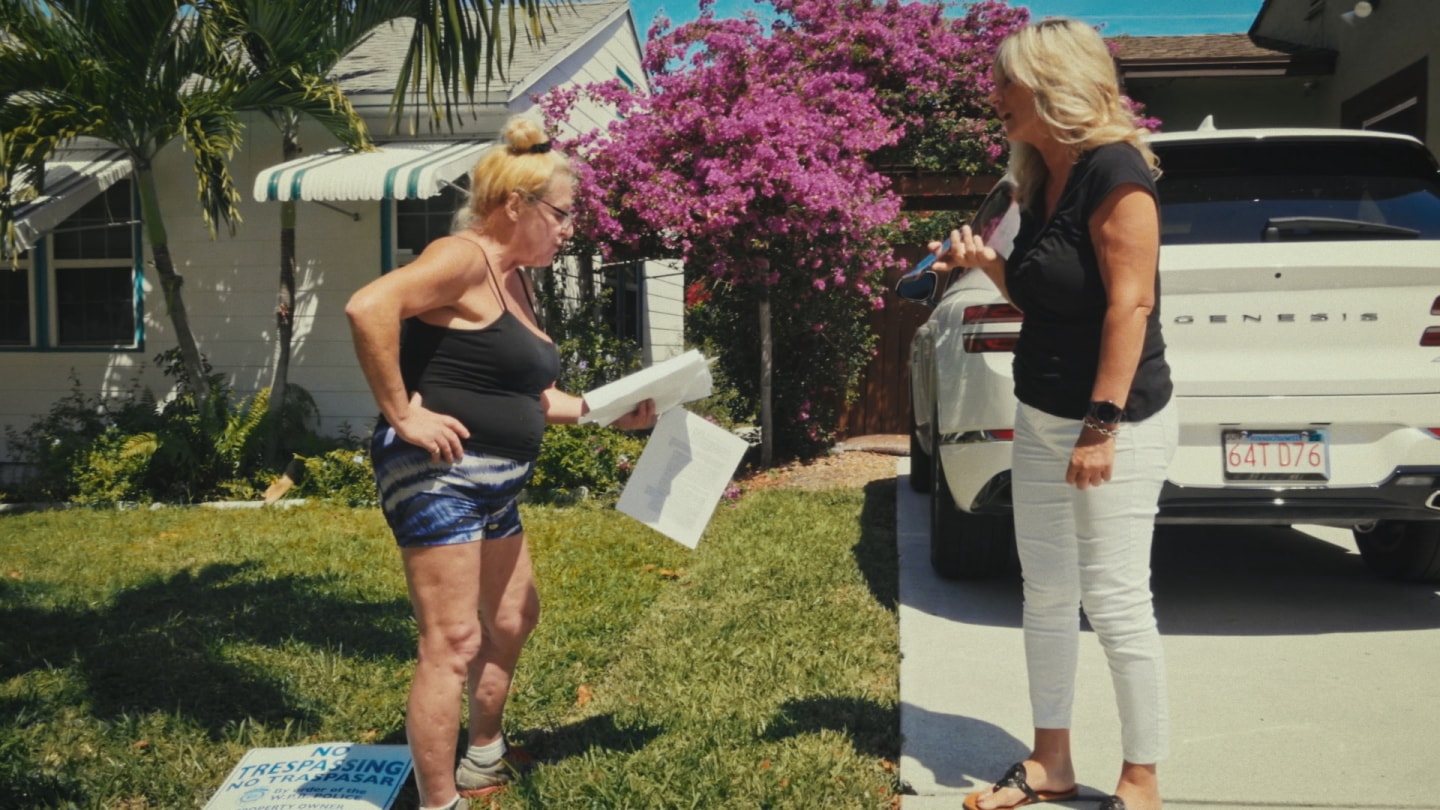
DYLAN REDFORD: There’s something about neighbor disputes that feel very urgent, so people grab whatever is in front of them. There aren’t aesthetic or filmic considerations. Even though I think subconsciously there’s an awareness of a visual language, it's really just what’s in front of them. Especially for older people. They think of their phone and camera as two separate things.
When people use a point-and-shoot or a camera to film, it feels more official. The reason a lot of these people are filming is to create evidence for a civil case, or to try to get a lawyer involved, or to issue a public callout. It feels more serious if it’s not filmed on an iPhone. And it’s easier to zoom.
 Courtesy of HBO
Harleigh, Harrison and Dylan mentioned Craigslist as an important tool for casting on the Son of a Boy Dad podcast. What were other ways you found the show’s subjects? I remember seeing Harleigh posting flyers on IG, did that ever lead to anything?
HARLEIGH SHAW: There’s really no best or surefire place. The best method for casting [Neighbors] is having lines out everywhere. For those flyers, there were maybe a handful of strong leads but nothing that ended up making it on the show. That doesn’t mean in season two we don’t shoot a story [through that method]. In terms of the final stories that made it on the show: two of them came from local news articles, one of them came from Craiglist, one of them came from small claims court records, another from local Facebook groups, and the [Montana story came from TikTok].
What key words were you guys searching?
SHAW: We had put together a whole list that we were searching everyday. Interns would search different variations of “neighbor dispute,” “neighbor war,” “neighbor from hell,” on YouTube…and now HBO has our casting call title card on the show.
That [title card] makes it feel like this dystopic, extended universe.
FISHMAN: It’s crazy to think about making this show without the internet. It feels like it’d be impossible. In a perfect world we could find disputes that aren’t on the internet at all. Interpersonal conflicts with no documentation and we’re the first to document them.
It makes sense why people are willing to fight with their neighbors. Your neighbor is a stranger. —Harrison Fishman
 Courtesy of HBO
How do you know when you’ve found an interesting or promising casting lead?
SHAW: Harrison, Dylan, and I were always talking about dream stories or textures that we’d like to see on the show. Whether it’s a story set in the middle of the desert or an off-grid story. Our team did a lot of reverse engineering to find certain elements we wanted. It became very successful in the season finale. We knew we wanted the [finale] to be centered on a specific, subcultural community living together. The same subject producer who found the Montana story was doing a lot of research throughout the whole period on nudist and other alternative communities.
I remember first reading the local news article on the San Antonio story and looking up the [people who were involved to find out] they were in a wealthy community. We really wanted more of that because it was a challenge to get individuals in wealthier areas to agree to be on the show. A lot of the people we spoke to [who were wealthier] were worried about [jobs and social reputation].
Was there anything outlandish you had to do to gain anyone’s trust?
SHAW: There was definitely a lot of playing up certain aspects of myself to relate to different people. With the nudist stuff too I spent [two weeks] with Harrison [naked] in the community to gain trust before the crew came. I had been to one nude beach before and played up that experience.
REDFORD: You find common ground with the people you’re talking to and share your genuine interests and struggles with them. I don’t smoke weed and at one point had to [pretend to]. I did not inhale.
FISHMAN: Dylan didn’t tell me he wasn’t inhaling, so I was just getting absolutely baked.
 Courtesy of HBO
Harrison and Dylan, a lot of your comedic work mines the absurdities that arise from an unwillingness or inability to see anything outside of a personal perspective. Did working on Neighbors teach you anything more about this part of human psychology?
FISHMAN: When two people really dig into conflict, sometimes it can be hard to come back from that whether it’s [a platonic or romantic relationship]...We start out almost like anthropologists [understanding the core of the situation] but once we get to know them we’re also like “I wish they could get along,” because both parties are cool and have shared interests.
REDFORD: A lot of this [involves] a huge financial component. These people have spent a lot of money on these disputes. Hiring lawyers, getting new fences, being fined by the city, trying to get permits etc… Generally speaking because owning a home is so difficult, things are so expensive, and people don’t have a lot of [disposable income] to just throw around, that kind of precarity is always going to make people feel like they don’t have a choice.
FISHMAN: It makes sense why people are willing to fight with their neighbors. Your neighbor is a stranger. The only thing you have in common is that you live [next to each other]. That’s kind of it.
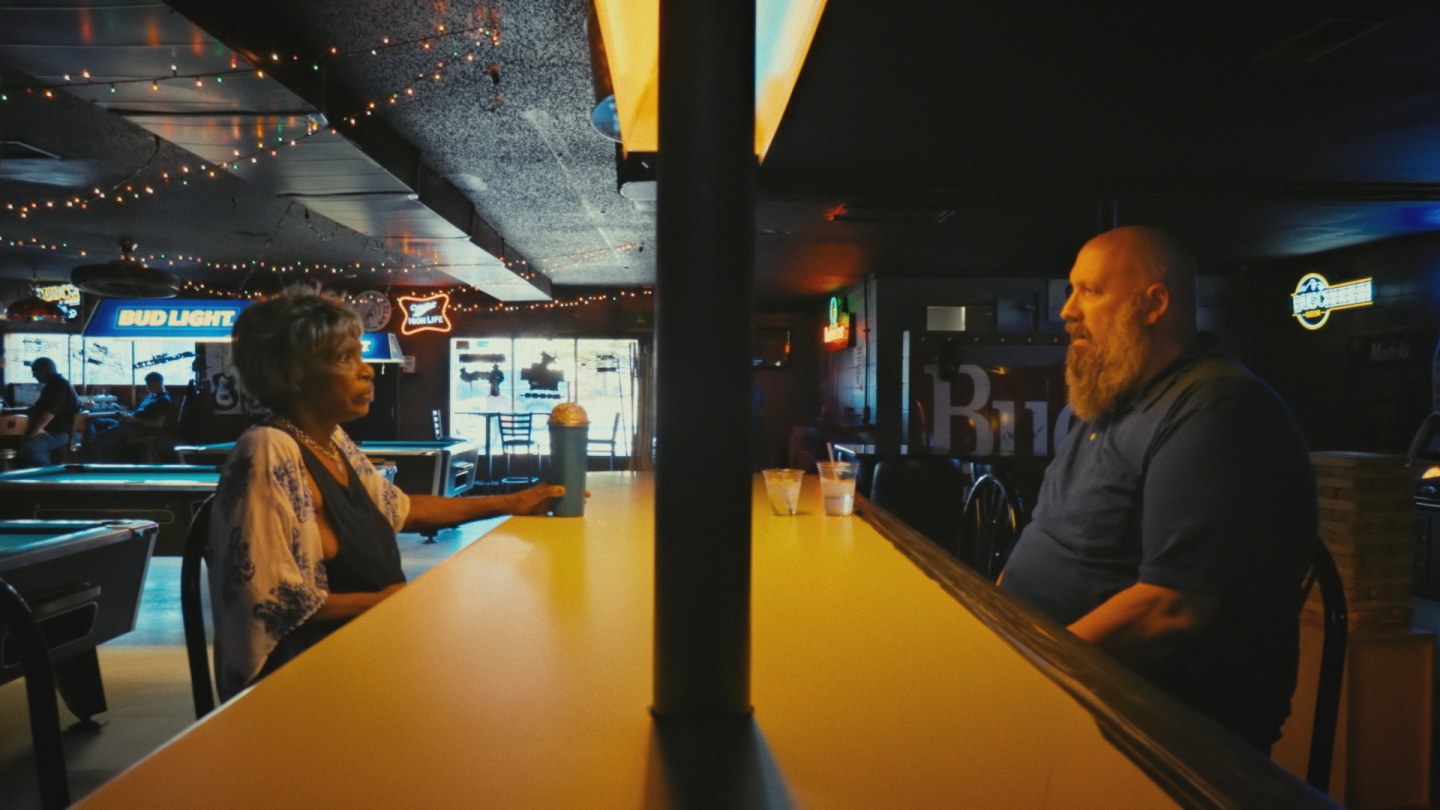
In episode four, Stephen seemed more open-minded about resolving things — granted he did make $26k off the dispute itself. Why do you think Joanne was so opposed to his olive branch?
REDFORD: Again, I think the financial part definitely plays a huge role in this. Both parties spent a lot of money on lawyers and new fences. [Stephen] is also making money off of [Joanne]. I think she was like, “I don’t trust you anymore,” “I don’t really like you anymore.” In her mind everything else feels like a drop in the bucket. It’s not really solving the problem. But in Stephen’s mind, he’s like, “You guys took a large part of my land and refused to acknowledge that.”
 Courtesy of HBO
Did any of those stories unfold in a way that surprised you both?
FISHMAN: The ones where [both parties began as friends] almost mirror how a horror movie plays out a little bit.
REDFORD: What makes those disputes really painful is that personal information is always weaponized because they got to know each other so well. They know each other’s financial situations and relationship issues. When they were friends maybe it was a point of empathy but the second that shift happens, all of those personal stories become fodder for humiliation and justification for why the other person is crazy. I think it’s ok to have a friendly relationship with your neighbor but I don’t think any of us would suggest being best friends with your neighbor.
What’s the role you guys see TikTok and internet virality playing amidst all of this ?
SHAW: There were people whose TikToks on their [dispute] became a launchpad for money or some fame. Those were the moments where I wondered if the beefs were being prolonged, especially for the people who amassed a big following based on the neighbor dispute. But with celebrity more broadly, I do wonder if that’s something we’ll begin to see more in season two, now that the show is more known. There weren’t many people who we came across in season one who were just trying to [promote themselves] but I wouldn’t doubt that’s something we’ll be seeing more.
How did making Neighbors make you feel about home ownership in the future?
REDFORD: I would definitely love to own a home one day. Every day [that prospect] feels farther away. But, you know, it’s against the law to discuss neighbors when you’re in the middle of a real estate deal. You can’t disclose the prior owner’s relationship to the rest of the neighborhood. If I ever get to buy a home though, there’s gotta be a way to get a temperature check.
FISHMAN: You’re allowed to knock on a neighbor’s door though?
REDFORD: I don’t know… if the seller sees you doing that it can get very complicated.