Petra Collins’s new book STAR sees stardom as a horror movie
Read an interview with the legendary photographer about capturing the fraught world of pop stars and how movies inspire her photography.


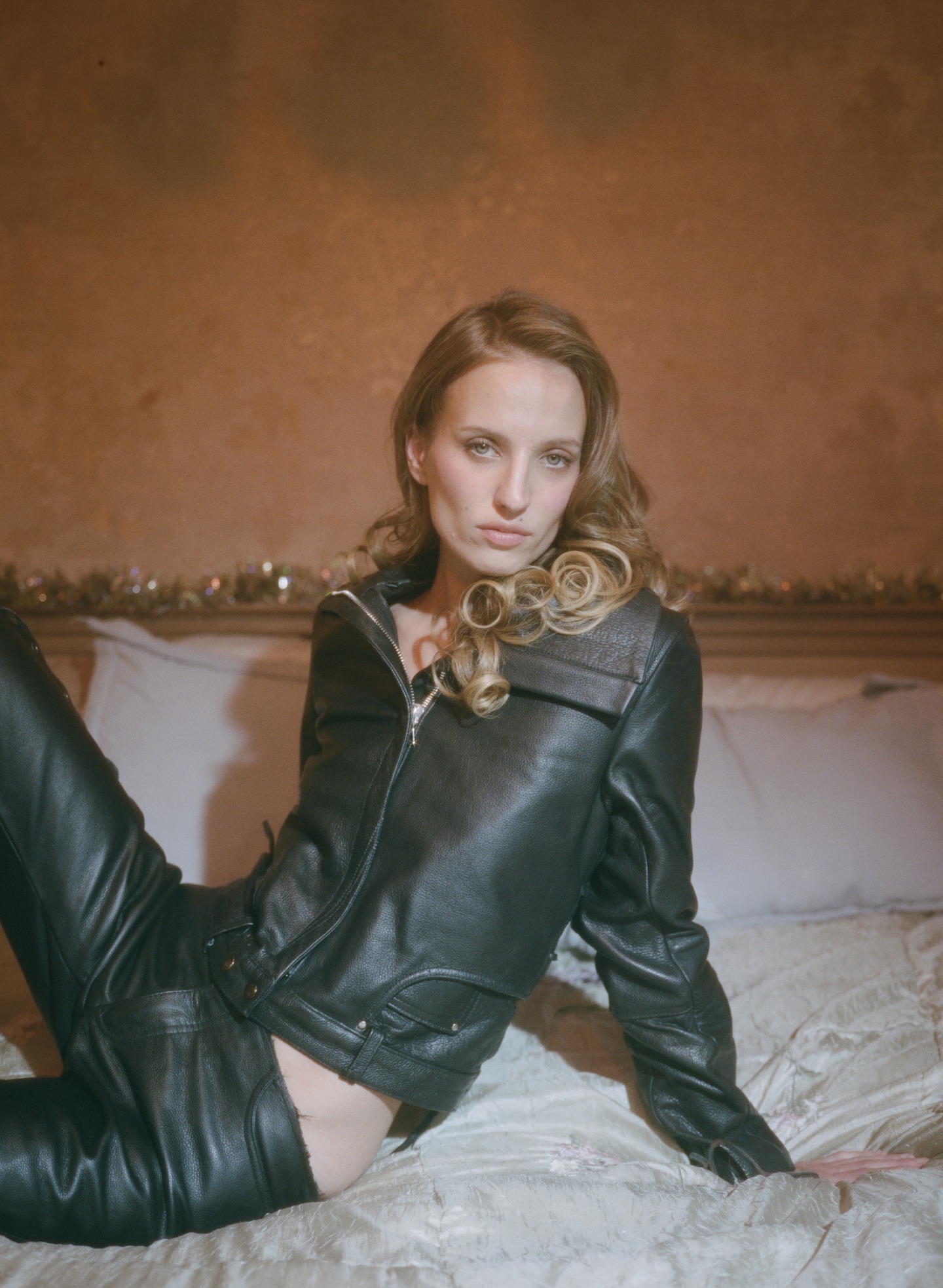 Petra Collins
Photo by Petra Collins
Petra Collins
Photo by Petra Collins
Petra Collins’ work has always blurred the lines of ecstasy and horror, girlhood and maturity, of what is innocent and what is fleeting. In her seventh book, STAR, out now on Rizzoli, she transposes a narrative she’s been mining for years into an emotionally poignant story about fame, fandom, voyeurism, and obsession.
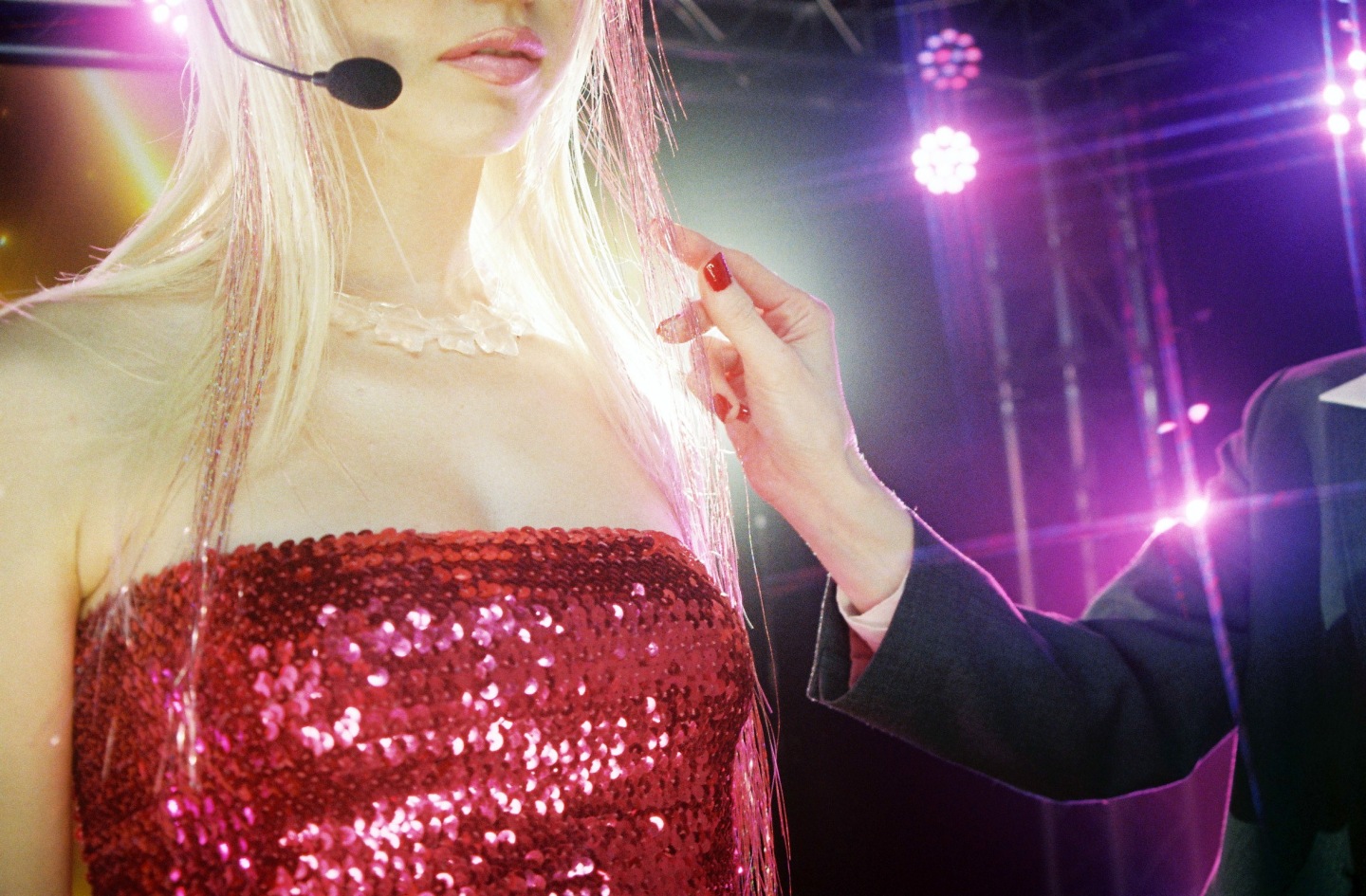
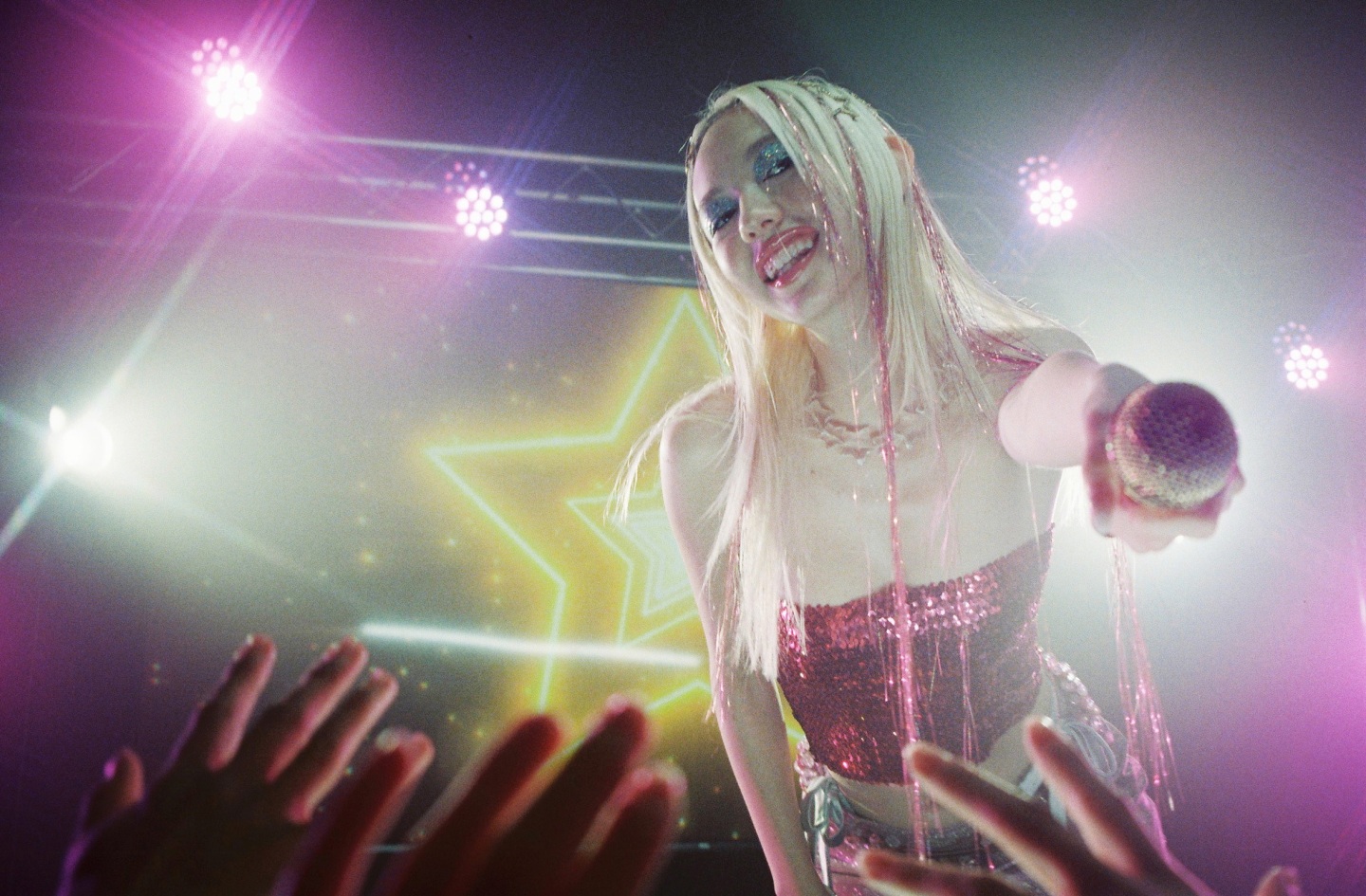
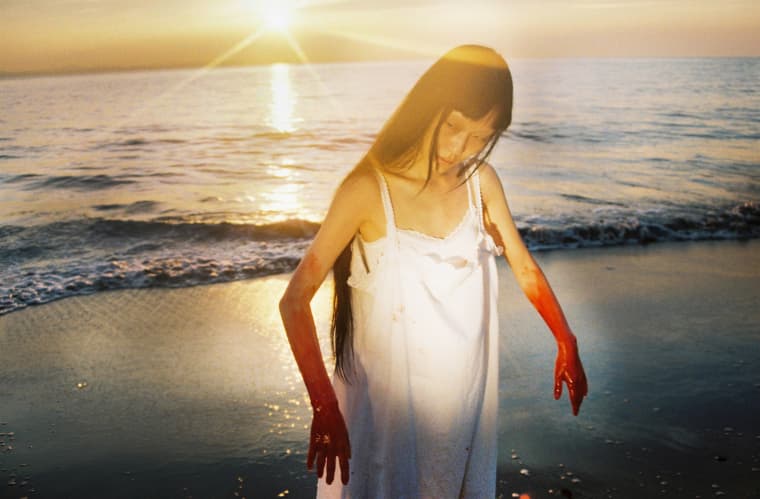
Star is a book of original photographs told from the POV of two fictional pop star groups and their fans and stalkers, interspersed with prose, letters, conversations and diary entries. Drawn from Collins’ experience both working with pop stars and witnessing the rise and fall of the idols of her youth, each chapter is named after a song from the ‘90s or 2000s: “Lucky,” “Erase/Rewind,” or “White Flag.” Images of Mudd jeans and bloodied hands highlight horrors both overt and inner, screamed and whispered. But Star is also a world, with an accompanying soundtrack. Composed by Collins’ partner Jake Nadrich, Star (Music from the Original Imagined Motion Picture Soundtrack) is 20 minutes of glitchy, atmospheric electronic dreamscape that captures the book’s glittering madness.
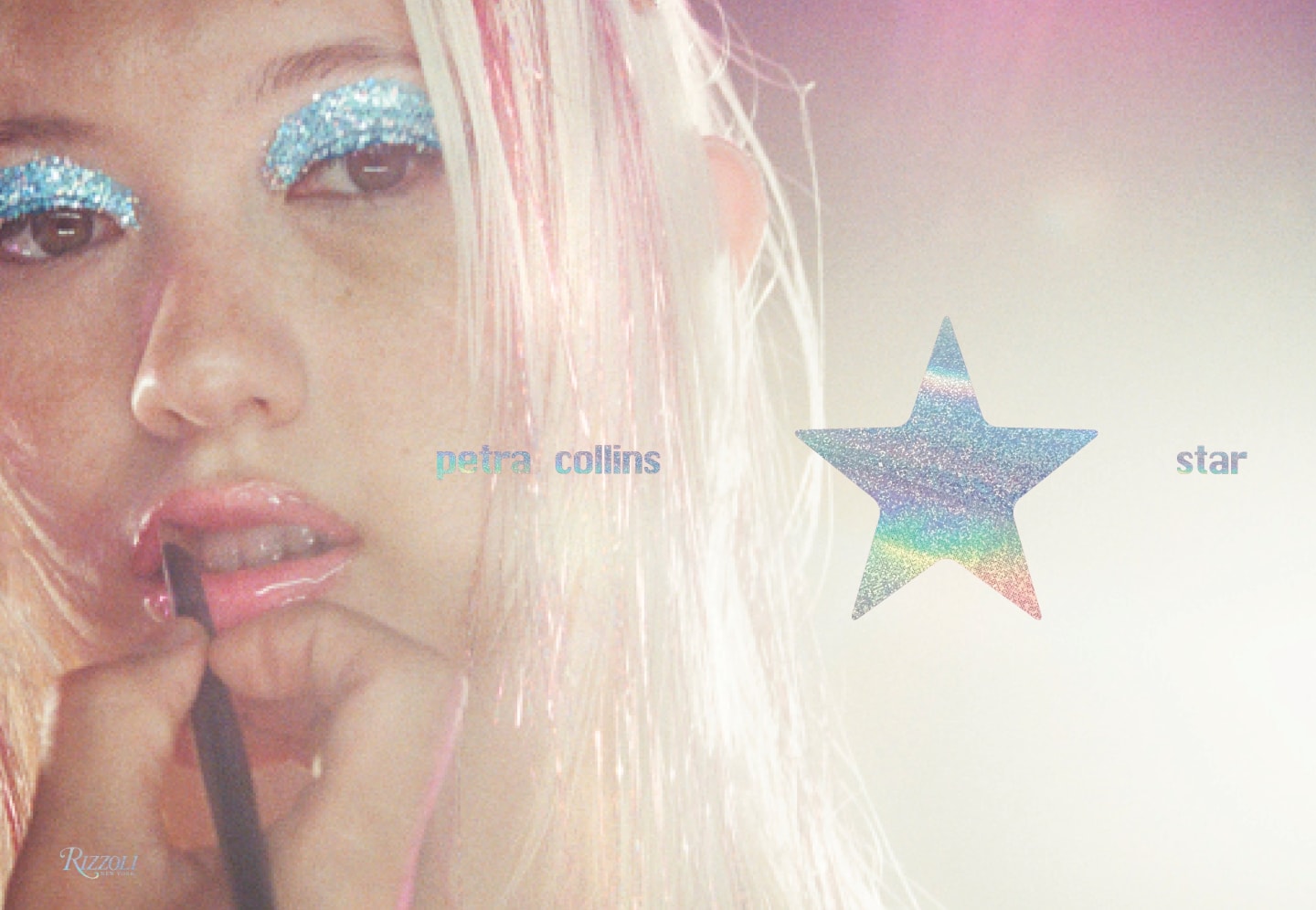 The cover of Star.
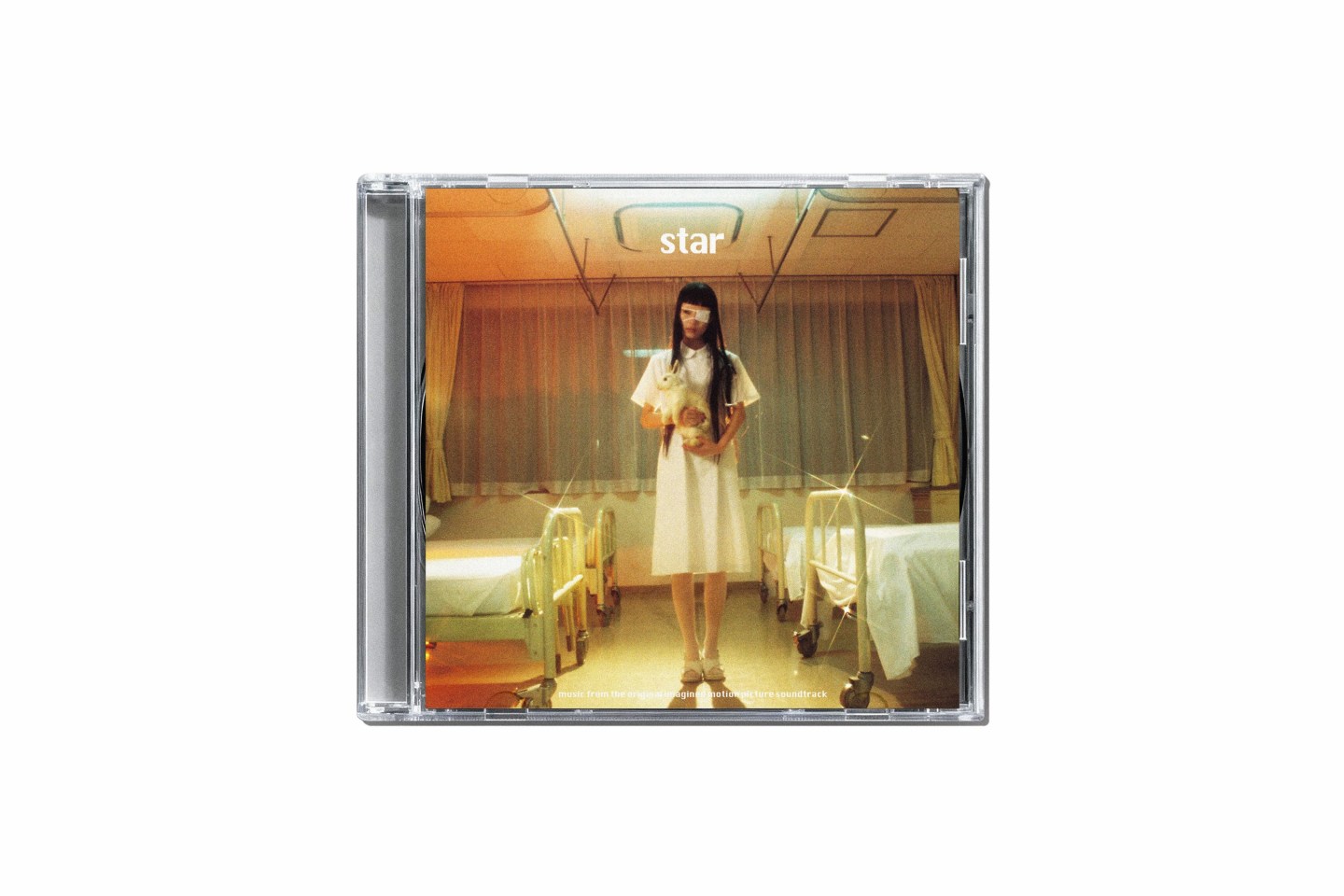 The CD of Star (Music from the Original Imagined Motion Picture Soundtrack).
Petra Collins/Rizzoli Books
The CD of Star (Music from the Original Imagined Motion Picture Soundtrack).
Petra Collins/Rizzoli Books
Creating a cinematic experience was the point: Collins is working on her first full-length feature (details under wraps, for now) and making STAR was a bit of a dress rehearsal. “Obviously film is such a massive undertaking, so I sneak in things that you'll probably see in my movie,” she says. “There will be stuff that bleeds over into the film and even sonically with the soundtrack. It's practice.”
This is what Collins does: She is a worldbuilder, an auteur, the blueprint of the young, disheveled, and dreamy. Her work with artists like Olivia Rodrigo, Charli XCX, and Billie Eilish have become crucial to the visual lexicon of what it means to be a pop star today. “For sixteen years I've watched the music world from behind the camera: the meteoric rises, the unravelings, the force of fandoms,” she writes in the book’s intro. “I've witnessed icons being born and icons being devoured. All of that, the beauty, the madness, the mythology echoes through the pages of STAR.”
’STAR’ is out now on Rizzoli Books.
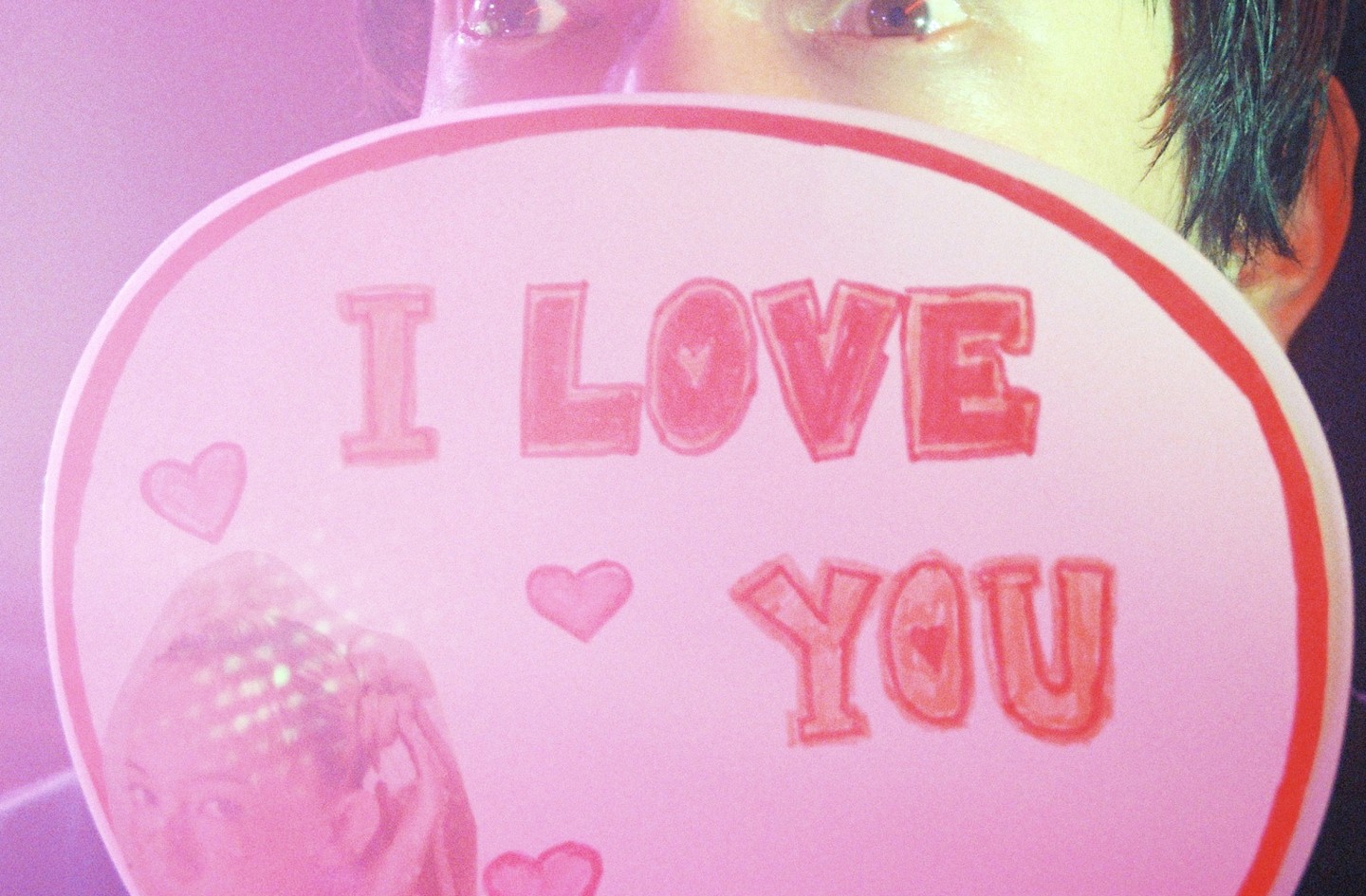 By Petra Collins/Rizzoli Books
 By Petra Collins/Rizzoli Books
The FADER: What have you been shooting recently? Are you allowed to share?
PETRA COLLINS: I was shooting the cover of i-D. I always love working with them. I love the last two covers that I did of JT, which is, she's like, so awesome. And I did the Margaret [Qualley] covers. I'm shooting another one at the end of this month that I'm excited about.
In a time when everyone is making short-form videos, to have your book STAR, which is this tactile, thoughtful experience that's not film but is very cinematic, is very cool.
I feel that way too. Everything's moving so fast and we’re used to scrolling and being shown videos and images en masse. I put out a lot of books and I collect a lot. It's the same as buying a record where you're like, I can keep this piece of music and I have this like, physical form of it.
Owning a piece of tangible art feels like a way of self-actualizing or something.
I feel like the reason I shoot on film is because it's tactile and it's real. It's the same sort of transference where I'm like, I want this. I want it physically so I can keep it forever. It's a way of holding onto memories.
 By Petra Collins/Rizzoli Books
The characters in STAR are drawn from real 2000s-era pop culture, the artists you and I grew up watching. So much media and art has contended or tried to contend with the pop culture and the celebrity of this era. Your photographs and the soundtrack together felt really emotionally poignant in how you captured the horror of that. Was it cathartic to make?
It was definitely cathartic. I obviously love the aesthetics of the 2000s, but I was really interested in the emotion of being a pop star or being thrust into stardom in this age in particular, because there's so many eyes watching you and you're so close to your fans; you're so easily possessed. Making this kind of work, being on set and shooting is always cathartic. It's my safe space. With this, I was thinking I was sort of melding my childhood experience of that pop world, which is so scary and oversexualized; there was so much misogyny in that, and bringing it into today, because it's almost worse.
There's a larger number of fans and then there's more access to these people. I hope it's cathartic for the people reading it because what it really is actually about is being seen on social media. It’s about being thrust into the world of the constant looker. I also purposely made the book so it wasn't from one certain point of view. I have the different stories, but this story could be made by a teenage girl in her bedroom who is just imagining everything. Or it's someone's stalker and this is the real story, or it's the pop stars’ fears. It’s this all-encompassing, I guess God-like, access.
 By Petra Collins/Rizzoli Books
 By Petra Collins/Rizzoli Books
 By Petra Collins/Rizzoli Books
I would love to hear more about the soundtrack. How did you know you wanted to extend this world to a sonic experience?
Music is such a big part of my work. Growing up, I listened to a lot of soundtracks. We were listening to the Magnolia soundtrack for like one year straight. The way that I think of ideas is I'll usually walk around or drive and listen to music. I have this close connection with sound and imagery; there's always a song that I could put to an image. With this being something that is so narrative, I knew it was imperative that we make a soundtrack for this because it's basically my movie in the book form; it was this natural extension of it.
I love world building, and I want to create a world beyond the book. And again, I love ephemeral stuff. So it's going to be sold as a CD available at the end of May. My partner has done the sound for most of my videos, so we have a very close working relationship. We looked at each page and I would say, if the credits are here, what are we going to hear with the credits? We went beat for beat, page for page. I'm going to be making a feature soon, so I was getting ready for that.
There’s so many eyes watching you and you’re so close to your fans. You’re so easily possessed.
 By Petra Collins/Rizzoli Books
STAR is a return to how you used to do photography. You talked about doing it kind of like shooting an indie movie. Why was that important to you for this project?
Because I've been shooting for so long, you gain more access to tools and to people and more of a budget, but that doesn't always correlate with creativity. I got to this point where I felt I needed to go back to how I shot when I was young, because it's very naive and instinctual, and you also run into more challenges.
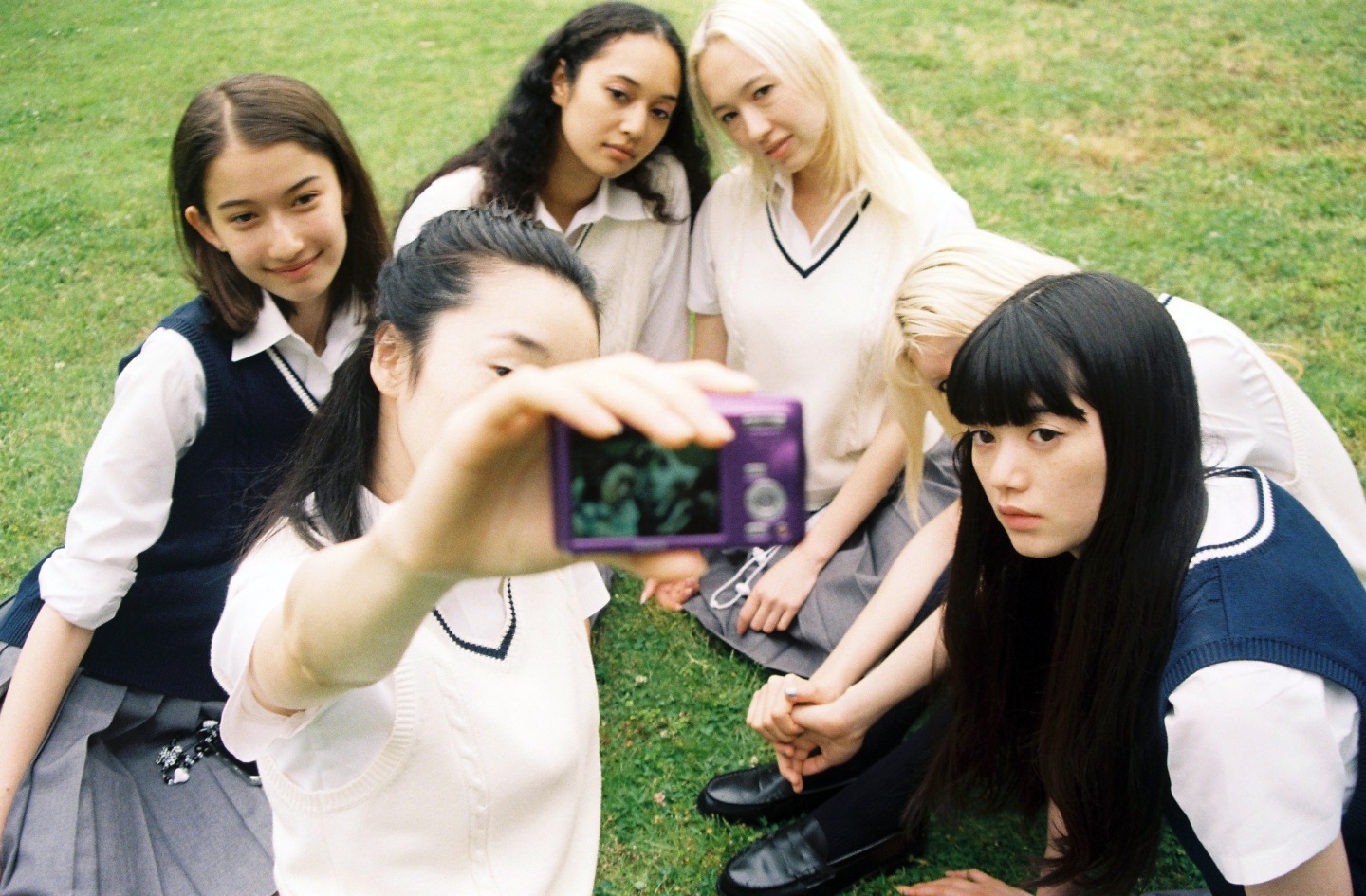
When I started shooting, my reason I started taking photos was because I really wanted to make a film, so I was only shooting in that horizontal way and the way that I worked with the girls or my subjects was similar in ways that a director would work with their subjects. We scouted all the places and then we casted. And then with the cast, I would throw them into the environment and be like, okay, “you're this character; you’re this character.” It was fun because it freed me up a lot. I think it's a really good practice as an artist to go back to earlier methods that are maybe simpler, but work.
 By Petra Collins/Rizzoli Books
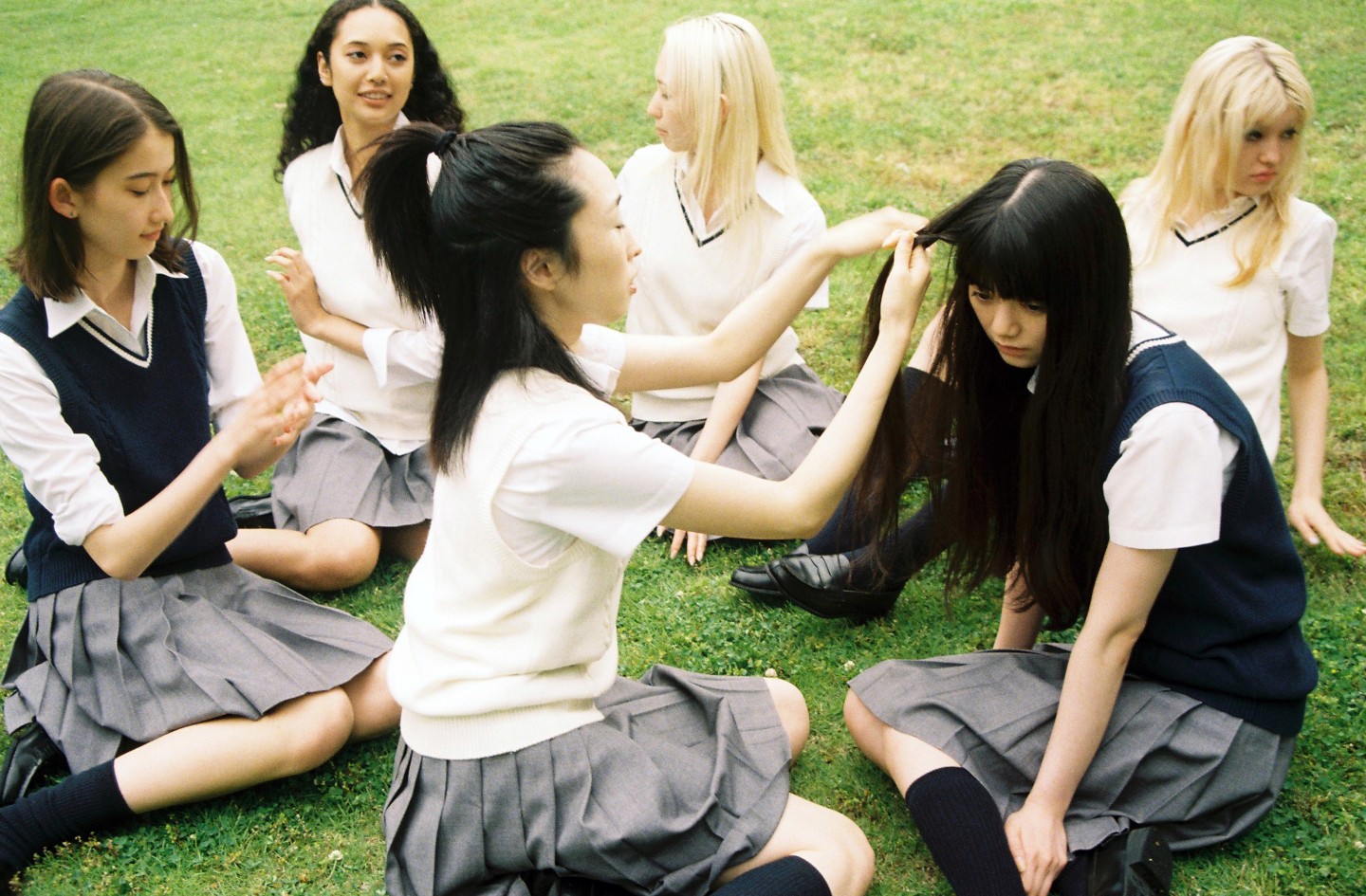 By Petra Collins/Rizzoli Books
Even in the photographs that aren't overtly horrifying in subject matter, you’re able to capture an underlying sense of horror or melancholy amidst this glittery pop star. How do you achieve that?
I was just talking to someone about my older work and about how there is this darkness to it. I think it's that you can only tell the story with as much knowledge as you have. It's not a conscious decision. Because I know that these things are inherently dark, it comes out in the photos.
When I was a teenager, I was not living the life of a teenager and I knew these pains and horrors of the world, so I think that really came through in the photos. That's the same with this book. It’s the knowledge of the photographer or the viewer, and it's seeing people as human, where they obviously contain multitudes. Because I'm not making people into idols; I'm capturing them in the way that they are.