Official Rebrand makes sustainable ravewear for the library and the club
The New York City brand’s recycled garments are good for the Earth and for long-endurance nights of dancing.


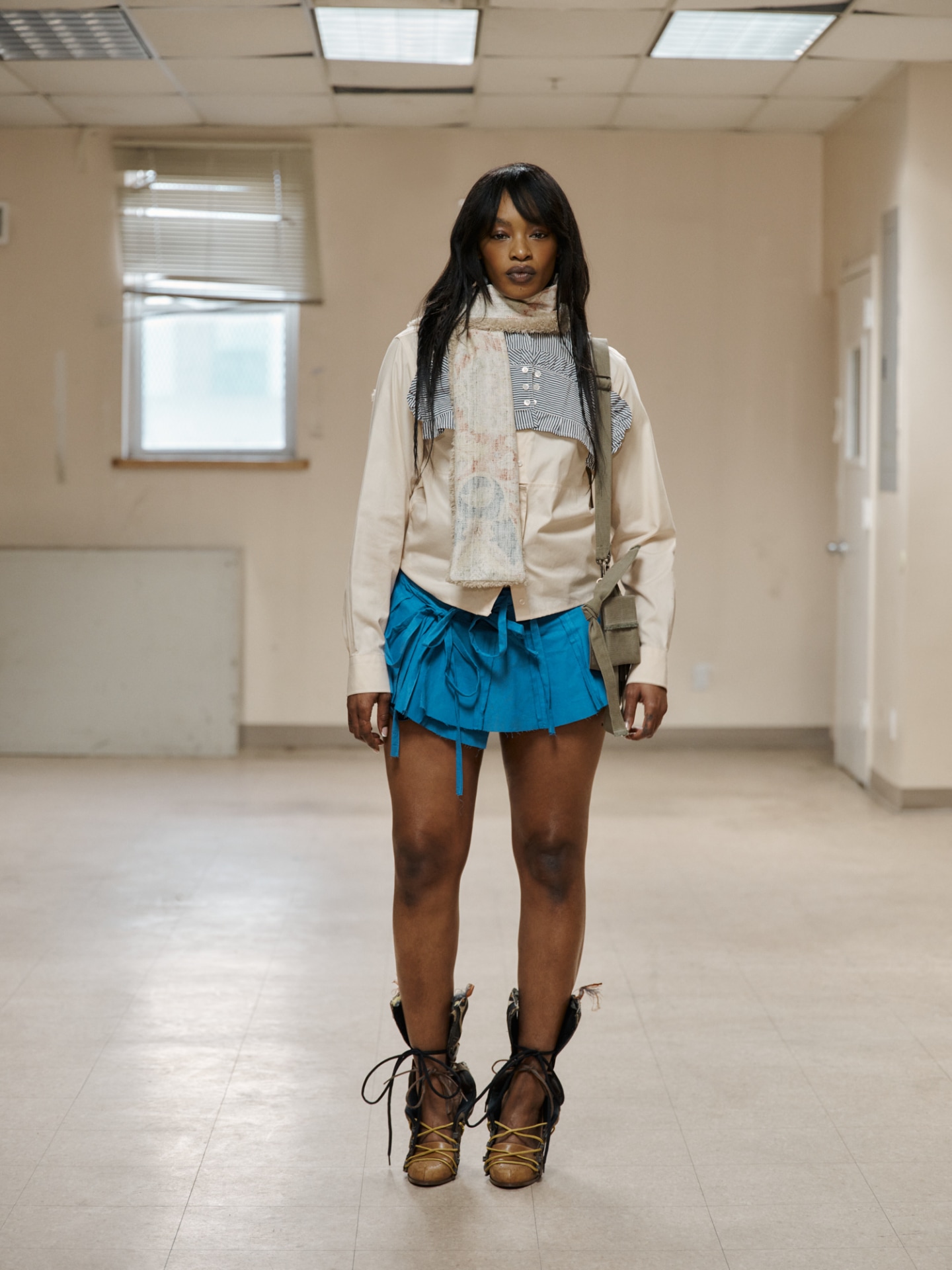 Image by Jaesa Acton
“If it's not working at a rave, it's not really going to work in everyday life,” says MI Leggett, the designer and creative force behind New York City-based fashion label, Official Rebrand, about their philosophy on club wear. “You're going to have a really terrible time if your bag looks really cute, but doesn't actually function very well and everything's getting lost in it.”
Leggett’s garments, upcycled from everything from a weed company’s surplus swag to a country singer’s overproduced merch, prioritize sustainability in many ways. Yes, they are made from recycled materials, but they are also crafted with multiple contexts in mind: “Something you could wear to the library or you could wear to the club and it could be styled seamlessly in between those two,” says Leggett. For example, Official Rebrand’s latest trans-seasonal collection, palimpsest, infuses prep and office aesthetics with the inventive, choose-your-adventure world of nightlife garb. No need to buy multiple looks when you have a few garments to rule them all.
After beginning their foray into nightlife in Berlin, Leggett has since become an integral creative player in New York’s ever-evolving rave scene, making specialized garments for raves like Merge, and working with the Queer Nightlife Community Center (QNCC): a new space in East New York that provides support services and opportunities for queer and trans artists and nightlife workers. Leggett uses the QNCC space to create new work and craft bespoke merch for the Center's parties.
The FADER chatted with Leggett about their approach to rave wear, sustainable fashion, and their ongoing creative relationship with the city’s electronic scene.
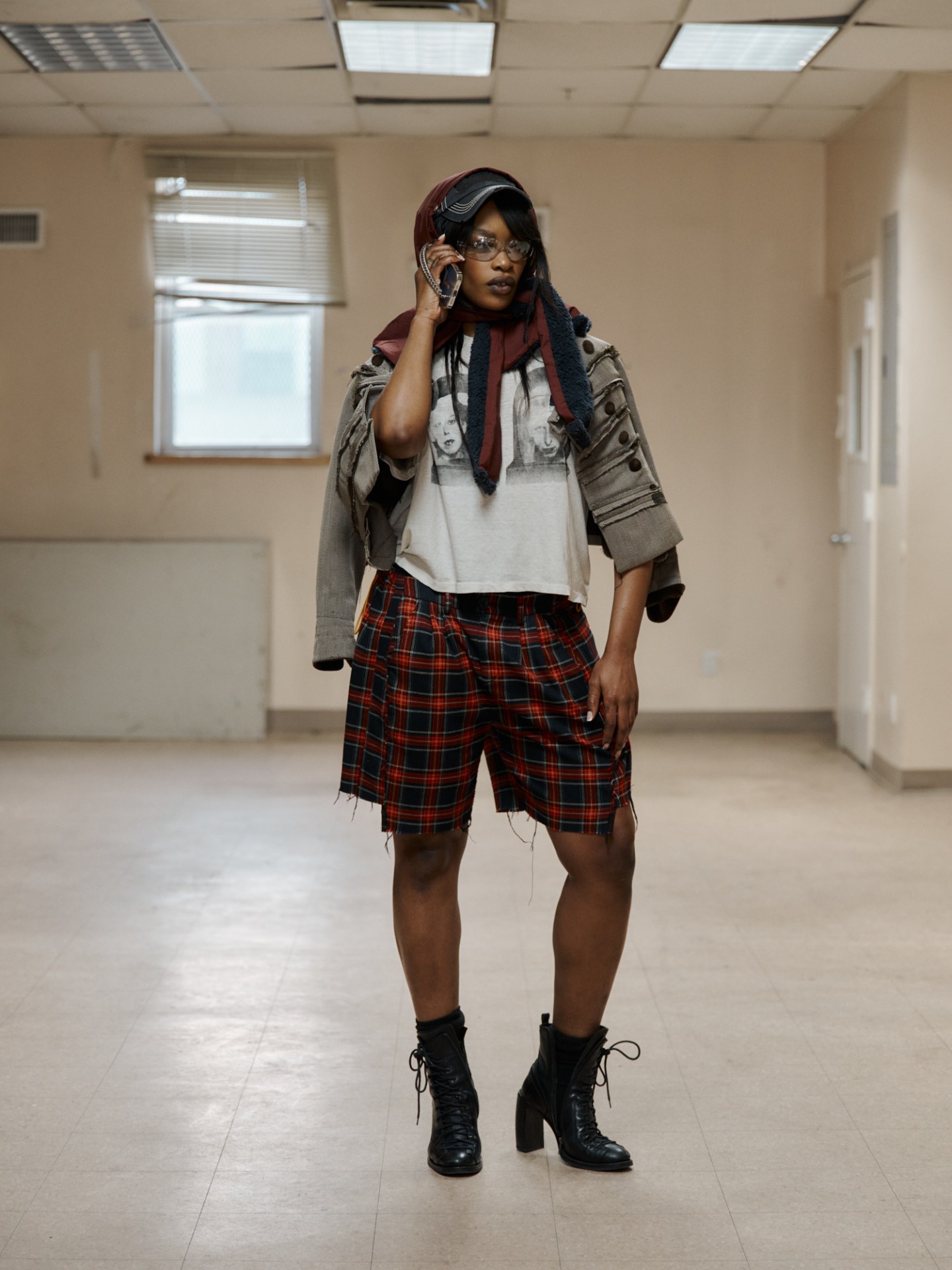 Photo provided by Jaesa Acton
The FADER: Can you tell me about how nightlife has been a part of your creative work?
MI LEGGETT: Nightlife has always been a core inspiration and test kitchen for my work. It was a crucial part of me discovering my queer identity and figuring out who I was, and the kind of communities I wanted to be a part of. Even before the idea of starting a brand came about, I started to make clothes to express myself to wear to these parties. That was a really formative culture to become a part of. Even though there have been times where I've been more or less involved in nightlife, it's always been a through-line.
Berlin was really where I first met queer culture and a queer community. I worked for a designer there who was really integral in the nightlife scene and was a drag queen, performing all the time and DJing. We were doing pop-up shops in toilet stalls.
There's a lot of discussion about what “rave wear” means. What do you think rave wear means in your practice?
The core for me is utility. Utility can also mean how it makes you feel, and the function of that. But I always want things that are practical and can be worn for the long haul. [Rave wear] has to be something that makes you feel comfortable. I think that we're all our best versions of ourselves when we're expressing ourselves and presenting ourselves the way that makes us feel the most like ourselves.
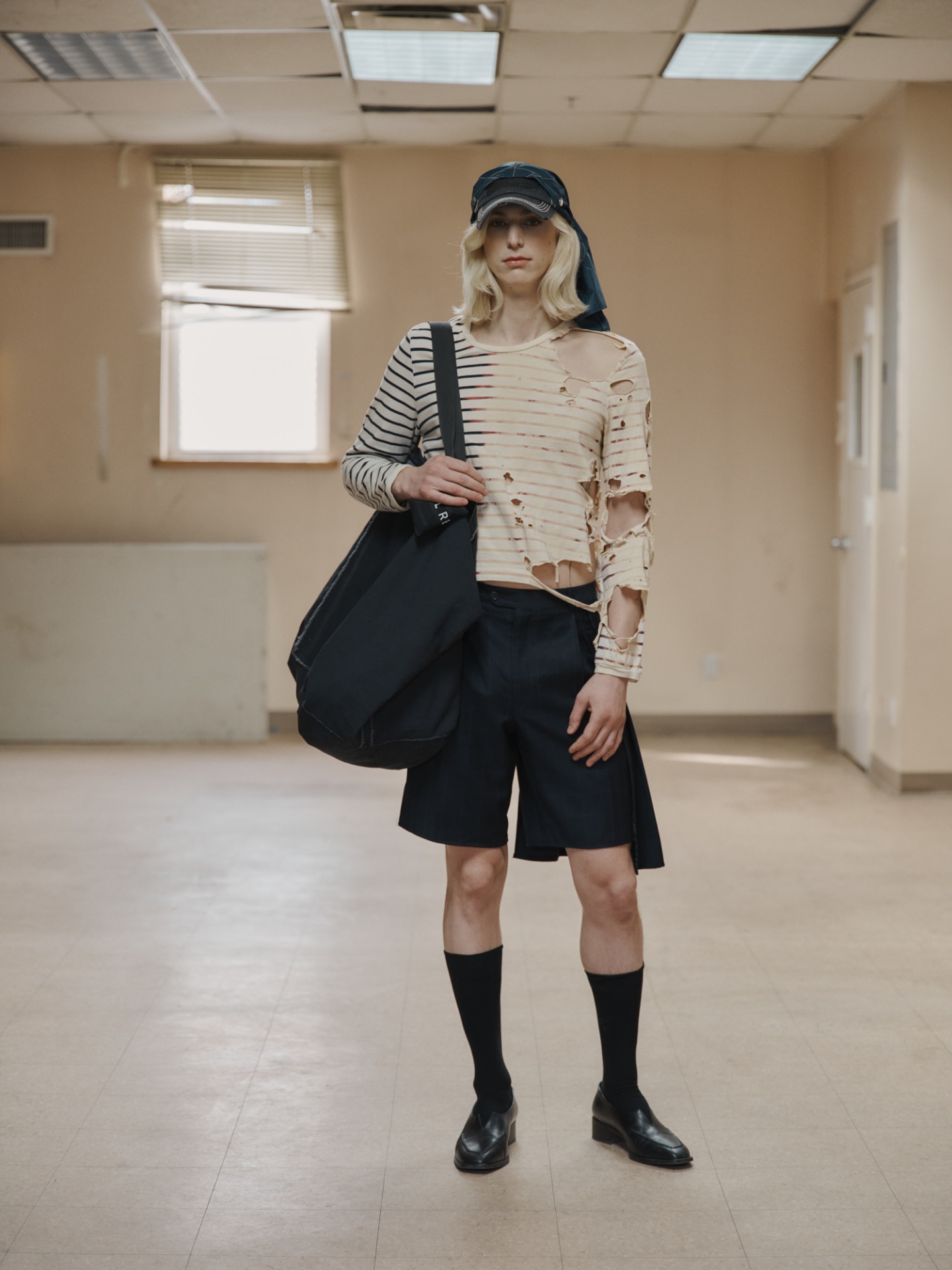 Photo by Jaesa Acton
I think that we’re all our best versions of ourselves when we’re expressing ourselves and presenting ourselves the way that makes us feel the most like ourselves. —MI LEGGETT
I'm curious to hear more about your specific practice. How did you develop the visual language for the brand?
I don’t work heavily with mood boards. The world is my mood board and every single thing I look at inspires me. Right now I'm obsessed with the trash cans all over New York City which have been painted on by different superintendents with the address, so they all have this unique style.
It really depends on the project, but it primarily comes down to what materials have made themselves available to me. After upcycling in New York for the past 9 years or so, people know to send me random discarded materials. Those things largely dictate what I'm currently working on. I like to make pieces that are really versatile and can be appropriate for many different kinds of contexts because that ties back to sustainability as well.
There's so much happening right now in New York City. Is there something about what's going on in New York now that's sparking something within you or exciting you in particular?
I've now lived in Ridgewood [Queens] longer than I've lived anywhere else in my entire life. I'm just feeling these really deep roots that happen not when you spend not just one amazing weekend with people, but years. I've been building with these creative collaborators, people who are all working together to form our own reality and make do with the resources that we have, to spread them as much as we can. The creation of QNCC is really exciting. It’s given me a lot of freedom and trust to present and create. I can really run with my ideas and have a place to immediately let them be seen by the public.
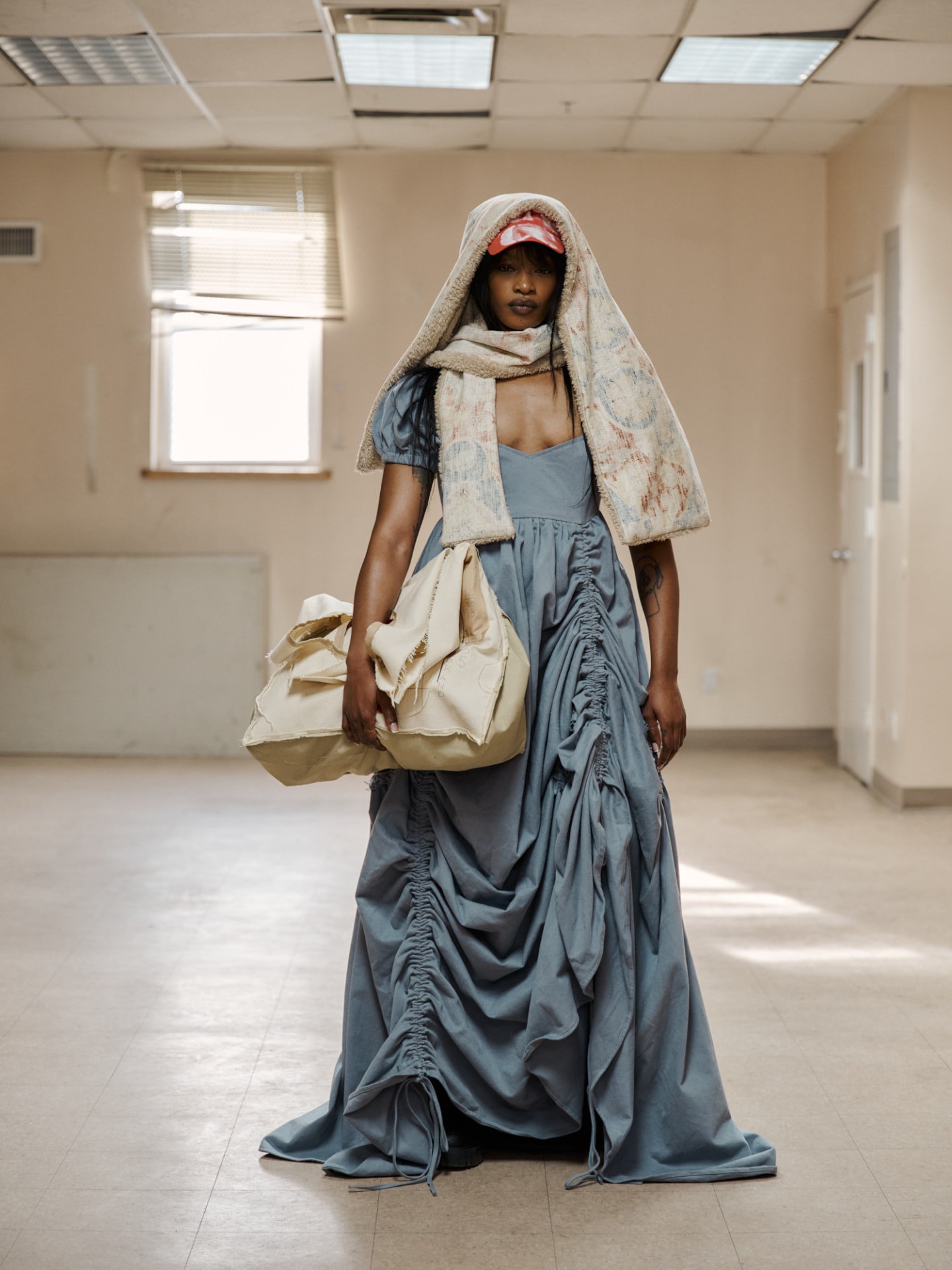 Photo by Jaesa Acton
Tell me more about your partnership with QNCC?
Queer nightlife spaces are often living on the margins and getting evicted. One of the queer nightlife spaces that I worked with in Berlin burned down. It’s an under-resourced and unstable industry to be in. I was really excited about the idea of having some kind of actual structure [for nightlife]. I remember when my art practice was constantly moving around before I had a real place to live. I was moving from sublet to sublet. It was really hard to actually hone a craft.
I was working on a process that really needs to be done outside. QNCC offered to let me do it in their yard. I started going there to work on these chemical dye removals for these shirts that I got from a weed brand where the weed used to be free and they would sell the t-shirts. They're really crazy, terrible colors, so I chemically removed the dye, but I needed to do it outside. That was a huge help.
Right when QNCC first opened, they were like, “well, we're going to need merch.” So I said, “Well, I would love to do it.” I sent them a proposal and they said to run with it. It's been a huge success since then. I restock it at every event. It’s one-of-a-kind upcycled stuff. I did one from excess country music merch from a very famous country music star that overproduced their merch. I hand-screen printed on leather and then screwed it onto the trucker hats over the original embroidery. There are things that I find from raver clothing swaps and then I screen-printed over them. My ultimate goals are to take as much stuff that people don't want and turn it into stuff that people love.