Listen to a new FADER Mix by Serokolo 7
Your primer on Mapanta, the energetic and 180 BPM sound coming out of South Africa.


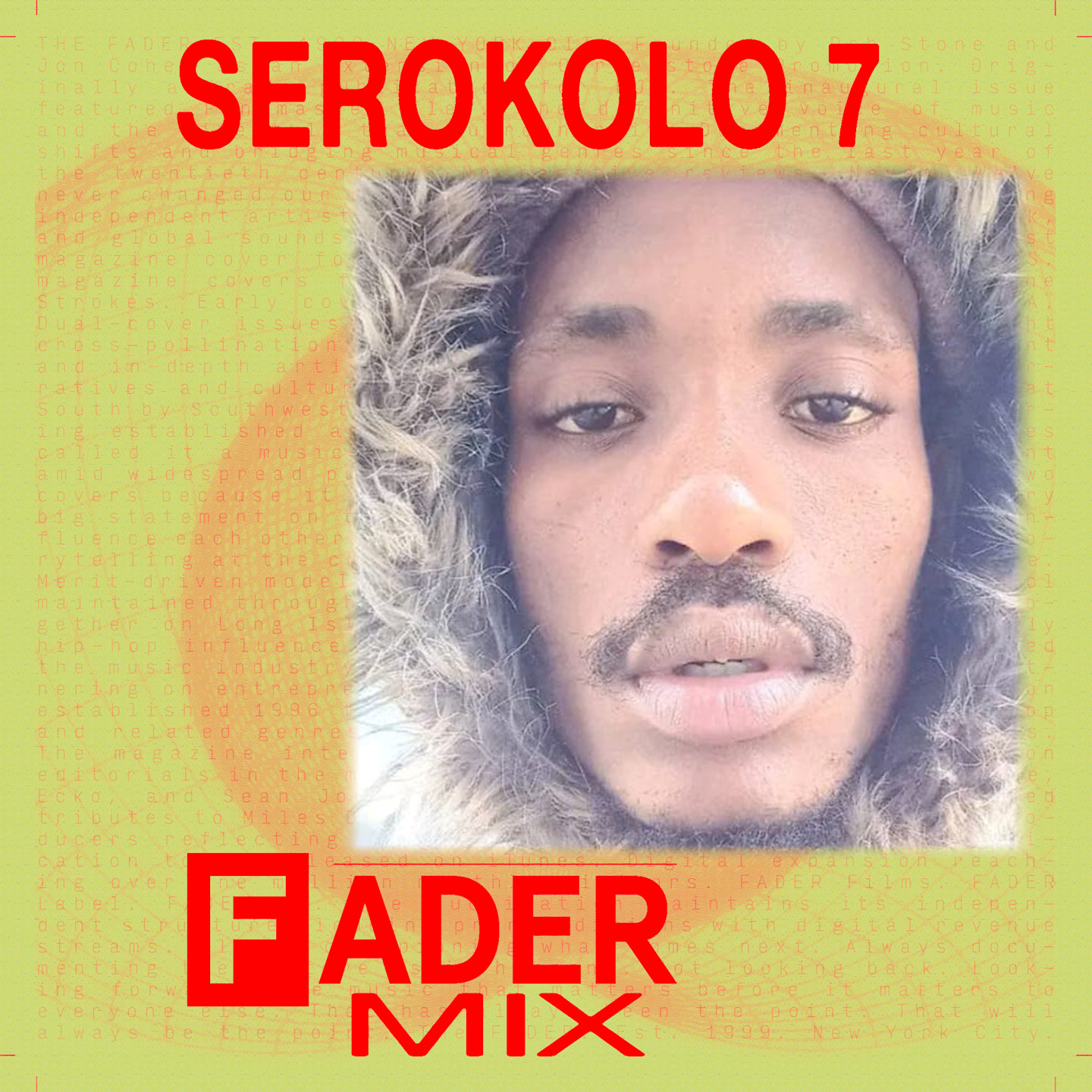 Photo by Serokolo 7
You’ve likely never heard anything like Serokolo 7's music. The South African DJ is one of the foremost figures behind the electronic resurgence of Mapanta, a traditional music and dance from Limpopo, the northernmost province of South Africa and the music of the Bapedi people.
Far before the music was rendered electronically, it was part of communal gatherings, namely weddings. Over time, its hypnotic rhythms and ecstatic energy was translated into FL studio, where local musicians sharing sample and sound packs with one another created a new expressive language. “Mapanta is very fast and energetic, around 180 BPM or more, and more minimal than a lot of other [local] styles like Tsonga music,” Serokolo 7 tells The FADER. “It comes from village life, not clubs, and it’s not influenced by what plays on radio or TV.”
This vibrant sound is now finding a home outside of Limpopo. Kampala-based label Nyege Nyege Tapes — known for introducing African electronic subgenres like Tanzania’s Singeli to the rest of the globe — has released Serokolo 7’s debut album Maramfa Musik Pro. “Mapanta has almost no formal documentation outside Limpopo. Serokolo 7’s tracks carry that village celebration context, while also sounding completely contemporary,” Nyege Nyege Tapes’s Arlen Dilsizian says. Recently, Björk included a track in a DJ set.
Serokolo 7’s FADER Mix is likely the first Mapanta mix made for a Western media outlet. “I thought it would stay in my village and not even spread beyond that,” says Serokolo 7. Now people can experience the real energy and where it comes from.”
Listen to Serokolo 7’s FADER Mix on Soundcloud and Youtube, and check out its tracklist, and read an interview with the DJ and artist below.
Serokolo 7 FADER Mix Tracklist
Serokolo 7, “Maramfa”
Serokolo 7, “Noga”
Serokolo 7, “Bogoshi”
Serokolo 7, “Tsonga”
Serokolo 7, “Thobela”
Serokolo 7, “Senare”
Serokolo 7, “Mosela”
Serokolo 7, “Malopo”
Serokolo 7, “Tsamanyalo”
Serokolo 7, “Strings”
The FADER: How did you start DJing and making music?
SEROKOLO 7: I started music and DJing in high school when we were dancers. Someone told me about Virtual DJ so I wanted a computer. When I got one, I discovered Fruity Loops and taught myself. At first I was producing Barcadi, then later I got deeper into the music played at weddings in my area, which led me towards Mapanta.
What’s the first set you ever played?
I played Barcadi music, mostly my own productions.
How do you define Mapanta music?
Mapanta is traditional music and dance of the Bapedi people from Ga Sekhukhune, Jane Furse. It comes from weddings, especially the night before, where people dance through the early hours. It has now evolved into dance music for the youth, but it still keeps that original function and feeling.
How is Mapanta music different from other styles coming out of South Africa?
It’s made for a specific moment in the community, so it doesn’t really fit into the mainstream music system in South Africa.
Why do you think South Africa is such a special musical hub?
South African music is special because we have many different official languages and cultures. Apartheid only ended not so long ago, so there is still a strong sense of expression and identity coming through music. It’s like an ongoing celebration, and that creates many different sounds.
What music inspires you?
Manyalo music from Limpopo, Shangaan music and Barcadi inspire me a lot. Also hearing older people play Mapanta at weddings when I was younger had a big influence on me.
How has your local music scene shaped your work?
The local music scene is my main connection. I grew up attending weddings and parties, and that’s where this music lives. I realized there was something missing and many possibilities to develop the sound. Over time more people around me started making it too, so it became a shared movement.
What are you excited for the global music community to experience with the first ever Mapanta mix released for an American audience?
Mapanta has been marginalized and mostly confined to Ga Sekhukhune, so it’s exciting that it’s now going straight to the world. For me it’s a big achievement.