


“You become a product and you become a joke.”
Kim Petras is warning me of the dangers of misaligned pop stardom, or what can happen when the general corporate powers that be force you to sideline your artistry for the company line. Petras named her 2023 album Feed The Beast after the monstrous music business she found herself prey to after her Grammy-winning mega-hit with Sam Smith, “Unholy," made her “suddenly successful,” she says with air quotes.
“I thought that it would be like a meta-joke,” she says of the Feed The Beast title and era, which featured many hallmarks of major label pop releases, including a verse from Nicki Minaj (before her MAGA and transphobic turn) and a press tour around “Unholy” that made Petras fleetingly ubiquitous. “I did the full fantasy of what you dream about as a kid when I signed to a label,” she says. Despite the pomp, though, Petras says that it all “felt pointless.” It made her feel less inspired and more disillusioned by her career path than ever before. That was the beginning of the end: her exit from the major-label machine to prioritize emotional expression and earnest storytelling.
Cue Detour, her forthcoming self-released album that finds her working with underground-pop darlings like Margo XS, Frost Children, and Porches, and, for the first time, musically reflecting on her struggles in an often brutal industry, and opening up about her childhood with moving candor on songs like “Brutalist,” a track thick with metaphor that may well be the first time she's ever spoken directly about her trans identity.
On this project she isn’t the bimbo sex bot of Slut Pop or the pop troll of Problematique, but Kim: “A German immigrant who came here at 19 and got signed up by, like, so many people, and was just like, Fuck it, I’m gonna do whatever it takes to get a chance at having a hit,” she says of the new record.
Petras left her former label, Republic Records, sometime in 2026 and is footing the bill of this new chapter. “The consequences are there,” she says vaguely, of her recent label negotiations. But for longtime listeners, fans and skeptics alike, there’s going to be an undeniable thrill in hearing Petras speak so plainly, and at times movingly, about her own ambition, moxie, and pain.
Petras stopped by The FADER for a wide-ranging and honest conversation about her career thus far, reclaiming her narrative, and committing to her art above all. Watch the full interview below and on YouTube, and read the transcript.
The FADER: You’ve been through a few different album cycles, and many different eras in your career, but this obviously feels distinct. What’s standing out to you about this process, with this album, that’s different from the last?
KIM PETRAS: It's very different. [Detour] felt like a secret project. I really got to reinvent myself and re-find why I do this. That’s been really incredible. It’s been a longer journey to it than I wish it would have been. It was frustrating and depressing to sit on an album that you love and be told, “We love it,” and then not get a release date. That was really frustrating. It feels really great to have creative freedom over what I do and to drop an album that I top-to-bottom love, my friends love, and that isn’t catering to any specific thing.
Can you tell me about what the early days of writing this record were like and what was going on in your mind coming off the last record?
It started with a physical thing. I tore a tendon. I couldn’t walk. That stopped me from performing. I canceled a bunch of festivals. Honestly, I had been feeling tired and drained from feeling like a product. I didn’t have much control over what I do on stage or what I say in interviews. I was losing my will to want to go to the studio and make stuff. I wasn't making [music] with friends, it was more industry [people]. I had started out [my career by] finding friends and working with them. Somewhere along the way that kind of got lost and I was missing it so much.
It started [this record] with Margo XS, who’s a really important part of this album. I met her at a party and we just hit it off, talking about music and philosophizing about synth textures and nerdy stuff. After official sessions, I had her over at my house and we started making music and that music felt really exciting.
It wasn’t met with much excitement from everyone on my team at the time. I did this double-dipping thing where I was doing big pop sessions during the day, like '80s nostalgia that felt forced, and then in the evenings I was making music with Margo. I fired my management and found management who were like, “We like this.”
And then the Frost Children came on board. I DM'd them. I felt like I needed a team of producers to do this together with, artists who I respected and loved and who I feel like stand for the same kind of stuff that I stand for. Porches came along, who’s an amazing artist, and nightfeelings. Porches and I made a grunge album. Frost Children and I made an EDM album; Margo and I made a pop album that felt almost anime-esque. We combined all of those into this album, kind of secretly. We presented it to everyone. And then everyone was like, “This is the most cohesive body of work you’ve made, wow …”
“But let’s not release it?”
Yeah. I just couldn’t release it. I was like, “Okay, well let me start with a song.” I then dropped two songs [“Polo” and “Freak It”]. Then it became like, “We don’t want to pay for the mixing and the production.” I was like, “Fine, I’ll pay for it.” [They said,] “We don’t want to make music videos.” [I said,] “Fine, I’ll make the music video.” And then it came to a stop and they wouldn’t let me release anything from it anymore.
I had to go. I’m happy they let me out. It was a sacrifice. I can’t really talk about it, but I’m just so happy that I can drop music. That’s all I want to do and even if I just get to put this album out, that feels like as much of a success to me as having a number one song or a Grammy: that is cool, but I want to put out a cohesive body of work. That’s why I’m doing this.
I thought that if I had a hit that would give me freedom to do whatever I wanted. [I had a hit] and then that didn’t happen. I’m really grateful to my new management team, my friends, and my creative director. I just wanna keep making music with people who are cool.
In the notes to your album you said that you played the game and there “was a price to it.” I’m curious to hear what not playing the game looks like?
It means not going to festivals or into rooms where I wouldn’t go myself, to meetings and types of press that I felt uncomfortable with … [avoiding the] boxes I felt like I had to be put in while being on a major label. “You’re our first trans artist.” That felt icky. It just didn’t feel good, being paraded. I want to be an artist. It just means not doing things that don’t fulfill me, like I just played Berghain and that was amazing.
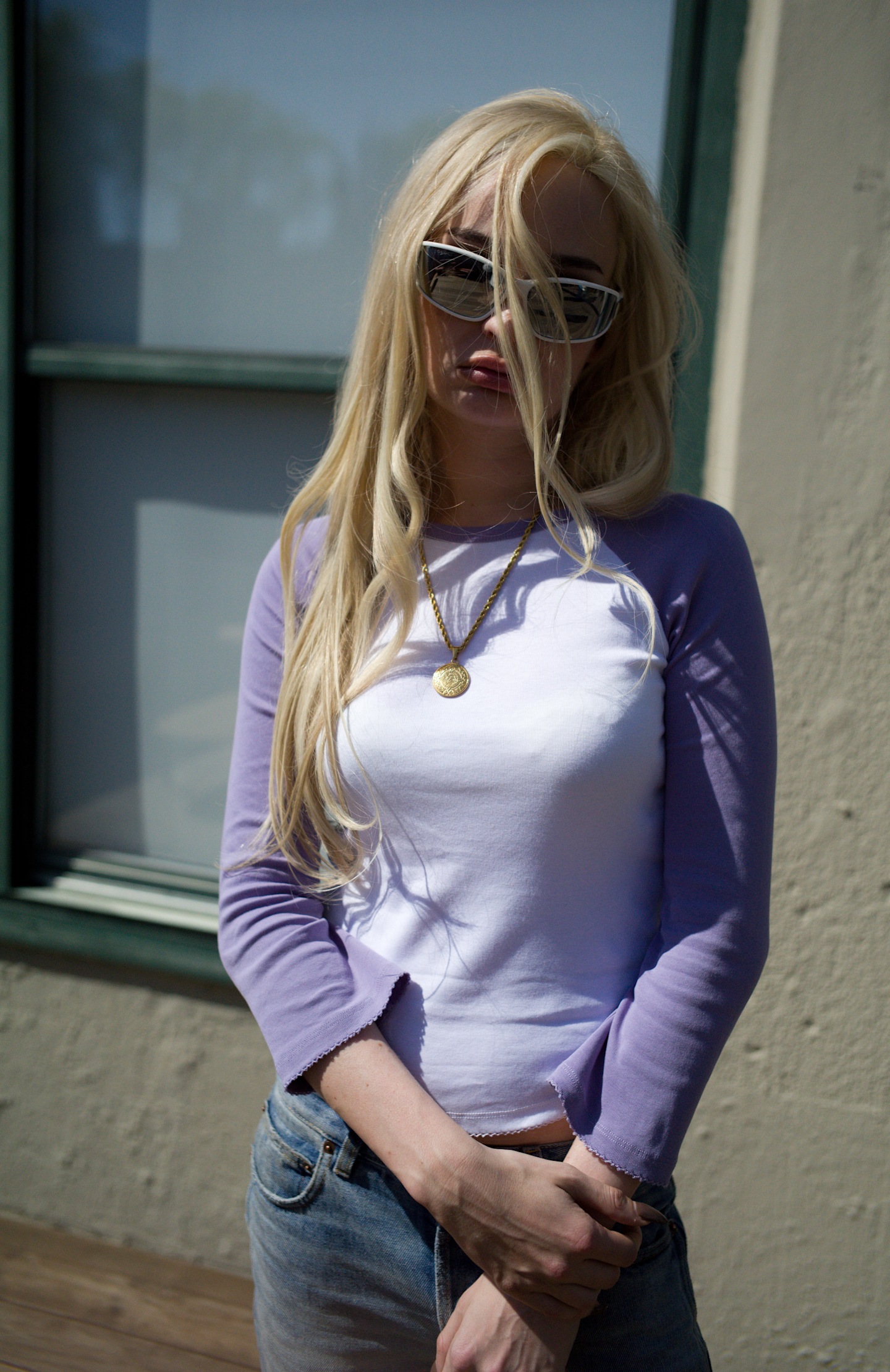
“I want to put out a cohesive body of work. That’s why I’m doing this.”
What was that like?
It’s always been like a goal of mine secretly. It took me so long to do it. I love DJing with my friends. I love going to parties where it’s not just taking pictures and socializing. This album is more about that for me.
[Not playing the game means] not having to answer to a committee to get a release date and wait for however long they decide, to keep making songs until there’s one song that could be a big song, and then your album gets greenlit because [of that]. The album should be a good album. I don’t think it needs [a hit], really. The landscape has fully changed what a hit can look like.
[This album] is going back to my roots, releasing things unconventionally, week by week, month by month. [Releasing] projects, concept EPs, albums … I never called them albums or EPs [early in my career] because then it counts under a contract. Then there’s a real pressure on it and people’s eyes are on it. Then it’s measured if you’re worthy to continue investing in, or it’s going to be a limbo situation, which I had seen before in other artists. So I was like, “I’m not gonna sign to major labels or anything like that before I have real traction and a real fan base that likes my stuff. Then I’ll feel brave enough to do it.” But in my case, [later in my career] it was just like, “Let’s make you into something different,” you know?
That defeated the purpose of the fan base that I built. I thought that it would be like a meta-joke if I called my album Feed the Beast and work with all the biggest producers who I’ve been a big fan of my entire life. I am proud that I got to work with them, but then there were political things like, “This [producer] needs to have this many songs on this,” [came up]. I thought that if I named it [Feed the Beast ] and I made it the aesthetic of the album, it would be kind of like a joke.
But how can it be a joke when you’re doing it day in and day out?
No, totally. It didn’t really work.
Didn’t work creatively? Commercially?
Creatively, fully. And commercially for them too. That’s cool, too, you know? I got the last Nicki [Minaj] feature that’s acceptable at this point. [Laughs]. I got to do a David Guetta collab and David Guetta’s a GOAT.
I did the full fantasy of what you dream about as a kid like when I signed to a label. So I’m grateful, and I'm grateful they let me out. It felt really pointless and not the same as this [album], which has a purpose to connect with people. This is a real try for me to let people know me, which is really rare because I love hiding behind a concept. I love escapist pop. The bridges on this album are a multidimensional view to the full picture [of me]. [It’s more] than me playing this character that’s super horny, or this person who kills people. This is combining all of those into a person.
I felt that throughout the entire record, especially on "Brutalist." Can you share the thoughts and feelings that were going through your mind as you were writing it?
It’s the story of my dad and I driving around in Germany to get my hormone therapy when I was a kid. He used to show me buildings along the way and teach me about architecture. There was this particular brutalist post office that we were obsessed with. It was something we could bond over. We came back to the city every few months or so to get psychological assessments of how [the treatment is] going. I’m from a really small town so we used to have to drive to a big city, which in that case was Hamburg in Germany. [One day we noticed] they knocked [the post office] down and built an apartment building that was a classic modern apartment building. We were like, “Ugh, they ruined the city,” you know?
In recent years, there’s been so much talk about … honestly from the beginning of my transition when I talked about [my transition in the German media]. I was 12 talking about it, which I kind of regret because privacy was really blurred, [but] I was really unashamed of talking about it because I was a kid and I was like, “This is the way it is.” Now that I’m in America, there’s so much shame around sex, sexual education is such a taboo, and it’s such a weird climate right now especially about trans kids in particular. They’re the enemy right now. In this political climate I’m happy I can stand for [the idea that] trans kids can transition and then be a grown up and happy and make [those] choices. I made the right choices that I’m proud of to this day.
But [at the same time] I have people saying I ruined my body and I ruined my life. They don’t know me at all. They don’t know my history, that I went to so many psychologists and so many doctors and that it was a real thing that had an assessment and [they gave me] an answer [about] why I got to [get hormone treatment]. It saved my life and then there’s people who are like, “This saved your life, but you ruined everything,”
I felt like my dad and I were guilty [of that with the apartment]. There’s people living in this modern apartment building now probably like, “We love it here,” and we’re like, “Nah, it’s basic and y’all ruined it.” I thought it was interesting to compare the two. What does it mean if something’s ruined but other people love it and it’s subjective. People are saying that you fucked it all up. That relates so much, too, to [how I’m] getting away from the pop formula.

“I’m happy I can stand for [the idea that] trans kids can transition and then be a grown up and happy. I made the right choices that I’m proud of to this day.”
That’s what came to my mind too. There’s this theme throughout the album of wanting this thing and wondering, “Did I ruin it all?”
Totally! That feeling is across the whole thing. It’s the image of diving off the cliff. Need for Speed is really the start visually of this because it just felt like I wanted to throw [my pop career] away, because it didn’t feel good anymore. I was like, “Maybe I’ll just move to the middle of nowhere and do drugs and that’s all I’m gonna do. And maybe I’m fine with that and maybe I wasn’t meant for this at all.” That feeling led me to be okay with any outcome. If I make something that storytelling-wise I love, that I want to listen to from front to back, then whatever it does is awesome, you know?
Pop artists in recent years have had something to do with [my mindset changing]. I obviously collaborated with Charli and seeing what she did when she just stopped caring was amazing. She started doing her own thing. It was super inspiring to see.
[The idea of perfect pop has] changed so much. I used to care so much about the perfect vocal and doing 500 takes of something until it was perfect. Vocal resting for like three days until I could get like this ad-lib. And then someone comes into the studio and tells you your “voice isn’t at 100 today. Let’s book another day in a month.” And then you wait a month to finish this song. And sometimes [you’re] being fucking yelled at if you can’t like hit a note in the first three takes, which is so trash and makes you feel so bad.
In this scenario it was me, Margo [XS], [Frost Children] Lulu and Angel, [Porches] Aaron [Maine] and all these wonderful people who have this love for storytelling and aesthetics. They have such a specific world of their own, and a culture of their own that they’re in the process of building. It felt so much more worth it to be in a collective of likeminded people and all collaborate in a true way.
[On this album,] sometimes [we picked] the not perfect vocal because it’s more emotional. Or not perfectly timing it because the timing felt cool or rushed, or mispronouncing a bunch of stuff felt really important, like a storytelling device. That’s what I’m most passionate about in pop: the storytelling of it all.
I definitely have a story to tell in pop because I’m this German immigrant who came here at 19 and got signed up by so many people, and was just like, “Fuck it, I’m gonna do whatever it takes to like get a chance at having a hit.” And then I had a hit. I love Sam and I love the song [“Unholy”], but I hate that now all of a sudden everyone thinks I’m successful and before that I was apparently not. Even though I was selling out shows. I liked that a lot more. Even if it was smaller venues, I liked it a lot more to just sing to my fans and actually make a safe space. So I was like, “Fuck it.” It’s been hard to do that and the consequences are there and I can’t really talk about them.
You got sponsors like Oatly and MISTR to fund your videos. Is that what making it work as an indie pop artist looks like now?
I’m really grateful [for the sponsors] because that was the only reason [I could do it]. I do actually like all the products. But [having the sponsors] made so much sense because me and my friends were honestly so drunk and up until seven in the morning one night and coming up with this concept of how to tell this story without writing it out. I feel like I did in a really fun way that basically sums up everything. [My team and I are] like, “Okay we’re gonna get out of this and release this album because we all really believe in it at kind of any cost.”
It doesn’t have a marketing budget but it’s amazing so I’m making the marketing budget happen by partnering up with people and going to things and putting the money back into it. I’ve gone broke on tours before just because I wanted the tour to look dope, because I care more about the creative. That’s just what I’m doing now too.
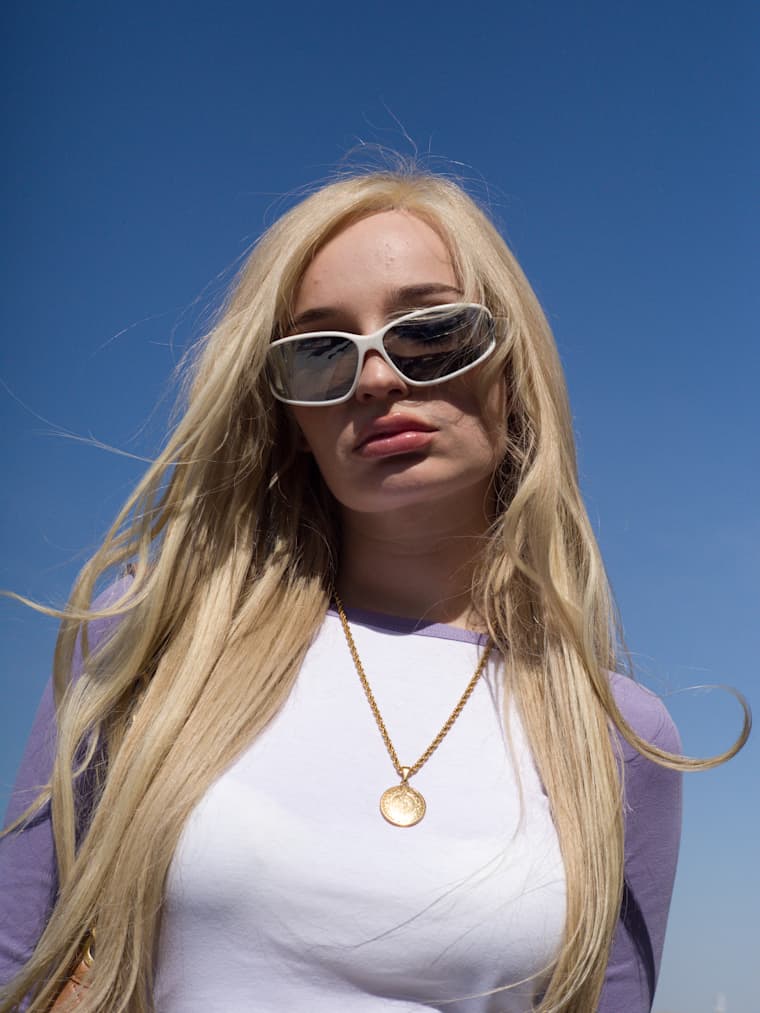
“I was like, ’Maybe I’ll just move to the middle of nowhere and do drugs and that’s all I’m gonna do ... maybe I wasn’t meant for this at all.’ That feeling led me to be okay with any outcome. ”

Part of me feels like you’re learning the lesson that so many of your peers in pop have, which is when you start doing what you love, everything falls into place. I’m curious from your perspective of someone who’s been through this label system: why doesn’t the industry seem to see that as the best way forward as well?
If you work with the wrong people who don’t care about the artist and the artistry first, it becomes about money. You become a product and you become a joke in many ways. That’s what it felt like to me. There are people who surround themselves with teams who truly do let you be your greatest as an artist and don’t try to sway you into being less of an artist because they think it’s going to sell better.
I learned my lesson in people, in friends, in producers … Do they care about themselves or do they care about this project? [I learned it] in songwriters: do they care about the song being great or do they care about having a percentage on this song? You really gotta watch out and be able to read people.
I honestly would have done anything for a chance to be a pop star. I think that’s endearing and I think that many kids that are talented feel like that. Walking that line and coming out of it as someone who’s admirable, whose actions are cool, is so important to me. I don’t want to feed into that and I don’t want to become a part of that and I don’t want to …
Feed the beast?
Totally! Or let other stuff come in the way of art. It’s about fighting off anyone who wants to get in the way of art and pervert it in a way, and make it not pure because like, “Oh, if we change this, then more people will understand it, because I think that people are stupid and that they don’t know this word or that they can’t figure out this melody. That’s why we have to repeat it 50 times.” It’s not for the purpose of repeating it because that’s for the emotion of the song. I’m not saying repetition is necessarily bad or stupid. I love repetition. But when it’s like, “I think people are stupid and I want Suzy in, I don’t fucking know, Kentucky to understand what this is.” It’s like, “Okay, so you think she’s stupid?” That’s just so disrespectful to people and to art and people’s interest in art.
I think that my fans are really smart. Ultimately it’s about trying to connect with your fans and trying to not feel alone. I started out that way and I feel like I’m back on track of telling my story and connecting with people. It feels awesome, but I also feel like I just woke up from being brainwashed a little bit. It feels awesome, but honestly waiting on a record for a year was not fun, probably the most depressing experience ever and it changed me for real. It sucked but here we are.
