Matthew Schnipper still lives for the thrill of new music
A chat with former FADER editor-in-chief about his memoir Rise Above and how the music of Bill Callahan and Henry Rollins helped him move past tragedy.


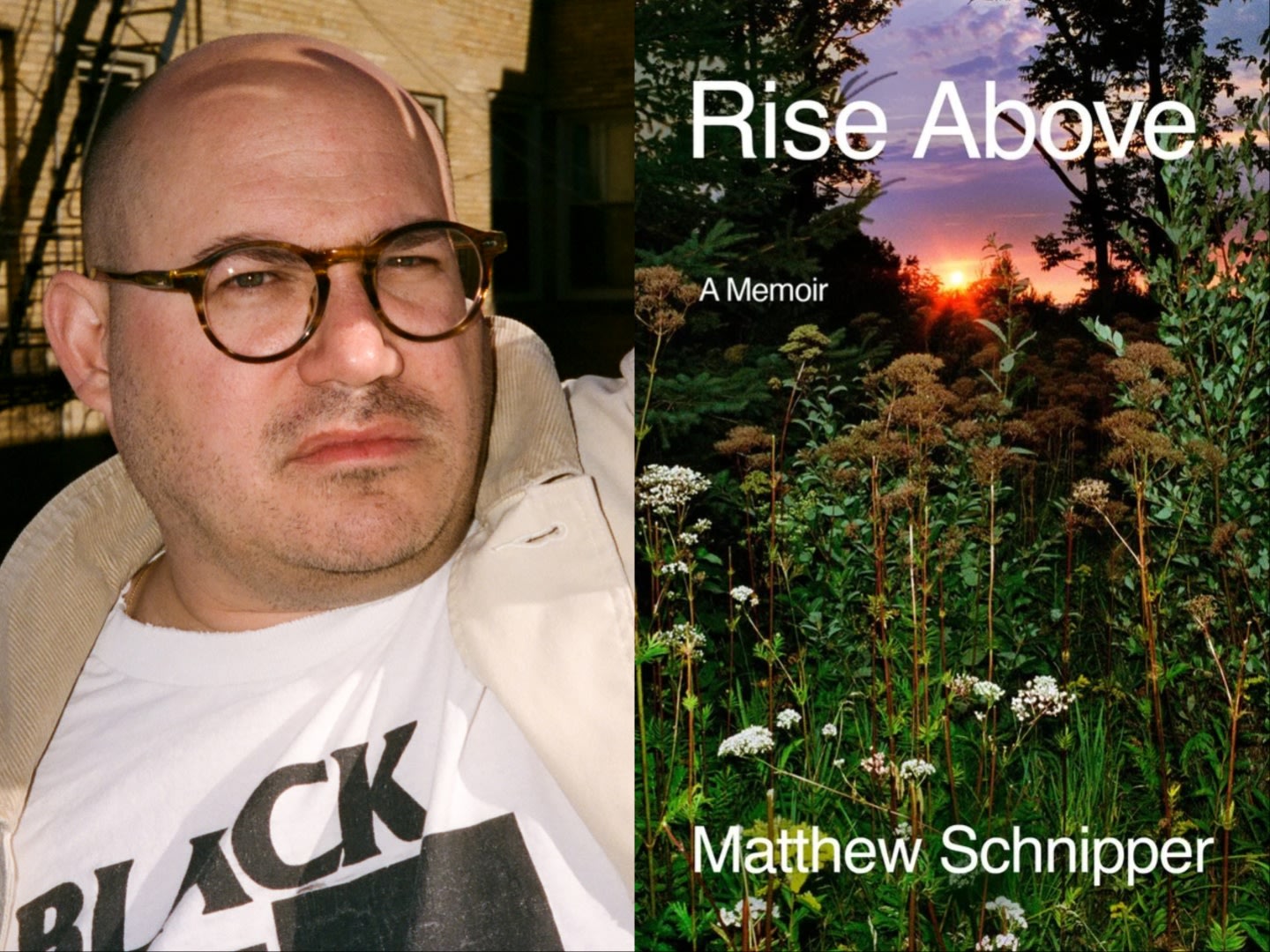 photo credit Daniel Arnold/ Random House
Music has been the constant through Matthew Schnipper’s life. As a child getting diagnosed with ulcerative colitis, the angst-filled punk of Black Flag defined his adolescence. And after the sudden 2021 death of Schnipper's son, Renzo Rollins Schnipper, everyone from Bill Callahan, Sonic Youth, and Frank Ocean became anchors for his grief.
In Rise Above, the open-hearted new memoir from the New York City-based writer, editor, and former FADER editor-in-chief, processing the trauma of the unthinkable was the impetus for documenting his path forward. But alongside his evolving grief, which he breaks open with grace, humility, and a generous amount of humor, is a moving argument around the salvational power of music: how songs and albums change and accompany us as humans trying to make sense of a cruel and unrelenting world.
“Most people who come to this book are going to come to this book through grief. They're not going to know who Bill Callahan is. That's okay," he says. Schnipper's the first to acknowledge the sometimes ego-driven folly of writing about music. But at 43-years-old, he's still moved by the ways it can also connect us. "If somebody is reading this and they have something that affected them in the same way, send it to me so I can hear it."
Below, read a conversation with Schnipper about writing Rise Above, his enduring love of music, and the infinite possibility of music discovery today.
The FADER: How is promoting the book going? How do you feel about it now that it’s out?
Matthew Schnipper: I've never written a book before. And I didn't understand exactly why I was undertaking the process of doing this, other than someone said like, "Do you want to do it?" And I said, "Okay." But I really do feel like my job's done. I think writing this book helped me heal a lot. It helped me have a little bit of fun. It helped me have a place to play around and take this kind of unimaginable, tragic event and turn it into something else. Because I've thought so much about the book, anywhere from emails about the cover and logistics of a book as well as the art of it, now that it's done, I’m actually going back and finding myself able to think more about my son. In the last couple weeks as it was approaching, I've been able to spend more time revisiting his life and those memories, and I feel like that’s a blessing because that used to be too painful for me to do.
It sounds like writing the book gave you the intended effect of that eye therapy you wrote about trying.
EMDR. I think that’s right.
How long, by the way, were you doing that? Did it end up being helpful?
That EMDR therapy specifically, I did for a couple months. I don't understand if it is total nonsense, to be honest. It was almost like, by saying, “I’m going to do this and it's going to work,” that it worked.
The book is about what it's like living through the unthinkable, but it's also an exploration of how your love of music, certain songs, artists, and albums, helped you move through grief. You bring music in to retroactively find meaning in memories with your son, and to explain habits that you have or the way you are. Did you learn anything new about yourself and your relationship to music?
A lot of people, I think, when they start getting older, stop paying attention to music. They kind of freeze where they were when they were young, and that’s kind of the end. I think for me, I found that my desire to be a part of a musical universe [...] I wanted to be in it still. I was going to discover solo piano records or I was going to discover what the santur was and read about that. I still needed to be learning about music all the time, even if it kind of was the most soft version of that.
There's a very small chapter at the end of the book about this Sonic Youth song. It's track 17 on Dirty. I wrote about it because it’s a song about grief, and I found that it became very personal to me. Originally, I had written about how that song was my Spotify Wrapped No. 1 song of the year. And my friend who read the book was like, “I don't think you can write about Spotify Wrapped in the last chapter.” So I changed the beginning of that last chapter [to be], “There’s just one more song I need to tell you about.” And the feeling of that is like, I have to share this with you. This is so powerful, that feeling has been so consistent for me throughout my life. I think what I learned was that it's not just a childhood thing, it's not just from the era when I was working specifically in music. This is so vital to me, I need to tell people about it, and I want them to experience it so bad that I literally forced it into the last chapter of my book.
What are your listening habits now? What are you listening to and how often?
I'm pretty much always listening to music. I like to put a record on and let it go cause otherwise I’ll look at my phone and try to put on a new song every five seconds, which is not a good way to pay attention to your family. Even on the way here in a taxi, I was like, “Oh, here’s a good 12-minute opportunity to listen to the new DJ Plead album.” I would say hearing a new song is still the most thrilling thing.
Bill Callahan, who you write a lot about in this book and whose music really helped you while you were grieving, narrates the audio version of this book. What was it like working with him? Did he offer any wisdom?
When Random House was like, “Okay, what about an audiobook?,” one day I just blurted out, “What if Bill Callahan did it?” I emailed him, and it was so funny. He was like, “Okay.” [Laughs] I was like, “Do you want to, you know, read it?” He's like, “I mean, yeah, I guess I should read it.” He just seemed like the most game person.
Around this time, it came out that actually he had had colon cancer. And he sort of talked about it actually in an interview that he's like, “I just am going to try kind of anything in his life.” Maybe this was part of that, maybe it wasn't. But it really seemed like a gift that he was able to give. Listening to him speak it is so surreal. Of the entire experience, I feel very blessed I got to write a book, but it still fucking sucks to have to write a book about, you know, your son dying suddenly at 22 months. The one part that has felt like a real, real blessing has been Bill being able to do this, and him doing it with enthusiasm.
Henry Rollins, whom your son is named after, is the second kind of looming figure in the book. Did you ever get connected with him? In the book you write about your journey trying to reach him after Renzo died.
I interviewed Henry Rollins for Pitchfork in 2019. When Renzo died, I sent him a note, you know, and said, “Hey, would you want to talk to me?” He was really gracious, but he said — I'll [probably] misquote him — but he said something like, “I know that I’m a public person, but I am very private,” and he said he was going to kind of respectfully decline. That’s fine. It’s not his job to do that. He didn't have anything to do with me choosing to name Renzo after him, Renzo Rollins Schnipper. I’m scared of what he’ll think about this book. Like, I’m really, really scared. I hope he reads it and I hope he likes it. I hope if he reads it and doesn’t like it, he doesn’t tell me, though. I don’t want to know. I’ll be so — I’d be really sad if he’s mad at me.
Did you send him a copy?
No. [Laughs.] I'm scared to do that. I mean, towards the end of the book, I kind of looked at some of his life, and I said, “Oh, wait a second. Maybe this was a bad idea to have this person as a hero.” And I don't want someone to feel bad about that. But I realized that the person who maybe is the hero is the person that he is now, not the person that he was when he was 20.
A sort of B plot of the book is the music journalism industry collapsing in the background as you’re navigating your grief. As a former editor for several music publications (including this one) what are your thoughts on the state of music journalism right now? Are you sad, happy to be out of it?
I'm sad to be out of it. No question. I mean, I said to you like, I loved when that was my life. For different reasons, it became not kind of feasible over time. But I still write a newsletter, which I've been doing for years. I still listen to music all the time, and I still feel lucky to be able to talk to artists whenever I’m able to.
I interviewed Cameron Winter like a year and a half ago for SSENSE. This was after the album had come out, but before it completely exploded. He was really late. He did not want to talk to me. [laughs] He felt like he was sort of putting a performance on. We did a really brief interview. And then he performed at a church that night, and I talked to the woman who was the pastor at the church, and she gave me the best interview. And then I was like, “This can’t be done. I have to talk to him on the phone again the next day.” So he called me from a windy sidewalk, and he didn't want to talk to me that much that next day. But it seemed like he had some begrudging level of respect for me that I was, like, pushing him. I felt lucky I had been able to have this time with this person. I think it wasn’t an easy conversation that I had with him, but it was real. I think when you’re interested in artists in music, when people are first in their part of their career, when it’s so exciting and it isn’t defined, you talk to the realest version of them.
As someone who is still so passionate about finding new music and excited to do the digging, what tips can you give to people about discovering new music when the ongoing narrative is that streaming services and Big Tech have stripped the fun out of it?
I always think, no matter what, talking to your friends is the best way to find out about music. There's nothing that makes me feel better than being like, “Listen to this,” and then they like it, you know? One of the cool things about the internet is that if you like a piece of music you can find out everyone who participated in that, and then you can listen to everything they have ever made. You can read the thank-you list on their album and listen to everything that artist made. You can go to Bandcamp and listen to a label's entire discography. Discovery is sort of infinite now in so many different ways. Every label that I follow on Bandcamp is like a little nugget of possibility. I think if you embrace it — you can’t chase them all, but there's enough you can discover something new 10 times a day.