Lollapalooza 2026 after dark had an electronic heart
From Six Sex to aespa to Ninajirachi, Lolla 2026 showed us where the American pop consumer is headed next: whatever dancefloor has the brightest lights and the biggest sounds.


 Six Sex performs at her Official Lollapalooza Aftershow on July 31, 2026, at Outset Chicago.
Vivian Medithi / The FADER
Six Sex performs at her Official Lollapalooza Aftershow on July 31, 2026, at Outset Chicago.
Vivian Medithi / The FADER
The sun was sinking behind the Chicago skyline as I waited for Snow Strippers to come out at Lollapalooza. After a sweltering Thursday that I swore gave me heatstroke after just five minutes of waiting for Ninajirachi, the climate at Grant Park was decidedly more friendly on Friday. But I don’t want to talk to you about the weather – I want to talk to you about the light.
Snow Strippers’s combination of haze and vividly saturated lighting felt like hotboxing a James Turrell as Tati spun onstage, her hair whipping in wild arcs. Their music is, of course, effortlessly cool, perfectly primed for a festival crowd ready to dance; lately, it feels like electropop has been swarmed by their offspring. On stage in Chicago, the duo’s trance-meets-witch-house flair felt supercharged among the darkening trees, leaves ringed in magenta and acid green glow as the dusk settled in.

 Snow Strippers backstage before their set at Lollapalooza 2026.
Vivian Medithi / The FADER
Snow Strippers backstage before their set at Lollapalooza 2026.
Vivian Medithi / The FADER
I was thinking about that technicolor glow hours later at Six Sex’s official Lollapalooza aftershow, posted up under the pink lights at Outset, a 750-cap venue four miles northwest of the festival grounds. The Argentinian perreo-rave princess toured the U.S. this spring behind her 2025 X-Sex EP, but she had yet to play her 2026 debut album ULTRA stateside. Her videos have always been totally polished, but this era has seen Six Sex and her collaborators dipping further into ero-guro and giallo aesthetics, upping the terror of her “Ultra Terrorific Fantasy.” On stage, her live show was bathed in unbelievable blues, reds, greens, and pinks. Sometimes it felt like my cone receptors were overloading, but guided by the IMAX-size bombast of songs like “Tócame,” the visual cortex overstimulation was a feature, not a bug.
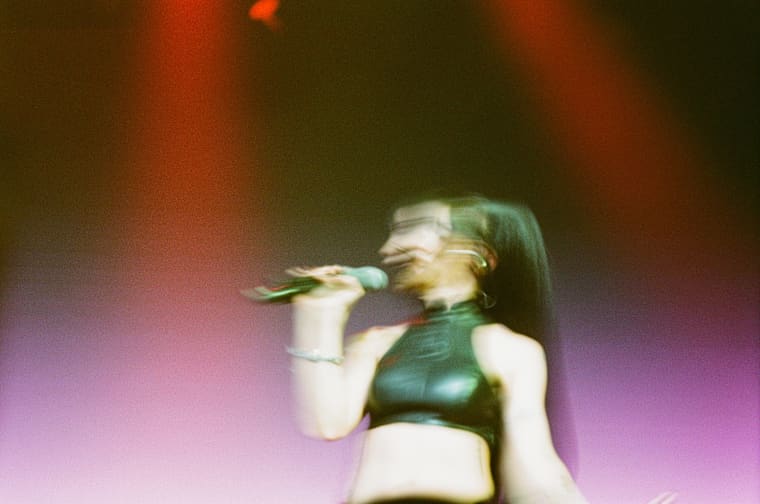 Six Sex.
Vivian Medithi / The FADER
Six Sex.
Vivian Medithi / The FADER
 Vivian Medithi / The FADER
With more than 100,000 attendees each day, Lollapalooza is one of the largest festivals in the U.S. Its centralized location makes it something of a premiere destination for children of the Midwest, and as you might imagine given its scale, the headlining lineup tends to favor the poppier and more established. But so-called “flyover country” is where icons are made: if you want to be a national star, you need millions of listeners from across the states, and Lollapalooza is one of the biggest stages to reach new fans. So consider the weekend a barometer of where the American pop consumer is headed: to whatever dancefloor has the brightest lights and the biggest sounds. You could see it in the air during Lorde’s set, hovering between the laser streams, and even during Tate McRae’s closing performance, sparked off by a wave of enormous fireworks. In an era of overstimulation, you better shine bright.
 Vivian Medithi / The FADER
 Vivian Medithi / The FADER
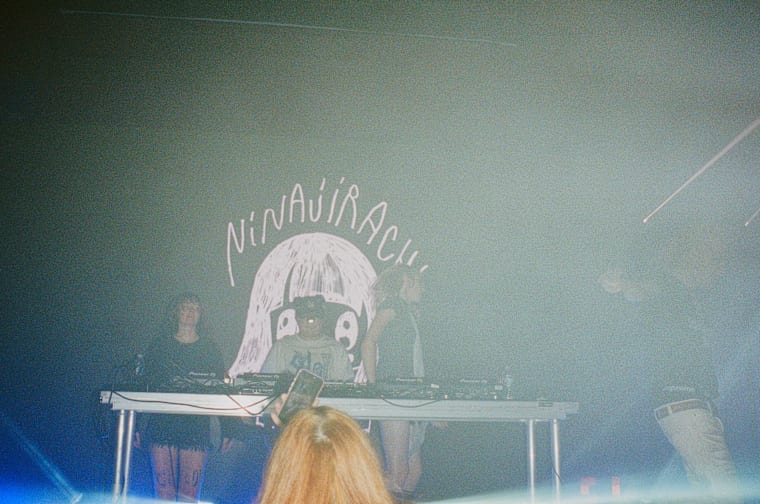
Overstimulation was the name of the game at Frostninaumrupalooza Saturday night as well, Ninajirachi joined by Frost Children and Umru at the former Church of the Epiphany. Built in 1885 out of irregular red sandstone, the church hosted the 1969 funeral for Fred Hampton, a key member of the Black Panthers, before eventually closing in 2011. The landmarked building was then revived as an entertainment venue, marking the first time I’ve taken a shot of tequila in the same room as a church organ. Earlier that afternoon, Lulu and Angel Prost had told me they’d made 16 new edits for their set with Nina, and when I found my way onto the dancefloor, an arms-length from the barricade, I was totally shock-and-awed. The lasers were strobing, the strobes were strafing; the hardstyle 808s seemed ready to cave in the floor and send us plummeting into the catacombs and greenroom. Between the fog machines and blindingly bright lights, I could barely see the Frosts, Nina, or Umru (wearing his signature headlamp, of course) – but I could tell Nina was grinning even harder than I was. When we spilled out into the night beneath the gibbous moon, my tanktop was totally sweatlogged.
 Vivian Medithi / The FADER
 Vivian Medithi / The FADER
The brief blast of hardstyle also took me back to horsegiirL’s set at the festival hours earlier, joined onstage by two contortionist snails. At one point, she’d hit a ridiculous jumpstyle break over “My Little White Horse,” her long legs kicking out fiercely; despite her lavish choreography and intensely fun set, it was the moment she seemed laser focused. I get it – dancing to her music is unbelievably fun, and in a big crowd, her stage banter and chanted hooks weren’t just catchy, but all encompassing. She wanted to realign our chakras; we wanted to let her.
 ADÉLA performs Sunday afternoon on the T-Mobile stage at Lollapalooza 2026.
Vivian Medithi
ADÉLA performs Sunday afternoon on the T-Mobile stage at Lollapalooza 2026.
Vivian Medithi
Though they scratch different itches for my electronic brain, both horsegiirL’s and Ninajirachi’s sets pushed together the sacred and profane, which can feel like the not-so-implicit subtext for music festivals in general these days. Music was pure, the folk wisdom goes, and then came 360 deals and LiveNation monopolies and TicketMaster fees. And certainly when you’re starving at a festival and see a $15 pizza slice for sale, cynicism is all but inevitable. But even as a self-professed champagne socialist, I felt moved despite the monetization, or perhaps, though it’s gauche to admit, because of it. I cannot imagine a spectacle of this scale happening outside of the profit-incentives of the free market, and through the rain and cancellations, it seemed fans and artists alike were determined to have an earnestly priceless musical experience.
 Vivian Medithi / The FADER
 Vivian Medithi / The FADER
Sunday evening I was ankle deep in the geese-shit-infused-mud of Grant Park, squinting at the lightless ground to try and find a spot that wasn’t squelchingly slick to watch aespa. The K-pop quartet’s performance was as slickly choreographed and timed as ADÉLA earlier in the afternoon, but aespa’s pop veers closer to the “go dumb” drops of Porter Robinson and Cashmere Cat than melodic catharsis. In that sense, it feels a bit like PG-rated EDM, dance music for people too young or sheltered to know about MDMA. But by the time aespa wound up to “Rich Man,” a 2025 single I initially found bewildering, I was beyond sold, thoroughly enamored by “Bubble” and “Switchblade” (though Ty Dolla $ign was not quite as energized during his guest appearance as I’d hoped).
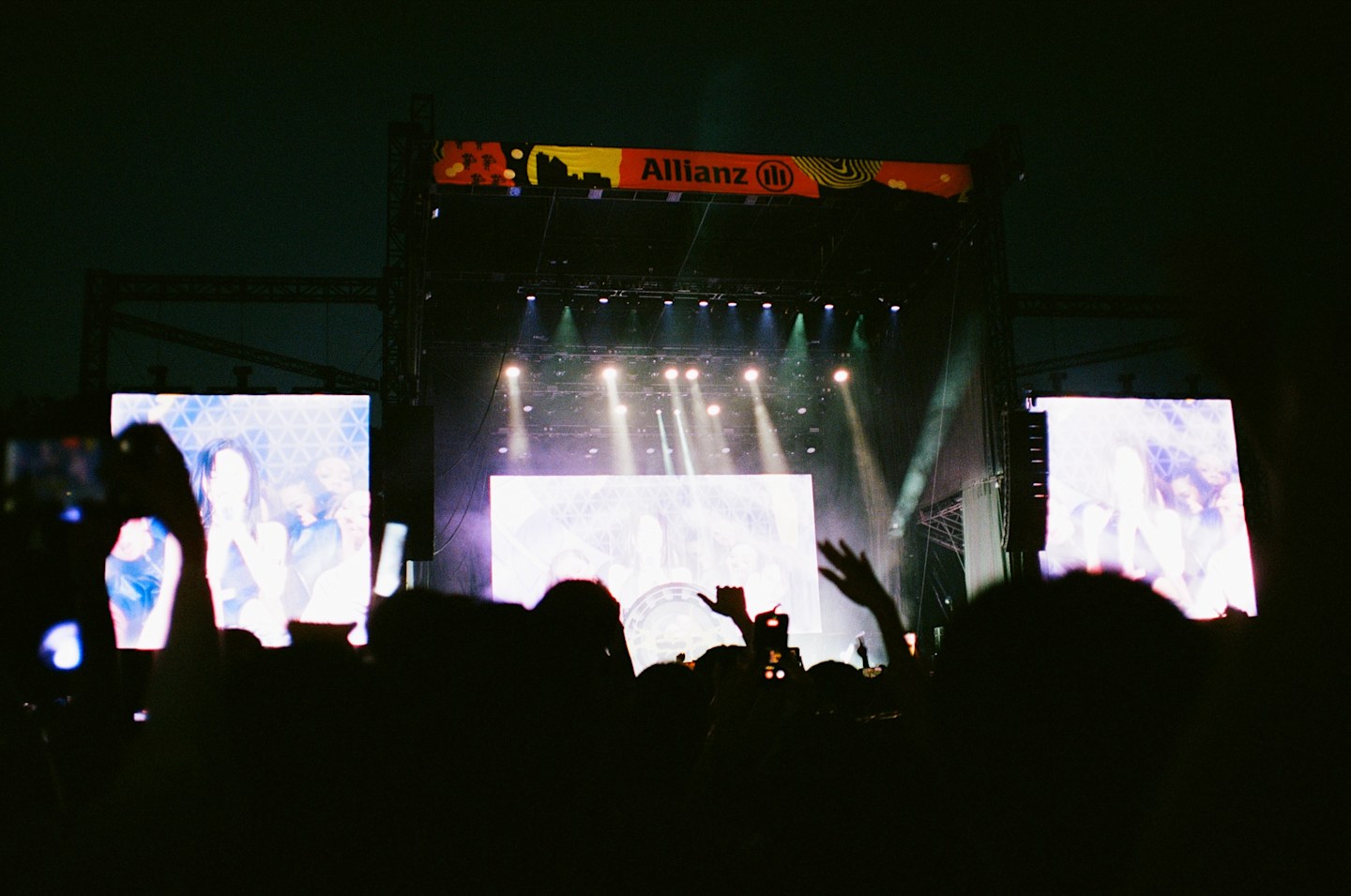 aespa perform at Lollapalooza 2026 on August 2, 2026.
Vivian Medithi / The FADER
aespa perform at Lollapalooza 2026 on August 2, 2026.
Vivian Medithi / The FADER
“My mom said to me, ‘Find someone who can give you everything’ / And I said, ‘Mom, I already have everything’ / I am a rich man,” Gisele and Winter intone on the intro to “Rich Man.” Bouncing gently in the mud, I was reminded of Six Sex performing her horsegiirL collab “GIIRLSWORLD” two nights prior. “Girlsssssss / Making monеy with my work! (Yessss!) / I don't need any man to pay! (Nooo!)” Sex crows on the hook; the entire room was screaming along as the stagelights stuttered. “I'm making money on my own! (Yessss!) / If you don't like it, go away!” In a world where the personal and professional are increasingly intertwined, I get that cash can be the most appealing form of liberation – after all, I’m a fan of rap music too.
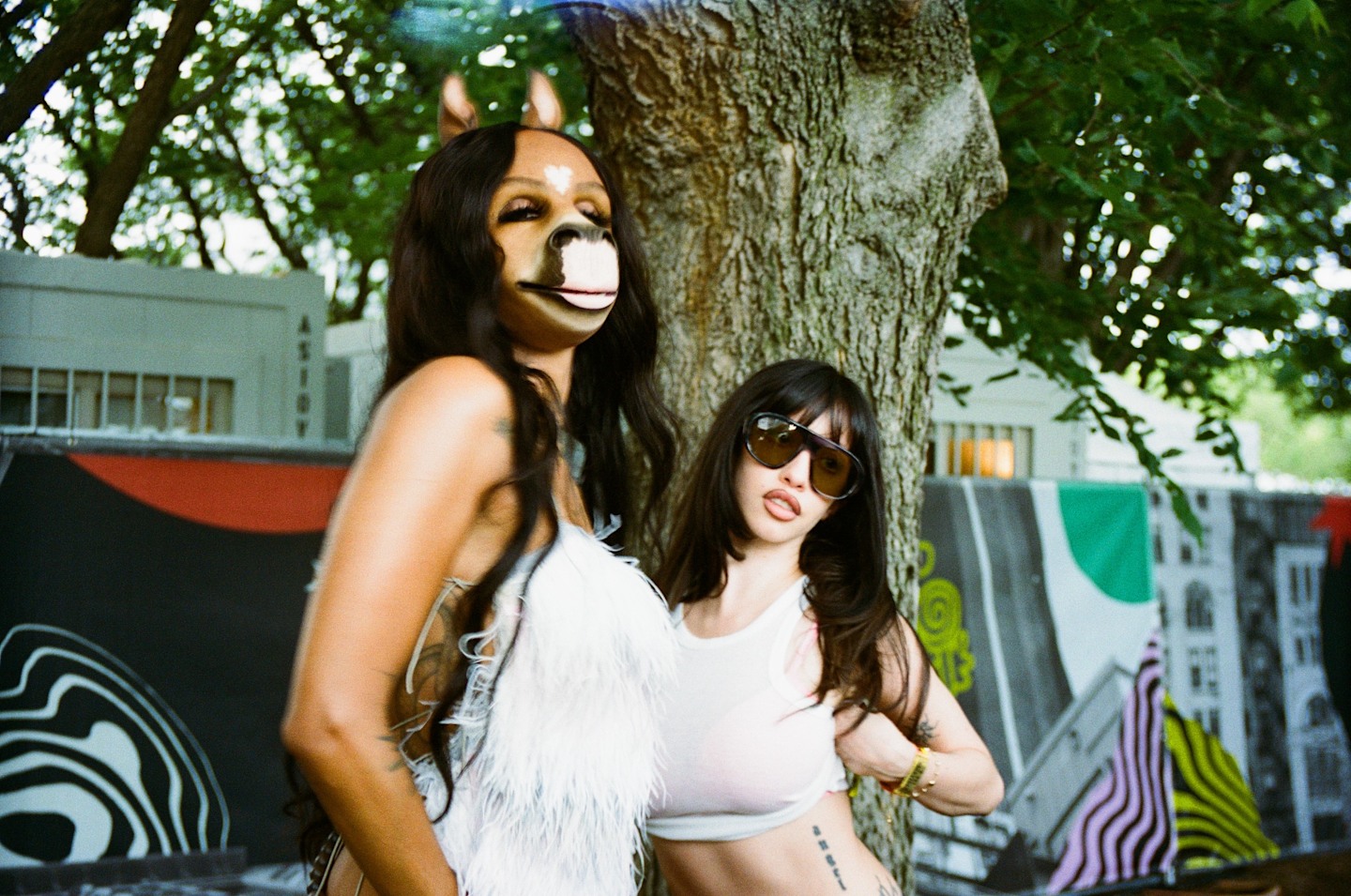 HorsegiirL and Six Sex backstage at Lollapalooza 2026.
Vivian Medithi
HorsegiirL and Six Sex backstage at Lollapalooza 2026.
Vivian Medithi
I grew up in Iowa, about 180 miles west of Chicago. Lollapalooza loomed large in the collective consciousness, even if it wasn’t part of my world or my friends’. Festival passes weren’t outlandishly expensive, but you’d have to buy before the lineup was announced. It felt like too much financial risk, and my parents were too strict to turn me loose on a distant city anyhow.
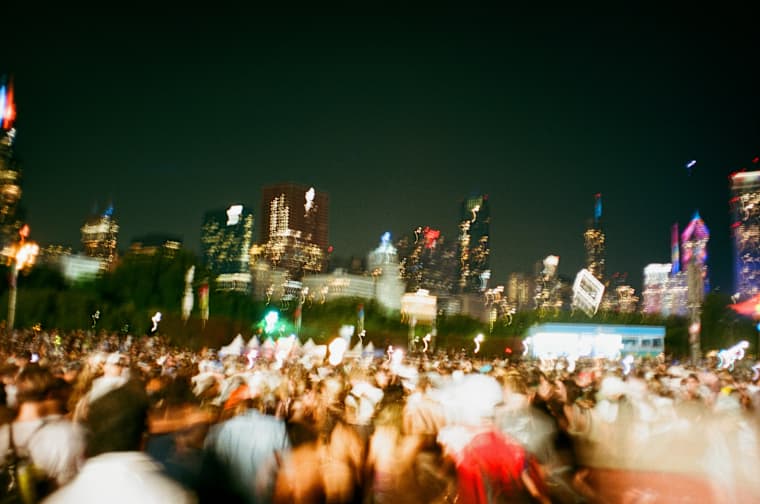 Crowds exiting Grant Park after Lollapalooza 2026.
Vivian Medithi / The FADER
Crowds exiting Grant Park after Lollapalooza 2026.
Vivian Medithi / The FADER
 Crowds stomp through the mud after Lollapalooza 2026.
Vivian Medithi / The FADER
Crowds stomp through the mud after Lollapalooza 2026.
Vivian Medithi / The FADER
Revisiting Grant Park for the first time since I walked the empty grounds with skaiwater back in March for their cover story, I found myself unexpectedly nostalgic. The Lolla crowd skews younger than most festivals: you could feel core memories forming in real time, whether it was the gay couple on the kisscam at Destin Conrad (sorry if I got in your shot) or the teenager I overheard tell his friend, “I just saw my ex at aespa,” as we frogmarched through the mud towards the T-Mobile stage for Tate McRae (wonder how he felt when the entire crowd screamed along to “exes”). Like everything else in American life, music festivals have been hypercommoditized; sometimes that can overshadow the music. But clustered together in the dark, craning our necks for a glimpse of the light, the thrill of a big-budget blockbuster was too irresistible to deny.
 Tate McRae closes out Lollapalooza 2026 on the T-Mobile stage.
Vivian Medithi / The FADER
Tate McRae closes out Lollapalooza 2026 on the T-Mobile stage.
Vivian Medithi / The FADER