“Yo, you know I photoshopped a fake FADER cover of myself in 2019?” Los Angeles crooner Blxst tells me. Scrolling through photos he shows me the 2019 magazine edit, his portrait beaming in the center beneath The FADER logo. “Now I’m finally here.”
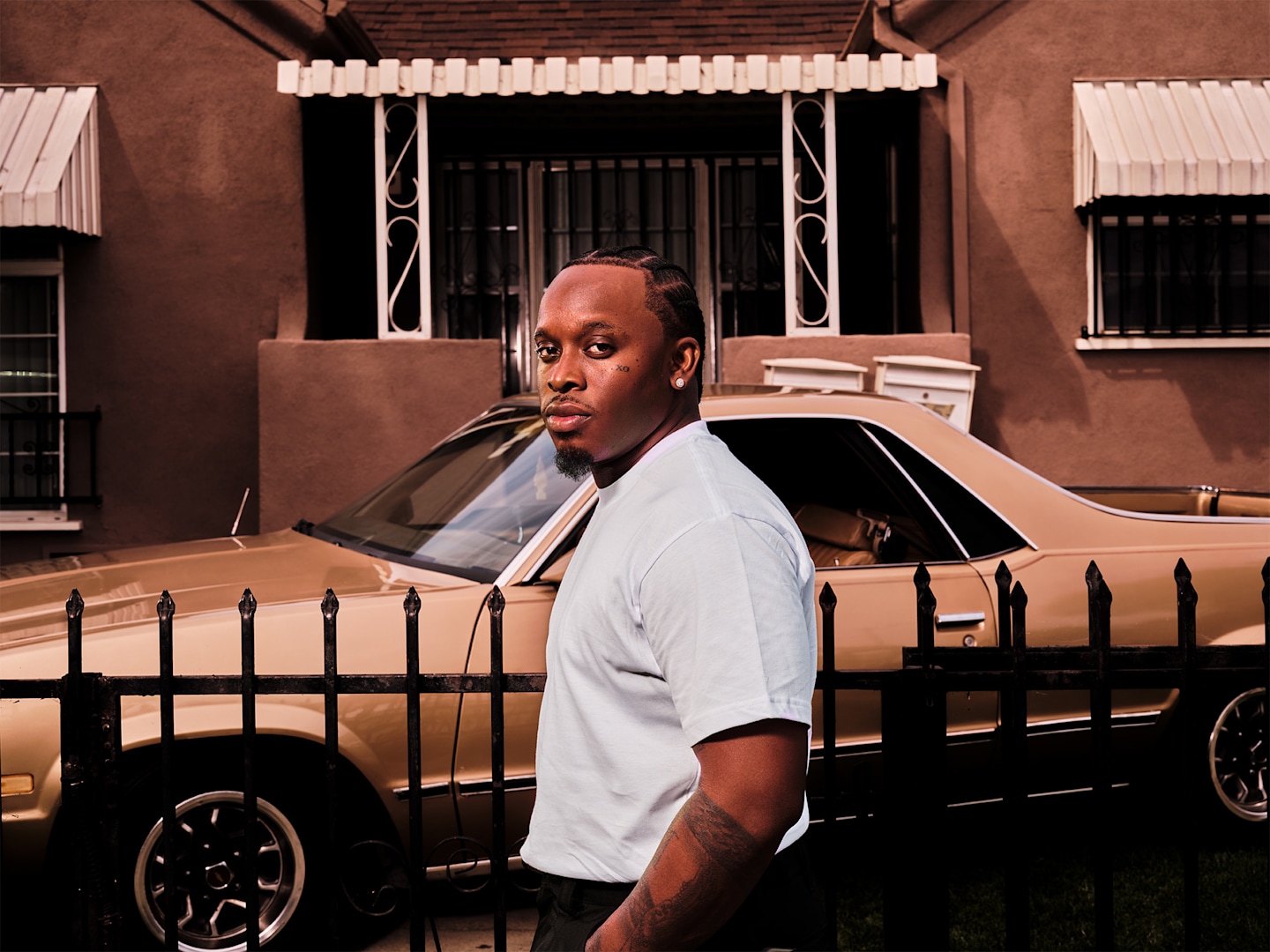
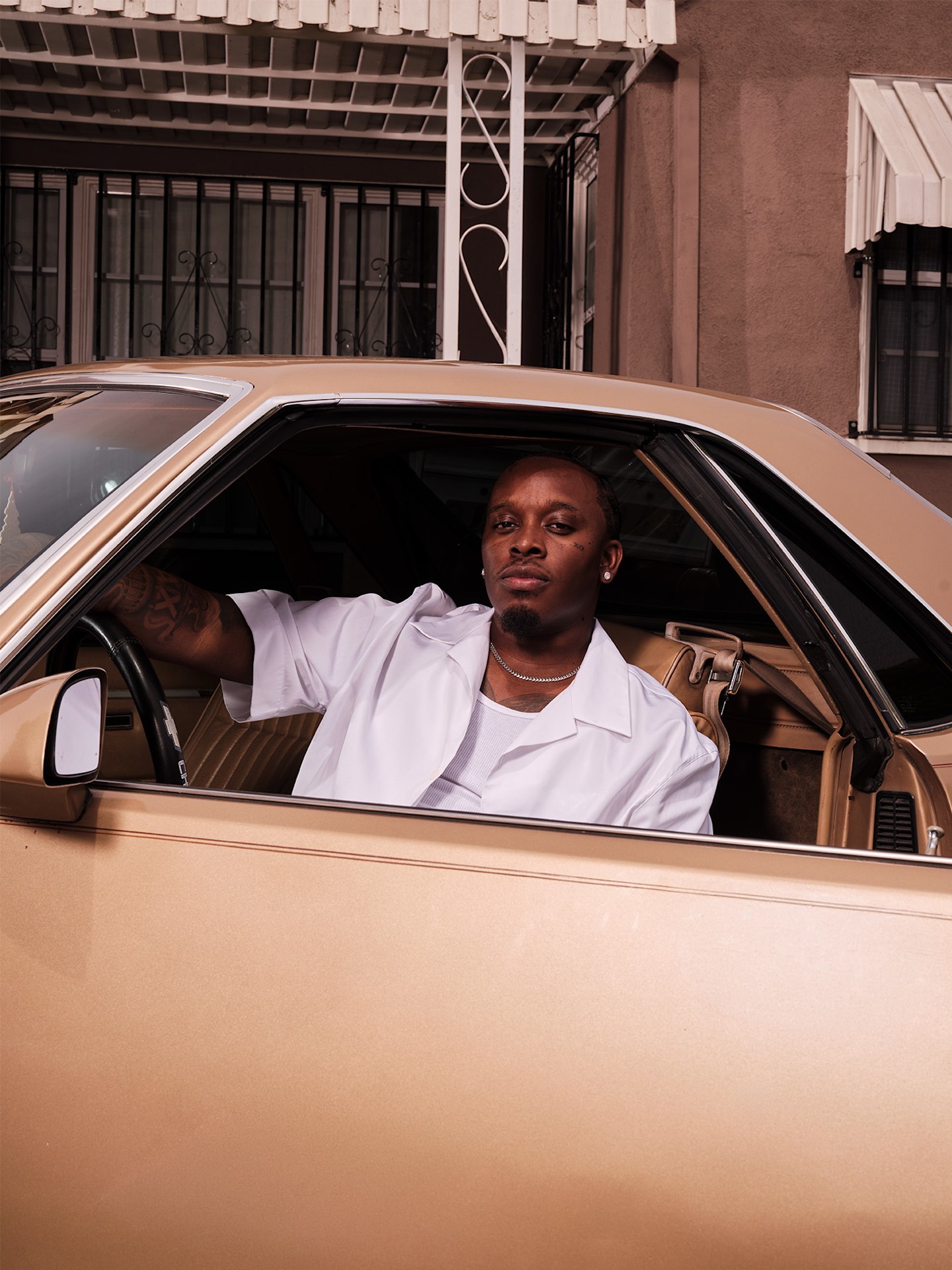
Blxst pulled up to The FADER office wearing a mouthful of silver grillz and a navy blue New York snapback — a plot twist of a fit for someone who’s a West Coast artist through and through. “I’m trying to make New York my second home,” he says. He's setting his sights east after making it to the top of Los Angeles’s musical food chain: In the few years since his 2019 breakout EP Sixtape, he earned a spot on Kendrick Lamar’s Grammy-nominated Mr. Morale & The Big Steppers album, performed at Coachella in head-to-toe Cali blue, and went multi-platinum and took over TikTok with his self-written and produced track “Chosen” (featuring Ty Dolla $ign).
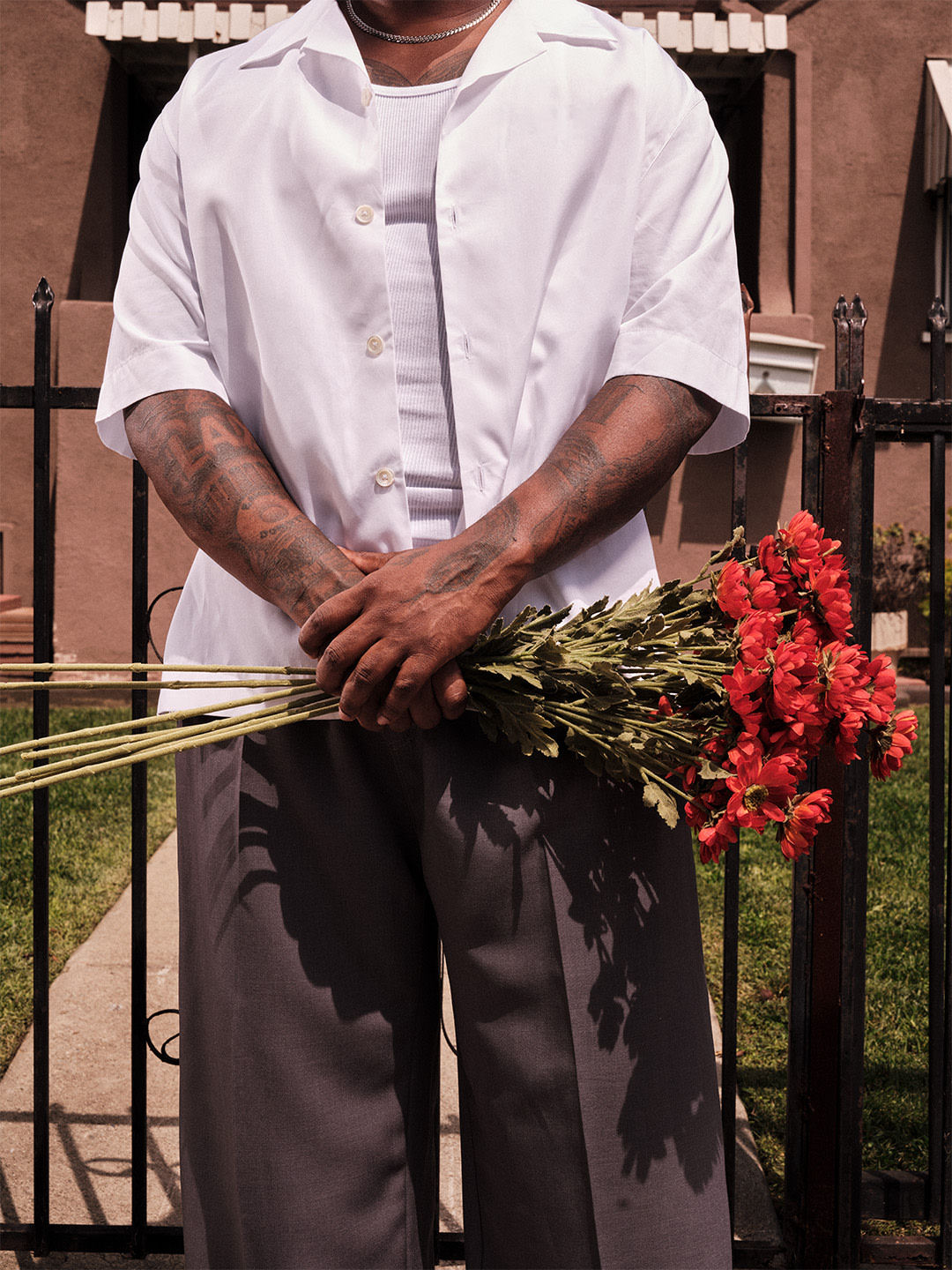
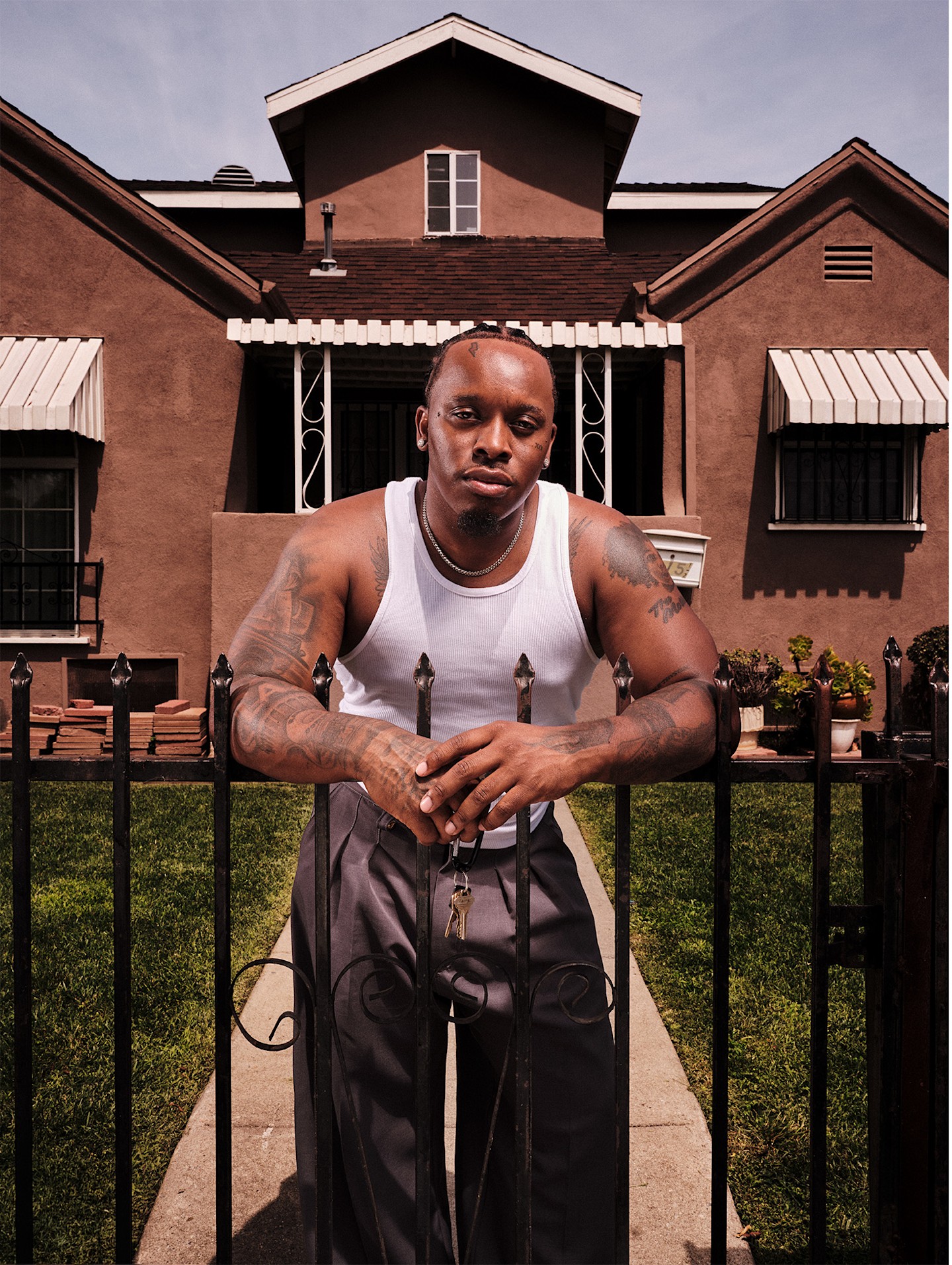
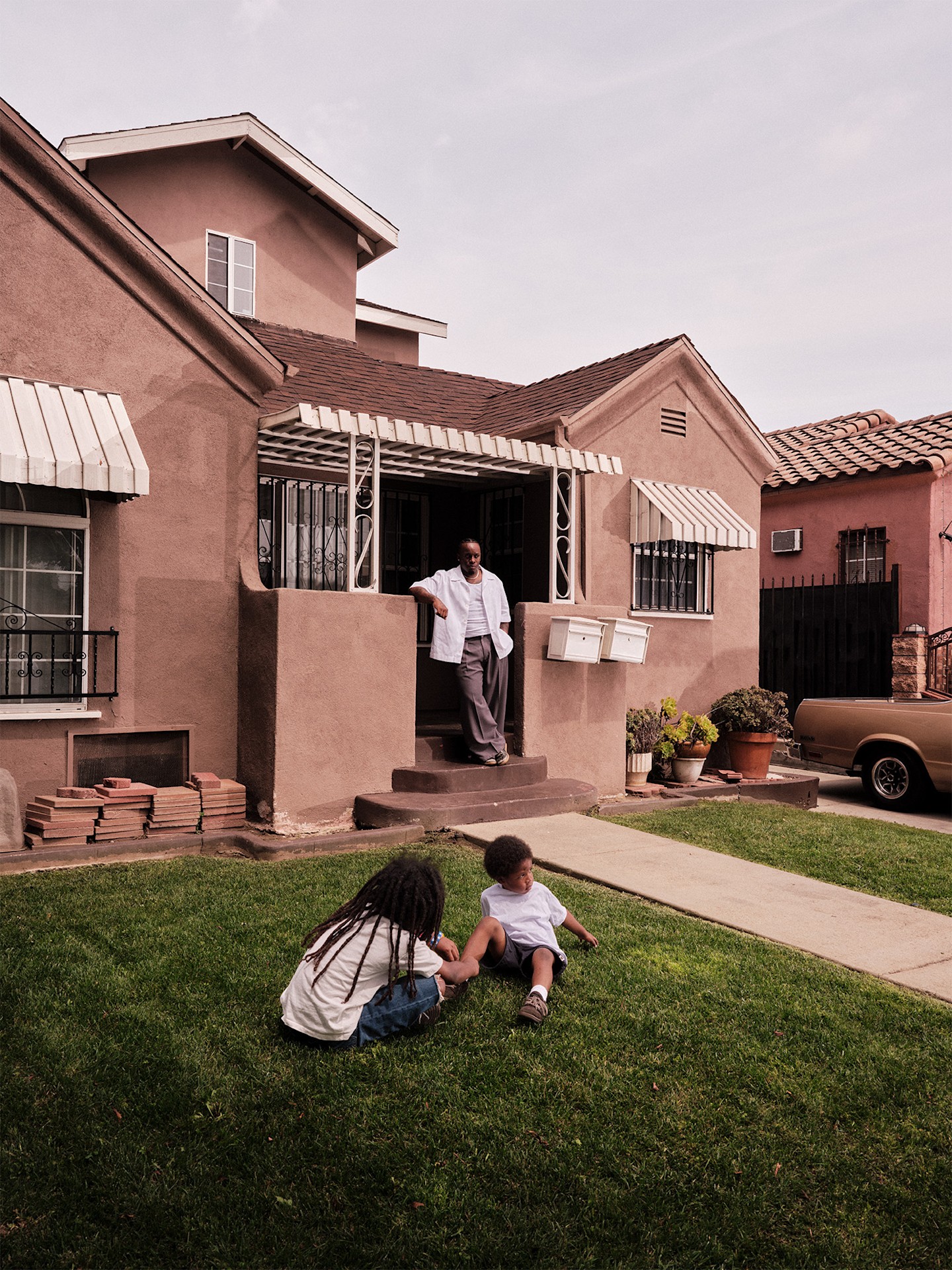
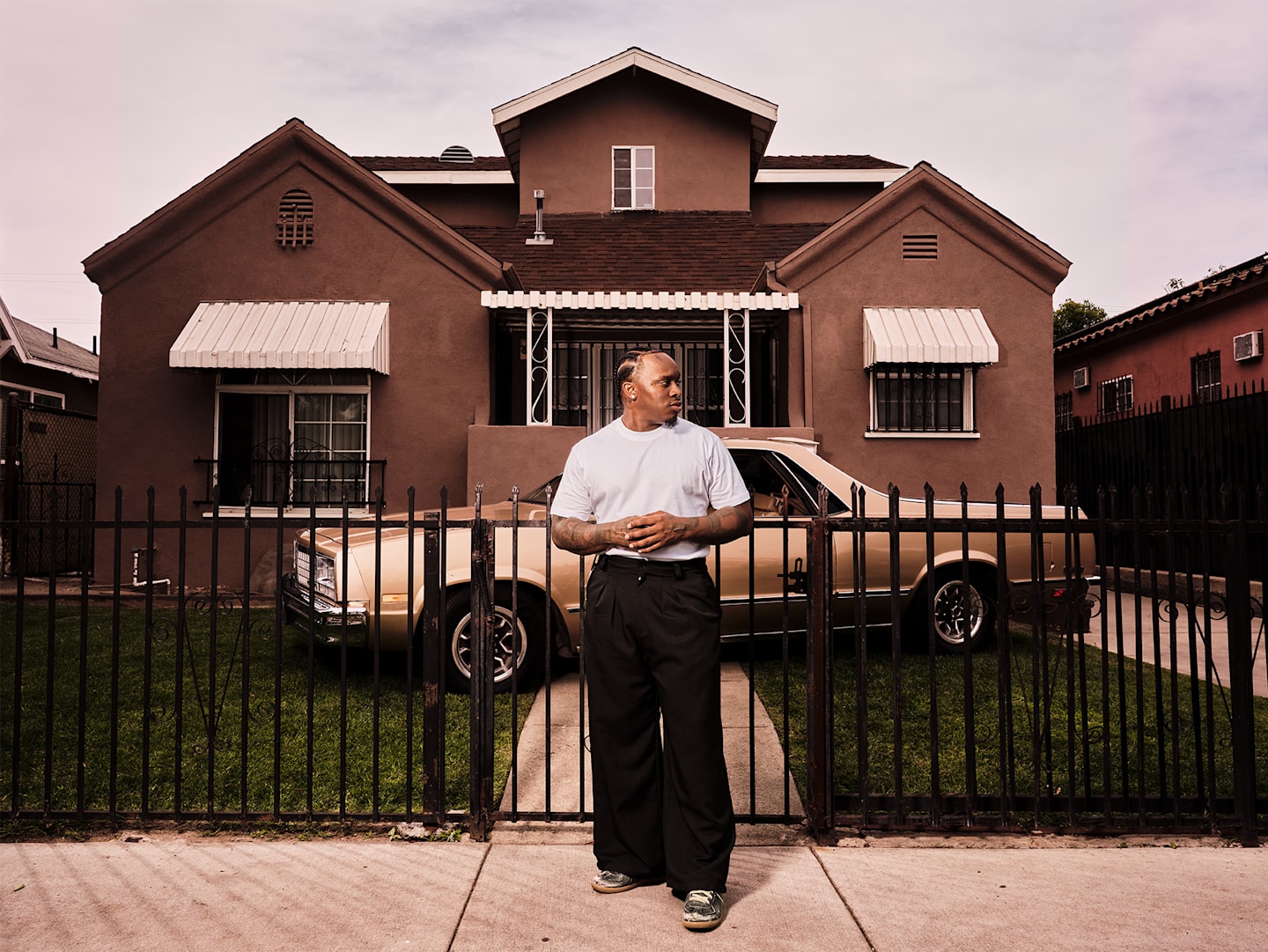
Labor of Love, his latest album, finds Blxst returning to his roots. The album’s artwork features Blxst’s childhood home, built by his grandfather, representing a sanctuary of familial love that he credits with strapping a younger him with the confidence to dream. Outside of music, Blxst is in “dad mode,” hitting his kid's games and chilling with family. He’s nowhere near the club — though a few tracks on the album will probably be bumping on a few venues' speakers.
Ahead, The FADER sat down with Blxst to talk about gatekeeping production secrets, healing from trauma through music, why West Coast legend YG inspired his career, and the belief that artists should have ownership of their music.
FADER: It’s been two years since your last full-length project. What have you been up to?
Blxst: I've been on a real long, silent, self-reflecting mode, and just staying creative, but not rushing the process. A lot of people know me for my songs, which is cool, but I've always been a fan of artists who opened up and were vulnerable and shared a piece of them.
How has your perspective on love has changed since No Love Lost?
Wisdom will make you have a deeper understanding of the word [love.] And now it's not just on the surface or about the feeling. Love is about the work that goes behind it: the sacrifice and the hours that you got to put in to be able to go through something to learn it on a different level.
The production sounds like classic Blxst to me. How do you define “classic Blxst?”
The bops. It still got that two-step energy, that West Coast sound that makes you want to dance. As far as sonically, the space, the guitar, tempo, something you can play for your family, for all generations. It’s feel-good.
Putting your childhood home on the album cover feels super personal. Does your family still live in that house?
That's actually on the east side of L.A. My grandpa built that house from scratch. It’s very sentimental for me because that's the house I grew up in, and it's a symbol of love because my grandpa created a foundation for a kid like me to dream and not have to worry about a roof over my head. I just wanted to bring it back for this album, reconnect with my roots.
 Joshua Gonzalez
Can you walk me through the story behind “Home” and processing that home invasion through music?
When I was younger I had a drive-by shooting at my house and it was around the same age my son was when the home invasion happened. And it's an eerie feeling that took some time for us to get past, but I really wanted to turn my pain into art and be an example for my son that this is a part of life. I wanted the song to represent a good feeling, instead of looking at it like, “Yeah, I'm a victim, this happened to me, and I'm seeking revenge.” It was a healing moment for me to share something that me and my son went through in different times, but the same age.
How do you talk about what happened with your son?
It’s an everyday thing. But my main goal was to help him navigate, even though things happen where we have no control, you can still control your security, whether that's learning about guns and protecting your family, or security companies.. It’s about rebuilding that confidence that it's okay, because he's still a kid, his brain is still absorbing what the world is.
You recently shared a video of how you produced the classic Blxst sound on the song "Home." What are your thoughts on producers who think we should gatekeep the producing process?
Man, I love gatekeeping. [laughs] I second that. Even when I show my beats, I don't show every detail. I show me playing the keys and stuff. We got to get back to people being qualified to do certain things. When you think about every other industry outside of music, you have to be qualified. I feel like we need a little more control over the toxicity and the shit that gets poured into it [the music industry] unintentionally.
So you think it's like watering it down a little bit?
It’s how music is sold, or when you think of it, all these DSPs sell our music for the same price. And when I think about true art, like traditional artists like Basquiat, you can't put the same price on every painting, cause it means something different to each individual.
And then there’s AI…
Yeah, that shit is weird. I don't feel threatened ‘cause I feel like I'm an originator, but I don't like the fact that people can monetize your voice, your pain, what God gave you. And then you have no access to monetize it yourself, or even if they use it, you can't get a percentage. It's too open. The landscape is too unpredictable right now.
Monetizing off of pain, that's crazy, cause yeah, this is like your personal story. So, Versuz battle: YG or The Game?
Damn, that's tough. They both my homies, but I'm going to have to go with YG. When I was in high school, YG was the guy. It’'s some deep cuts that mean something different to people from L.A. that the world might not even know.
What are some deep cuts? Put me on.
"She a Model", "She Fuckin' Runaway"... That's 2008? He brought a resurgence back to LA, and his movement was, if you know about Pu$hAZ, that was his clique. It was a lot of gangs in one clique. He brought unity, and they would throw parties. YG was different.
So, were you going to those parties? What were they like?
A lot of ratchet activity, a lot of sweaty windows, (laughter) but it was a lot of fun, too.
Were you making music already at that time?
Nah, see that's why I say YG, too, cause that era sparked me to start making music. YG made it to where it felt like I could do it, too, cause we saw his grind from day one to where it is now. And we saw him pulling up to high schools and selling tickets on Myspace, we saw the grind.
How did you acquire the skills to songwrite and produce?
When I was a kid, my sister used to write down lyrics to her favorite songs. So that helped me with understanding structure. Then we would remix songs. It was a game. So as I got older, when music came across my table, my cousins showed me they did a song. And I was like, ‘How y'all do that?’ They showed me they did it on a Rock Band microphone and they plugged it into their laptop. So when I started recording and writing it felt effortless. And over time, I fell in love with words.
You’ve mentioned before that you feel like L.A. is currently an underdog city in music. Why is that?
Every region got its moment, and I feel like L.A. at one point in time had it in a chokehold. You think about Dr. Dre and Snoop Dogg and all the lineage that came under that from The Game, Daz, Kurupt. And over time, New York had it, Atlanta had it, and now we are in a space where the person who's at the forefront, the gap is so high. We got Kendrick Lamar, it's like who's after that, really?
When it comes to R&B, it seems like a lot of artists are trying to distance themselves from that. What are your thoughts on that separation?
It's kind of fucked up if you're Black and you sing, that you automatically R&B. But also, I'm aware that Black people created every genre, too. So, it's all perspective, but for me personally, I do consider myself R&B, I consider myself hip-hop, cause these are the foundations and the inspirations that I pull from. And we should allow every artist to be whatever the fuck they want to be. If she want to be a country singer and she say, ‘I'm not R&B,’ then we should respect that.
What do you want people to take away the most from this album?
I just want to share vulnerability as a Black man. Because a lot of times we hold it in and it's better to let it out. And there's different stories that we feel like we can'share because it may entice the world to look at us differently, and my main job as an artist is to connect with real people, and vulnerability is the key to that.