Ethan Holland
Cakes Da Killa and DJ Miss Parker know how to get the club pumping.
The always essential queer rapper and DJ Miss Parker, a central figure in Brooklyn’s ongoing dance music revival, had known each other for years but they had never been close collaborators. That is until an inspired conversation at Nowadays spurred DJ Miss Parker to send some beat ideas to Cakes, who was in Berlin on tour. “I was like, I think Miss Parker got some nasty stuff,” Cakes Da Killa says while sitting alongside DJ Miss Parker in the FADER office.
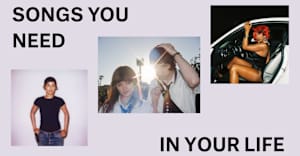
Cakes recorded on each of the eight beats DJ Miss Parker sent over a whirlwind two-week period. The result of that heads-down creativity is the audacious, high-octane EP NEW BITCH which finds Cakes Da Killa delivering fearsome bars over beats fit for the peak of a DJ set.
On “NEW BITCH” Cakes embodies the EP’s spirit of reinvention, stunting about feeling like “a new bitch with a new vibration” over acid-soaked propulsion. On “LETHAL” Cakes' crystalline diction glimmers over an eerily cinematic beat haunted by synth spirits.
For the duo, making voice-forward dance music has a deeper historical meaning, given that many dance music “heads” marginalize tracks with vocals, calling them “distracting.” “A lack of vocals in the dance space definitely erases the history of dance music,” says Cakes Da Killa. “We have vocals from Martha Wash, all these powerful Black women and queer people that shouldn't be pushed out of the conversation.”
Ahead, Cakes Da Killa and DJ Miss Parker explain how they linked up and the legacy of vocals in dance music.
The FADER: How long have you known each other?
Cakes Da Killa: We've known of each other for a while and seen each other out for a while. But this project definitely got us a lot closer. In the scene, you have a sense of community, but we weren’t really kicking it, kicking it.
DJ Miss Parker: I would see Cakes at the clubs a lot. I saw Cakes the first time I was in New York. Cakes doesn’t remember it. [Cakes Da Killa and DJ Miss Parker laugh] Our friend Ms. Boogie was performing.
How did you decide to make an album together?
DJ Miss Parker: I was at Nowadays and I was talking to Byrell The Great, and I was like showing him some tracks I made. And I was like, "I think I want to hit Cakes up." I had that idea, went home, and started busting out some tracks. Within like two months, I had five to six tracks, and then I just sent Cakes an email.
Cakes Da Killa: I was in Berlin like, "What? This bitch makes beats?" Everyone's a producer! Then I started playing one, and I was like, "Oh, this is cute." And then I played another one, and I was like, "Okay." I was staying at my friend's place — he's a producer — and he came out of his room like, "What are you listening to?" It was a pack of eight beats, and I recorded over all of them. It was really that easy.
DJ Miss Parker: He sent me back pretty much the whole mixtape within like two weeks. I was severely gagged. I just wanted someone with a nasty pen to get on them, and Cakes was the first person I thought of. I knew he would understand the language of the music.
Parker, what's the relationship between your producing and DJing practices?
DJ Miss Parker: A good DJ will mix music like they're making a track. Back in the day, a lot of producers were also DJs. They would basically cut different records together to make a track. With producing and DJing, it's all about this ebb and flow, intuition and risk taking. I have a very punk ethos with DJing. I want to show people music that is very emotive. I try for my own productions to have that similar feeling or essence.
Cakes, over time your music has gravitated more towards the club space. Can you tell me about that trajectory?
Cakes Da Killa: I've always been a nightlife girl, that's kind of been my first love, aside from journalism. I don't really do anything calculated. For my music to sound more club, it's literally just the people I work with, like people like Parker reaching out. If Parker didn't reach out to me, I wouldn't have made a record like this. So, I don't go out to find a sound or curate things like that, it just happens, and then I A&R from there.
What’s your philosophy on having music with lyrics in the club?
Cakes Da Killa: We need more! It's setting the tone for what's going on. We're getting less vocals in dance music because the DJs don't know how to mix records with vocals. I hear a lot of people say, "Oh, lyrics can be distracting." No, it's because these DJs don't know how mix records with vocals, number one. There's space for both, but to just have a whole night of drones dancing side-by-side … that's very cultish. [laughs]
DJ Miss Parker: I always try to have a ton of vocals, just because I need people to have some sort of accessibility. That drone music isn't for everybody. It's cool to weave those tracks into sets, [because] you're really building narrative. When you're DJing with lyrics or vocals, there's a whole lineage of like queer musicians in nightlife, like Kevin Aviance. One, most people would be afraid to make music like Kevin Aviance. His vocal inflections, the attitude, the diction. It's so raw and fierce. You can play "Cunty (The Feeling)" at any party, and the whole room will go up.
I wanted to continue a certain lineage of queer dance music in the clubs. There's this style called bitch tracks, that started in ballroom from Kevin Aviance or Sweet Pussy Pauline. There needs to be more campiness and attitude.
Cakes Da Killa: Bring back vocals!
DJ Miss Parker: And DJs, learn how to mix. Learn phrasing, please.
 Ethan Holland.