Kelela’s songwriting process can be painstakingly slow. It doesn’t help that sometimes, not even she knows what she’s trying to say.
“Oftentimes when I'm singing in gibberish over the instrumental, there are word sounds that come out. So I am always deciphering on some level what it is that I'm trying to say,” the D.C.-born artist explains on an August 28 video call from her NYC apartment. “So I do take a longer time to write lyrics than a lot of people because I'm trying to craft this type of meaning.”

July 2026’s new avatar is the fastest the genre-blurring singer has ever recorded an album. Produced almost entirely by Oscar Scheller, the LP finds Kelela in her so-called “White Bag,” updating and upcycling the altrock sounds that have inspired her over the years. The moniker might be tongue-in-cheek, but the underlying sentiment is very real: “It very much means something if you are somebody who's appreciated many different types of genres. If you've always been into strictly guitar music, that's not going to resonate.”
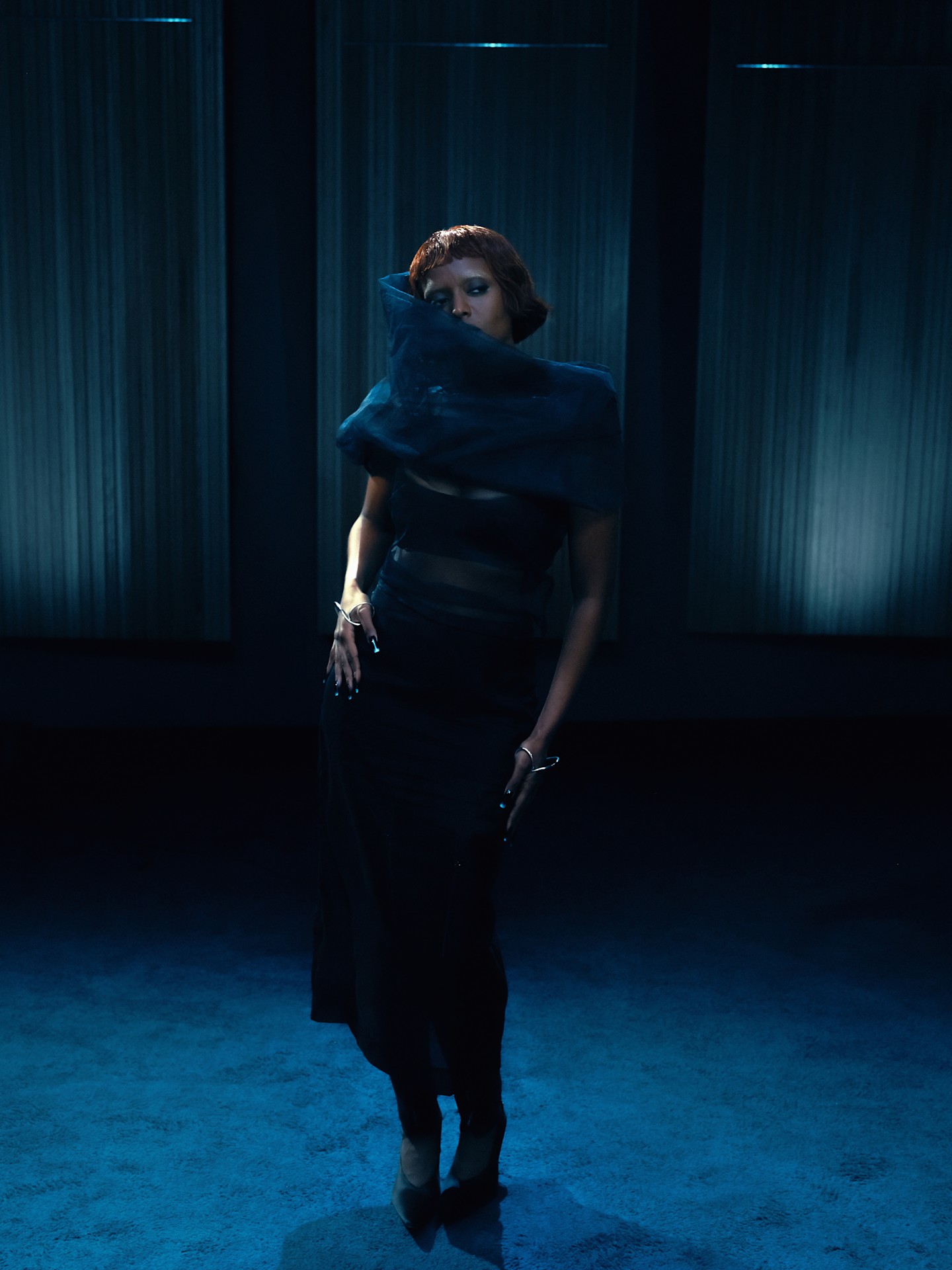
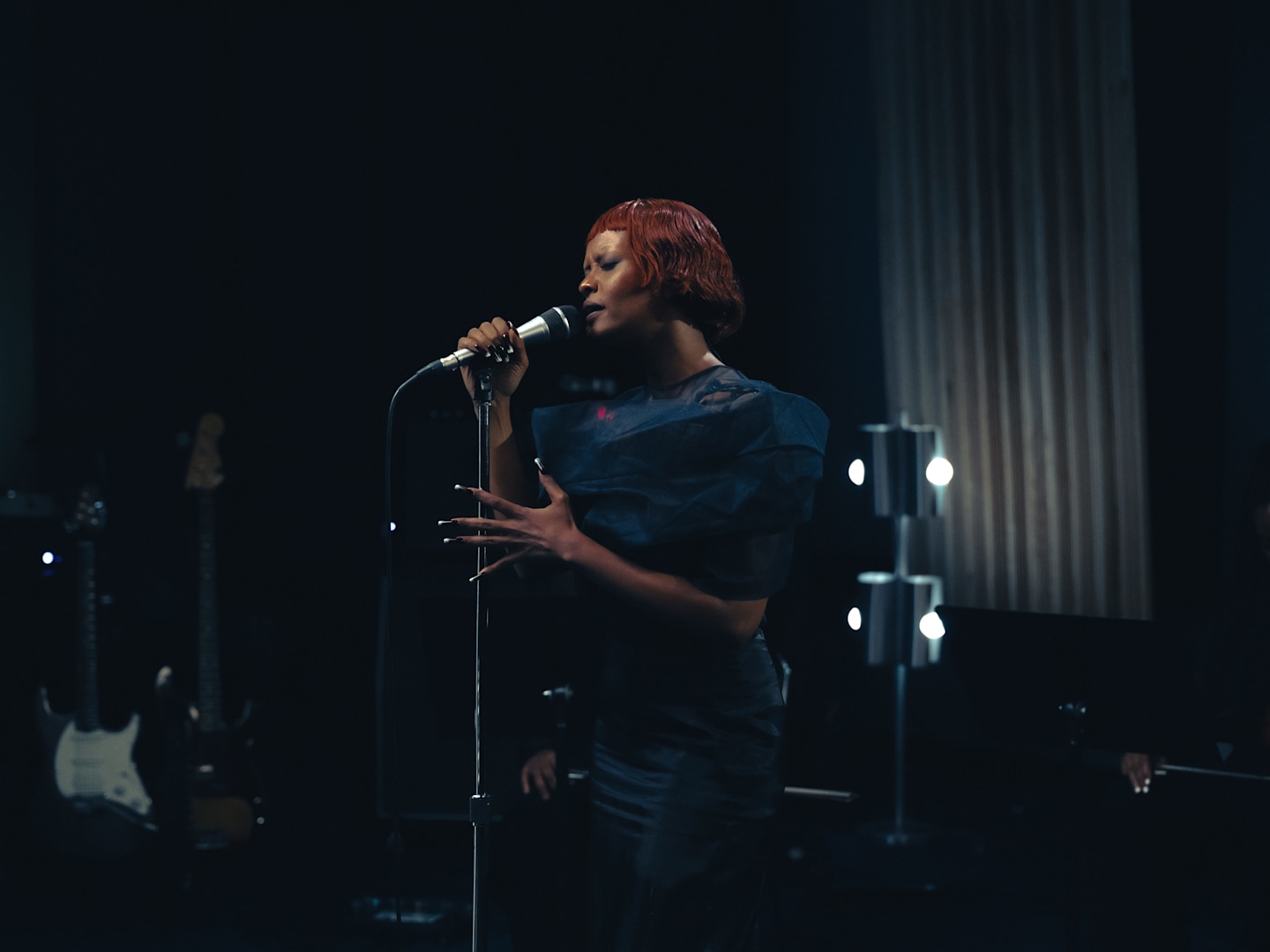
 Kelela performs for Spotify Live Room.
Spotify.
Kelela performs for Spotify Live Room.
Spotify.
Considering Kelela’s extensive cross-genre experience – from childhood days in orchestra to her early arc as a punk musician before finding critical acclaim in the realms of electronic and R&B – it’s fitting that she’d choose to do a rock cover for her new Spotify Live Room session, out today. But Morning View by Incubus holds a particularly special place in Kelela’s heart. “This record, I've discovered over the years, was a gateway record for a lot of us,” she explains. “There's something about the compositions that speak to a lot of Black people specifically.”
As she prepares for an extensive tour behind new avatar this fall, fans can get a taste of what Kelela might have in store on the road through her live reinterpretations of “Mexico” by Incubus and her own “idea 1.” The FADER caught up with Kelela to chat about her new Spotify Live Room sessions, negative space in her music, collaborating with Oscar Scheller, and how the enduring legacy of Jim Crow shapes the music industry today.
The FADER: You’re covering “Mexico” by Incubus. Why that song?
Kelela: It was a formative record for me, but it's not until I started actually singing in the studio that I realized how much I love Brandon Boyd's voice as a singer and how related our voices are. It's something that I've been in love with for a long time and have always loved to sing along to, so it's kind of a dream come true. And to be able to do it with strings – there's already a cello part in there, but to be able to make it even more dramatic in some ways was really, really cool.
It's an honor to cover one of the songs from that record, and there's a kinship that it uncovered for me as I started to sing. Also when I've showed my friends the video, they're like, “Wow, I've never heard you sing this low.” And I'm like, “right” – I've never written a song that pulled that register out of me. It's the beauty of being able to cover other people's compositions because you unlock a new part of your own voice.
You said you discovered a kinship between your voice and Brandon Boyd’s. What were you hearing?
I just never processed how much I love imitating his stylings and approach. I've always loved the band, these guitar tones, the arrangements. But it's not until I actually started singing that I was like, Wait. It feels like an older brother relationship. It's not until I start singing that I can feel how much that person's voice means to me.
There was also one of the violists in the ensemble that we put together. Before we started, she was like, “I can't believe you're doing this song.” And I was like, “whatchu know about this?” And she was like, “girl, the whole record.” This record, I've discovered over the years, was a gateway record for a lot of us feeling kind of on the outside of this sound – however inside we were. There's something about his approach to singing, and also I would say the compositions, that speak to a lot of Black people specifically. So over time, I've discovered some of my closest bonds are with people who are like, “Wait, no, Morning View though?” [But] we've all had that moment later on. It's not like we met connecting on that, but it's a thing that we discover about each other.
One thing in there you mentioned about the original song and the new live arrangement was the use of strings. You’ve got a background in strings yourself, and your last major release [before new avatar] was a live album, In The Blue Light. I was curious how those experiences translate to the live arrangements for these songs.
I grew up playing violin; I would say that that's probably the most central variable. It’s always been a musical love of mine, [especially] modern strings, string arrangements that don't adhere to the classical template. It's all operating out of that for the most part, but there's ways that you can approach rhythm. I really loved this arrangement [of “idea 1”] I found online. The composer Mocksun, the way that he approached the guitar arpeggio during the verses was really interesting, and offkilter enough for you to feel a little bit uneasy. [...]
So when it was time to do this performance, I was like, “Actually, let’s just hit Mocksun. I want to use this person’s arrangement from TikTok.” Like, he kind of ate. I'm going to switch some things up sonically a little bit maybe, but the thing is there. It ain't broke, let's not even try to fix it. It was such a seamless process to dwindle the parts down to four parts. And it was just magical hearing that come to life for the first time.
They're such expressive players – you can tell that as they are reading the music, they understand rhythm and swing in a way. Everybody that plays a string instrument has a background in classical music, so that goes without saying, but when you have a background in other music and you are thinking about how to use your instrument, how to make it swing, it creates a new level. It unlocks something new.
One idea in there I want to press on is the idea of dwindling the song down to four parts. Something that comes up a lot in your discography is this idea of reducing or restriction; speaking specifically to the material on new avatar, I was really taken with the use of negative space on “point blank” specifically. How are you thinking about this emptiness or hollow space in your music?
I've always been into music where I feel like I can see the sessions. I’ve always been in love with that. I’m also thinking about things spatially [and] about how many elements need to really live around what it is that I'm saying. There's so many parts to this, but I love stripping things down. I can have a maximalist moment, but for the most part, I am looking for space. I'm looking for the air. That's an instrument for me.
That is part of the magic, how a few elements work really well together. Mocksun’s original arrangement was maybe six parts, including the lead. So once you take the lead out, it’s like we have to budget and figure out which parts are most important. Cut 4 Me, my entrance into this space, was very much leaning into that type of space on the track. Night Slugs, Fade to Mind, they are also approaching production in this way that feels quite minimal, but also really heavy-hitting, hard sounds, and also not afraid to…
Tenderness for me is also expressed through a few elements. It's not absolutely necessary but it's one of the big ways that I like to explore that feeling. I think that's why it shows up so much and it just is delicious. I love that sound. It's really gratifying for me to hear only a few things and be like,"Wow, the beep!” Like the only percussion in “A Lie” for example, there’s a beep that happens once every eight bars, and every time it happens it's like, yessss [laughs]. I guess I'm a nerd for arrangement and how few elements you can get it down to while creating groove and rhythm.
It's interesting to hear you connect that to this idea of tenderness because I think one of the few places in your music you don't restrict yourself is when you're getting lyrical and talking about relationships or how you're feeling in these very explicit terms. What is your writing process like right now, and how do you decide what to hone in on specifically?
I have always been a “gibberish first, lyrics later” type writer. I'm not writing poetry and then figuring out how the melody could fit the lyric. I am working in the opposite way. So I will change a lyric, or I will try to find a lyric to satisfy phrasing. I care more about vocal phrasing, even down to vowel sounds. Like, “the vowel has to be ooh, it can't be ow, it's not ow,” you know what I mean? And that is something that I'm often having to deal with.
When it comes to lyrics, I am thinking about the feeling. And oftentimes when I'm singing in gibberish over the instrumental, there are word sounds and words that come out. So I am always deciphering on some level what it is that I'm trying to say, and the meaning is usually produced through those words and word sounds. And sometimes, I don't even know how I know, but I'll just be like, “well obviously this gave this.” Like, I'm not saying anything – but I know exactly what the fuck I'm saying. That's kind of a recurring thing for me.
With “Point Blank,” I don't even know how or why. I just kept my first improvised line: the guns are pointed at me. And I was like, “but it's a club banger.” And I said this to Oscar [Scheller] and I was like, “This song sounds sexy and I don't know where that's coming from." And then he was like, "But the bullet set me free." And I was like, [mimes shocked head turn]. And it's so interesting, I had a conflict in that moment of being like, "Oh, no, I don't want to be a Debbie Downer on a song that feels so uptempo.” But that's kind of the thing about me: I am trying to insert something real into what feels like fantasy. And for this song, I think what really gave me permission was the bridge. We went straight for the bridge and it was just so sexy and I was like,"Okay, this is the flip." Like, if that part is bitter taste in my mouth, this part is the payoff. Like, it can't be all bad. Why would you keep fucking with these people if it was all bad?
That's the type of song I've always wanted to write, songs where the real complexity in our life experience is articulated, even in one song. So most of the song is like, I'm sick of your shit, I hate this, this is so annoying. You guys are so annoying. Y'all ain't shit. But then the bridge is this payoff, the moment where you're making physical contact and there's so much gratification in that. So I do take a longer time to write lyrics than a lot of people because I'm trying to craft this type of meaning.
 Spotify
My colleague interviewed Oscar Scheller a little earlier this summer, and he had talked about how you guys met through your mutual friend LSDXOXO and that you played him Morning View in the studio. What initially drew you to Oscars's production, and how did those sessions develop into new avatar? I know this is the fastest you’ve recorded an album.
It was the stuff I’d heard him do with PinkPantheress, with Shygirl, and with RJ himself, with LSDXOXO, that brought me into the door. I thought I was coming for dance music, so when I got in there, I saw the guitars and was like, “what is this?” I didn’t understand just how much range he was working with. And in addition to that, being a songwriter himself and being able to contribute melodically, lyrically, there's just a way that it creates a certain type of efficiency, and I was really pleasantly surprised. But yeah, Incubus and so many other things in my White Bag playlist were played. And then he was like,"Wait, this is making me want to create my own White Bag playlist."
Every person I told that to, including white people were like, "Wait, I'm going straight to my Spotify right now to create this playlist because it's speaking to me,” what it says about music and what it says about the time that we were all in. And that means something slightly different for everybody. But it very much means something if you are somebody who's appreciated many different types of genres. If you've always been into strictly guitar music, that's not going to resonate. You'd have to have other bags in order to have a White Bag.
 Spotify
You and Oscar are both people who have an interest and experience in a wide range of types of music. Why do you think people are so obsessed with genre?
Because of racism.
Fair.
I would say the origins of popular music, American popular music, is just so rooted in the Jim Crow era, you know, Birth of an Industry. I think that dictates so much about how the music itself was born, and then how people make contact with each other through that music. Even when we're talking about just pop specifically – R&B was called race records, like literally. And it was somebody’s assignment, leaving an office on Friday: Monday, I need a new name cuz this isn't going to work, guys. And somebody came to the desk, was like, “I was thinking about rhythm in blues.” There's just some white guy who came up with that name and was like, “this is what it gave.”
And so because it's so steeped in this culture, I feel like what what we are witnessing over time is just like these really rigid, fucked up, racist lines being interpreted and named in newer, nicer, less offensive terms. And that has been proven over and over again, because if we're talking about just the sound of a song? If we were just categorizing based off sound, artists would be falling into different categories than if it was about the full package.
But it was about marketability and capitalism as it relates to the creative industry of music.
I’ve been thinking about this a lot because of this book called BlackSound by Matthew D. Morrison. He’s talking about the legacy of minstrel shows in American culture, and how the history of music copyright actually arises out of the reproduction of minstrel blackface music. It’s wild to think about.
The OG version of that book is a book called Blues People by Amiri Baraka. I think he wrote it in 1963, but he basically maps out, even just from people you know being stolen and brought here, that beginning that origin, all the way to that time. But this is really cool to know that there's a modern take, because I think that's a really important part of the story that no one is privy to. Or even when we're aware, we just are abstractly aware.
There's a rhetoric around like, “Black people invented so much. Black people invented everything.” But what does that actually mean? What does that look like? What did White people do in response to that? That’s a very important part of the conversation, and you will be lost when you're looking at the current context if you don't know that origin story. It's key.
But thank you for putting me on, I’m gonna get this.
And maybe just a silly one: can I ask what perfume you wear?
It’s a combination. I wear this perfume called Tokyo Milk by Margot Elena – Tainted Love is the specific one of that line. And then Love Don’t Be Shy by Kilian. I put the Love by Kilian [mimes applying perfume behind the ears] – it’s the second thing you’ll smell when you hug me. But the first whiff is going to give Tokyo Milk.
 Spotify