 Nolan Zangas / The FADER


The FADER's longstanding series GEN F profiles emerging artists to know now.
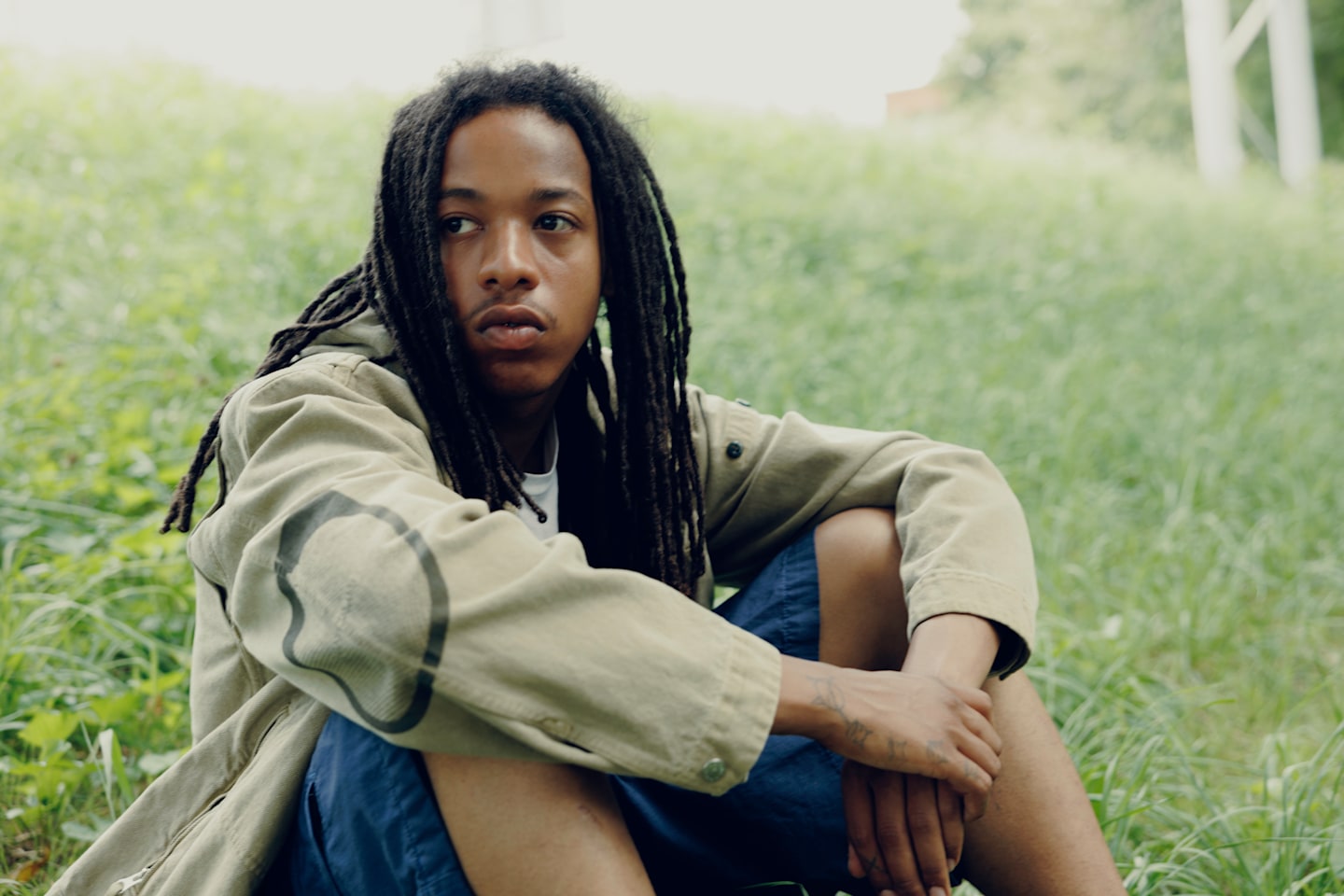
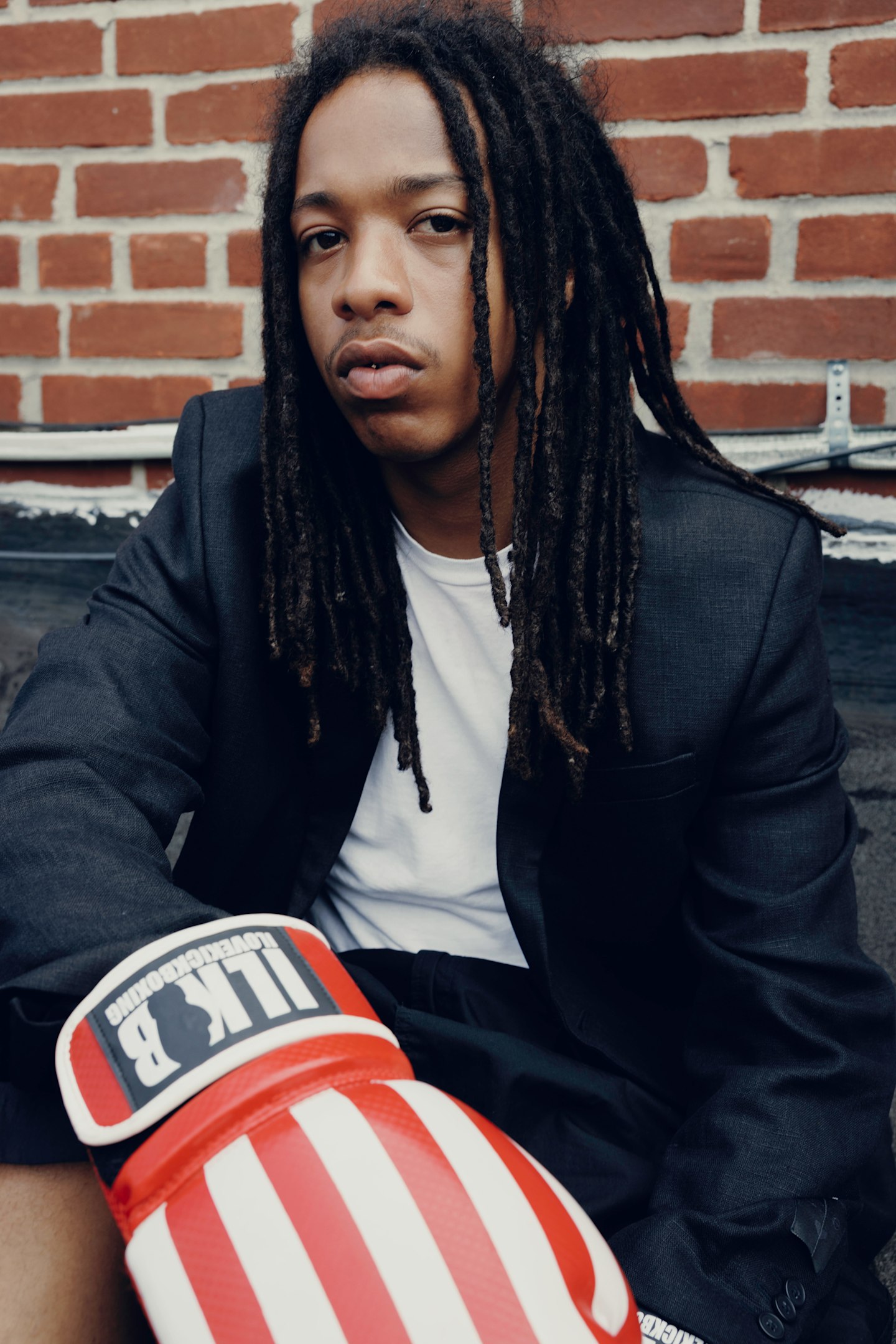
It’s a Wednesday night in Brooklyn, and a group of twenty-somethings is dressed in vintage clothes and jamming out in front of an industrial warehouse garage. Liim, a 22-year-old polymath from Harlem, is hunched up against a brick wall, his suit pants barely covering his black dress shoes and his shoulder-length locs draping his frame. He and his crew are approaching hour 12 of shooting the Martin-inspired video for “Wanna Be With You,” a single from his sophomore album, A Sunflower Garden In Harlem Is Hard To Find. The song, a bit of Stevie Wonder by way of Blood Orange’s Freetown Sound and Steve Lacy’s “Sunshine,” details a period when he was selling weed as a teenager and the girl he was dating at the time didn’t care for it. “I don’t wanna see you / doing anything like that,” goes the song’s hook. “We were on our Martin and Gina shit for real,” he says with a laugh.
It’s been a long shoot day, one starting at his apartment in East Williamsburg before bouncing around Brooklyn and Manhattan. But even on break, Liim is still a ball of energy, chomping at the bit to move and shake for the camera. In between takes, he and director Morian Mikhail work out a strut and finger snap that he brings to the next shot. A quick study and an eager up-and-comer, Liim keeps genre-agnostic influences like Tyler, the Creator, Blood Orange, and Solange on his sleeve, but if you focus on the videos for other singles, more old-school tentpoles jump out.


The visuals for his song “R.I.P. Peace,” directed by 9oodkid, play like the paper cutout style video for Michael Jackson’s “Leave Me Alone” redone as a Microsoft Windows screensaver, while the Nate Clement-directed video for “1980” feels like Eric B. and Rakim’s “Let The Rhythm Hit ‘Em” as reimagined for the world of Belly.
“I love Paid In Full, I love Juice, I love all these hip-hop movies and music videos. These things aren’t as appreciated as they once were, and I wanna be the conductor—the bridge—between them for my generation,” Liim says.
Liim was more primed for this archival affection than most. Born in 2003 and raised by a Muslim immigrant mother in Harlem, he grew up without cable and would often watch the movies, television, and music videos his father grew up with. But there was no escapism to it: The realities on the screen were eerily similar to the world he was navigating as a Black person at the turn of the century. “I always had a very hard time with my reality. I always had a hard time with the fact I was poor and in the hood. I was very conscious of the violence happening around me. It made me not wanna be around anybody for real.” he says.
Early on, Liim recognized how his interest in alternative things like skateboarding, combined with growing up in a home that didn’t allow any music, isolated him from his peers while also putting him on the path to create. Singing was an important outlet for him, one that would bring him peace during the harshest moments of childhood, but he stopped early on because other boys in his neighborhood would call him gay. It wasn’t until meeting friend and longtime collaborator Opraah, who put him onto artists like Tyler and Steve Lacy, that he felt comfortable picking singing up again; first in FaceTime group chats with the homies, then in demos recorded on GarageBand on his phone. One of those became the 2021 springy proto-funk song “Pupils,” which caught a bit of steam online. Since he had dropped out of school after the eighth grade (“I’ve never stepped into a high school in my life,” he asserts), he took his shot at success.
 Nolan Zangas / The FADER
Liim cites DMX and Eminem as the first rappers he fell in love with; both confirmed how difficult and precious the art of rapping is to him. “I consider myself a rapper first before anything,” he clarifies. “For me, it’s easy to make someone feel something through singing. You can sing ‘I’m in pain!’ and niggas gon’ know exactly what you’re talking about. But if you wanna rap about some shit like that and have somebody cry, it can be hard to do that. I wanna get better at rapping and being able to make what somebody can feel in a song through a rap.”
That tug-of-war of emoting as a singer and rapper can be felt on Liim’s 2025 solo debut, Liim Lasalle Loves You. Inspired by a “really bad” breakup with a woman he admits he pushed away, that album’s gauzy sonic palette and singles like “Mezcal” and “Kicked Rocks,” endeared him to wider audiences, not the least of which was Tyler, The Creator, who shouted him out during an interview with Zane Lowe. Liim’s faith in himself was well-placed, pushing him to be more intentional and meticulous when crafting the follow up.


“With Sunflower at first, I started out wanting to make a Harlem album no one had heard before. Then, I came to realize that I’m the sunflower, the thing that’s hard to find in Harlem. That doesn’t make the album about Harlem. It’s a big part of my life, but I’ve been so many places that have inspired me in insane ways in ways equal to that.”
Music helped broaden his horizons, and traveling the world on tour for the first time helped him notice quality of life differences between his home in New York and the rest of the world. (“I love being able to drink actual clean water” he says, half-jokingly.) Sunflower, which was largely produced by Shamshawan and AJRadico with assists from Norwegian producer Lido and London-born producer Budgie, encompasses Liim’s life outside of the breakup that drove Liim Lasalle Loves You, unveiling a tapestry with more than a few frays. The near-death experiences involving dirt bikes and shoot outs crowding the frame of “Machete Summer,” the ass-chaser tales on “R.I.P. Peace,” and the muted freak soul churning within “Is Loving Really Bad?” inform the pep talks of a better tomorrow on “Right Ride.” The streets will force you to grow up as quickly as music stardom will, and being affected by both have pushed Liim to the fore at wild speed.
The night we speak is roughly a week-and-a-half out from release day, but the looks and kudos are already pouring in. The day before, Liim was announced as part of the bill for Tyler’s annual Camp Flog Gnaw festival this coming November. After the video shoot, he has to head home to prepare for a flight to the U.K. for a brief run of shows and pop-ups before settling into a tour of his own in the fall. To be a 22-year-old with a middle school education, making a living off of music, and jet-setting to God knows where is both exciting and exhausting.
“I’m not even thinking of this as a breakout moment,” he says. “The other day, I started stressing about numbers and all that shit. Numbers are important, but it’s a plus, not a must. I want to change the world with my music. This music has changed my friend’s lives, my mother’s life. All of that is a plus. I just wanna make music, bro. Seriously.”
Then, as quickly as we’d started, he joins his friends dancing to Young Thug’s “Floyd Mayweather” blasting out of nearby car speakers, a bouquet of budding sunflowers shining through the dark.
 Nolan Zangas / The FADER