Eartheater tackles the cosmic joy of motherhood
Backstage at Bowery Ballroom, Eartheater talked to The FADER about working with Oklou, her advice for new mothers, and her latest album Heavenly Body: If I’m The Bottle You’re The Message.


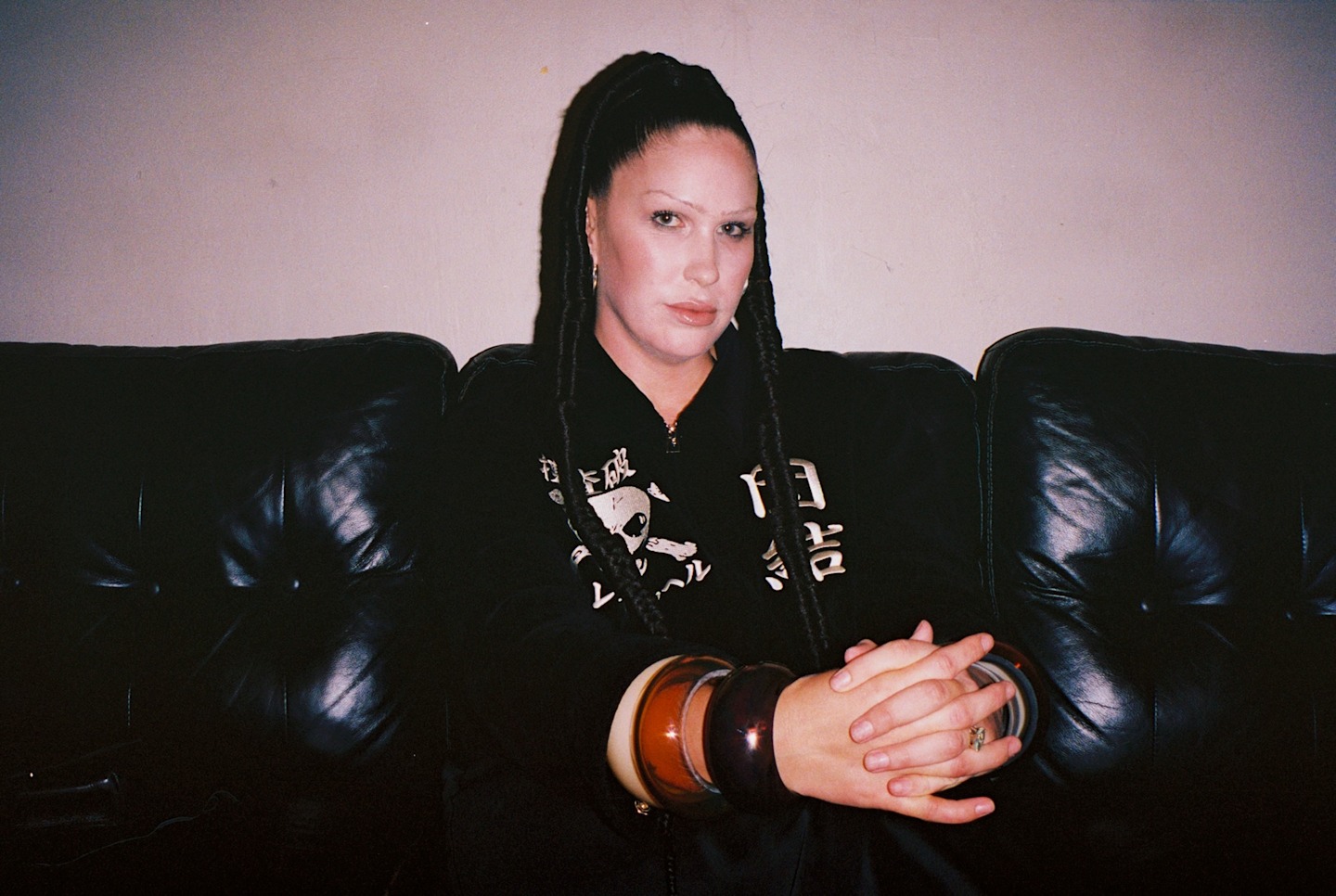 Eartheater backstage at Bowery Ballroom.
Vivian Medithi / The FADER
Eartheater backstage at Bowery Ballroom.
Vivian Medithi / The FADER
“I felt like it might be too personal for people to resonate with,” Eartheater says.
We’re backstage at Bowery Ballroom in July discussing her recently released album Heavenly Body: If I’m The Bottle You’re The Message. Inspired by the conception, gestation, and birth of the singer’s first child, Eartheater’s latest album is anchored by material body horror and divine joy, ecstatic but never naive. It’s an intense record, and an intensely personal one.

To the singer’s surprise, fans loved the album. Although Heavenly Body doesn’t showcase the full breadth of Eartheater’s stylistic range, in its restraint, it feels like her most accomplished LP to date. Even if fans don’t directly relate to her experiences, they can certainly feel the impassioned emotion in her vocals. Plus, dialing in on such a specific, meaningful life event helps to ground and connect her more elaborate and ambitious conceits, including extended metaphors on interspecies mutualism and 1980’s synthpop throwbacks.
The FADER chatted with Eartheater about the recording process for Heavenly Body, working with Oklou, and her feelings and advice on motherhood.
The FADER: You just released Heavenly Body: If I’m The Bottle You’re The Message. The album title itself is pretty self-explanatory, but can you talk to us about the concepts and photo shoots for the album cover and single art?
Eartheater: My friend Yasz art directed the cover, and when she sent me the deck, there were hardly any contemporary references. It was all ancient pottery and sort of shadowy, dusty battered sculptures. It just resonated with me really deeply, and I kind of took that and ran with it. As you can see, there's a vessel on stage with me, and in the artwork, there's a cracked and repaired vase, a wabi-sabi vase. I've been a fan of wabi-sabi forever, so it's nice to be able to have an opportunity to use it, and one that really rhymes with my whole experience right now of really being cracked open and kind of destroyed, and then healing and being put back together, so to speak.
The album cover reminded me of Venus of Willendorf meets Alien's Xenomorph.
Absolutely. I love that it harkens to Giger a little bit, who is one of my favorite artists. And that was by accident, completely. Yasz's headpiece that she made was a custom piece that she molded out of leather and it came out transparent. I do not know how that works, but such a cool process! And it wasn't until after I was looking at the stills and I was like, "Oh my God, this looks like the alien mother," which also feels really cathartic to have been like the symbol or the silhouette of this album. Cause when I was in the C-section room, I felt very Sigourney Weaver. It's just very sci-fi and intense.
With the new record, one of the things that really struck me is that you sing about motherhood with a real confidence or assertiveness. Where do you think that confidence comes from?
I feel like I was really meant to do this. I feel like when I became a mom, I was exactly where I should be. And it just comes to me. I wrote something stupid the other day, but I really felt it. It was like, "ADD girls thrive in crisis," and that's what it felt like this whole time.
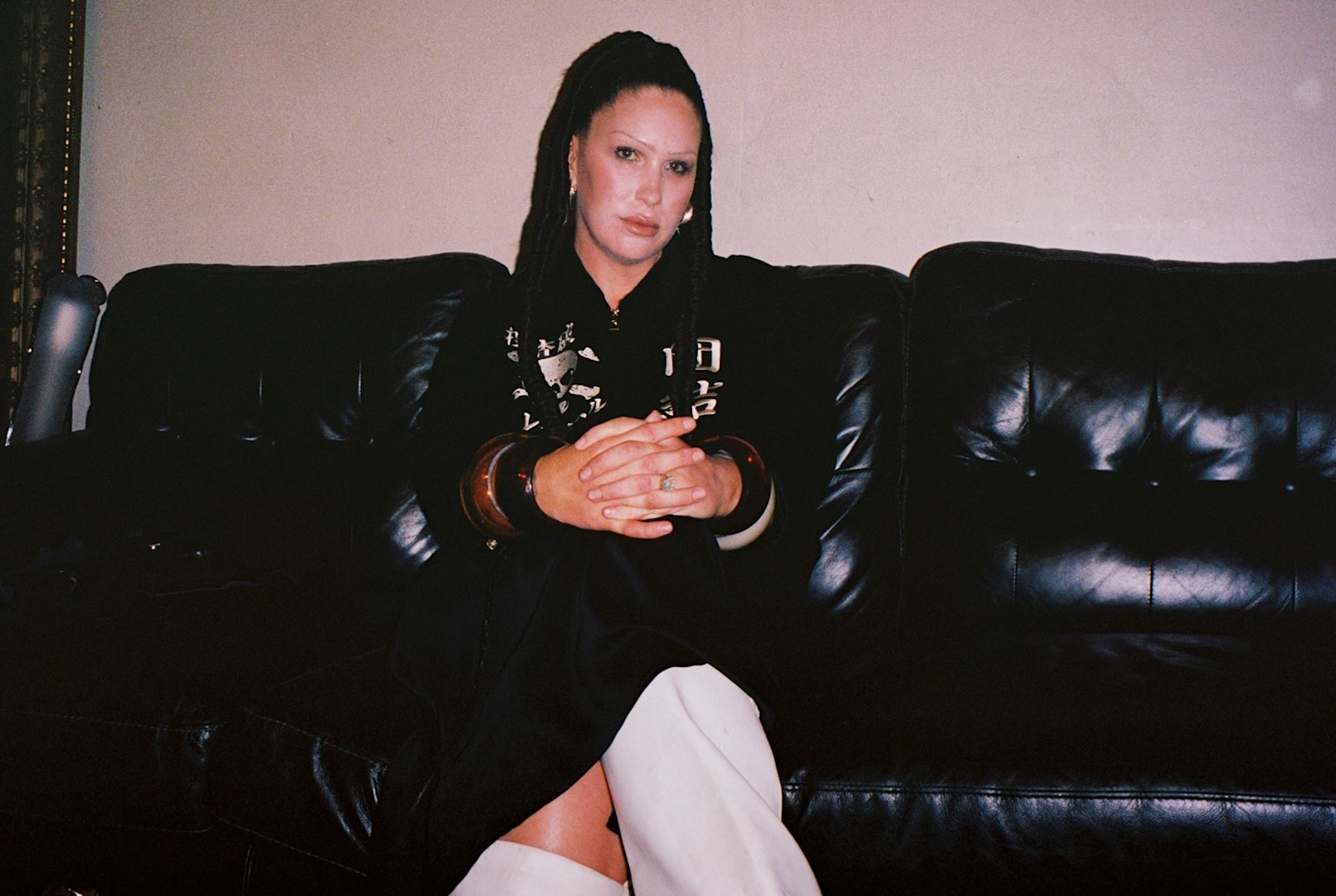 Eartheater backstage at Bowery Ballroom.
Vivian Medithi / The FADER
Eartheater backstage at Bowery Ballroom.
Vivian Medithi / The FADER
When did you start recording the album, and when did you know it was finished?
I started as soon as I had the strength to really move around, and when I felt like I could move with the baby a little bit more, and she didn't have to be so cozy at home. In some ways I feel like in the past I probably would have meandered on the album longer, but every day that went by, I could feel the potency of that experience sort of dissipating. And I talk about it on the track "LFP," how you start to forget the palpable pain and mind-bending psychedelia of early motherhood. It starts to fade away, that feeling, and I needed to release the music and be playing these shows and on tour and talking about it while it's still somewhat present in my being.
One of the things that really struck me about the new album was the use of percussion and how the album progresses and unfolds, like especially the way that the drum machines come in on "Wasp In The Fig." Could you talk to us a little bit about how you were thinking about the drums and the overarching sonic arc of the album?
I have to give that up to my friend Dave Cerminara, who helped me produce this album. He made all those drums from scratch on modular. So even if he tried to replicate one of those drums exactly, he couldn't. And there were times when he would be jamming on modular and I'd be like, "Wait, stop! Go back and do that again!" He's like, "Sorry, I can't." Literally, it's just sort of a magical wielding of sorcery, playing with that kind of raw synthesis. So I feel like the drums very often just came out of the randomness of his wall of synths. But he's a master of production, and I fed him prompts.
On "Crushing" for instance, I was like, "I want something so '80s mommy nostalgia, something that makes me feel like a baby." And that was the music that was playing on the radio when I was a little baby. I wanted to have that represented on the album. So he did make a lot of that with modular, but then also used a drum machine called the Syncussion, which was very prevalent in Skinny Puppy and iconic darkwave and industrial electronica from the '80s.
How do you find balance in these natural, acoustic, old-world textures with the modern and electronic as a musician?
I don't really think about it too much. I have sort of an inexplicable hankering in me when I'm in the studio, and we keep itching and scratching until I feel it satisfied. It ends up being kind of like an amalgamation of things from the past that are sonically subverted in a sense, into something that feels fresh. But in the past, I think I've been more careful to not fall into nostalgia and try to push for things that feel like they're piercing the membrane of what's new a little bit, and I’m relaxing on that a bit.
How did your collaboration with Oklou on "Fast Asleep" come together?
Lou and I have been mutual, sort of distant friends in music for quite a few years now. And I always knew that I wanted to work with her and sing with her. But as soon as we had babies almost the same day, I knew that we had to sing something together. And I wrote that lullaby and had always wanted to sing with somebody in a dual harmony as opposed to it being singer and backup. I just knew her voice would sound so perfect.
Obviously, we're big fans of "Wasp In The Fig." Can you talk to us about when you first learned about fig wasps and the recording process for that song?
First of all, thank you so much for your beautiful piece of writing on that. I thought it was really insightful and lovely, and it's just cool to see how music... I felt like you seemed inspired by it, so that was cool.
I don't remember when I found out about fig wasps and read about it, but I remember being blown away when I heard that this incredible asexual or interspecial, if you count trees as species, interspecial intercourse that happens in this miraculous thing. I just thought it was really erotic and magical. You said in your piece, the specificity. The specificity of it just speaks to the kind of care that comes about… trying. I was thinking about how the wasp must have just been trying to do this for however long that process took to evolve. And I thought about that, maybe the wasp was just obsessed with the sugary sap, and it's a female wasp that goes inside [...]
It's really horny and cool, and poetic more than anything. I was thinking about how something in me had to die to become a mother, and I used to be quite a debaucherous person, and I don't regret anything. I think it's part of who I am, and I grew so much, and I learned so much in all those adventures. But you have to stop being crazy when you're pregnant and about to have a baby, so I had consciously let that die. But it was a beautiful thing, you know? And I liked the imagery of this demon-time past being a wasp that then just gets consumed by this sugary, warm, juicy womb of a fruit.
What's the best thing new mothers can buy for less than 100 bucks?
Good question. It's called a Tushbaby, and it's essentially just an extension of your hip, like a shelf that you just sit your baby on top of, and it has all these pockets. It's very tactile. I don't carry a diaper bag. I just have a Tushbaby and I put my diapers, I put my wipes, I put my phone, my passports, everything in it. And I don't have a stroller, nothing. I just put my baby on there and she's not trapped and confined, so when she wants to get down I can quickly just pop her down. I just love that thing. Other parents that know, know. It's a really good one.
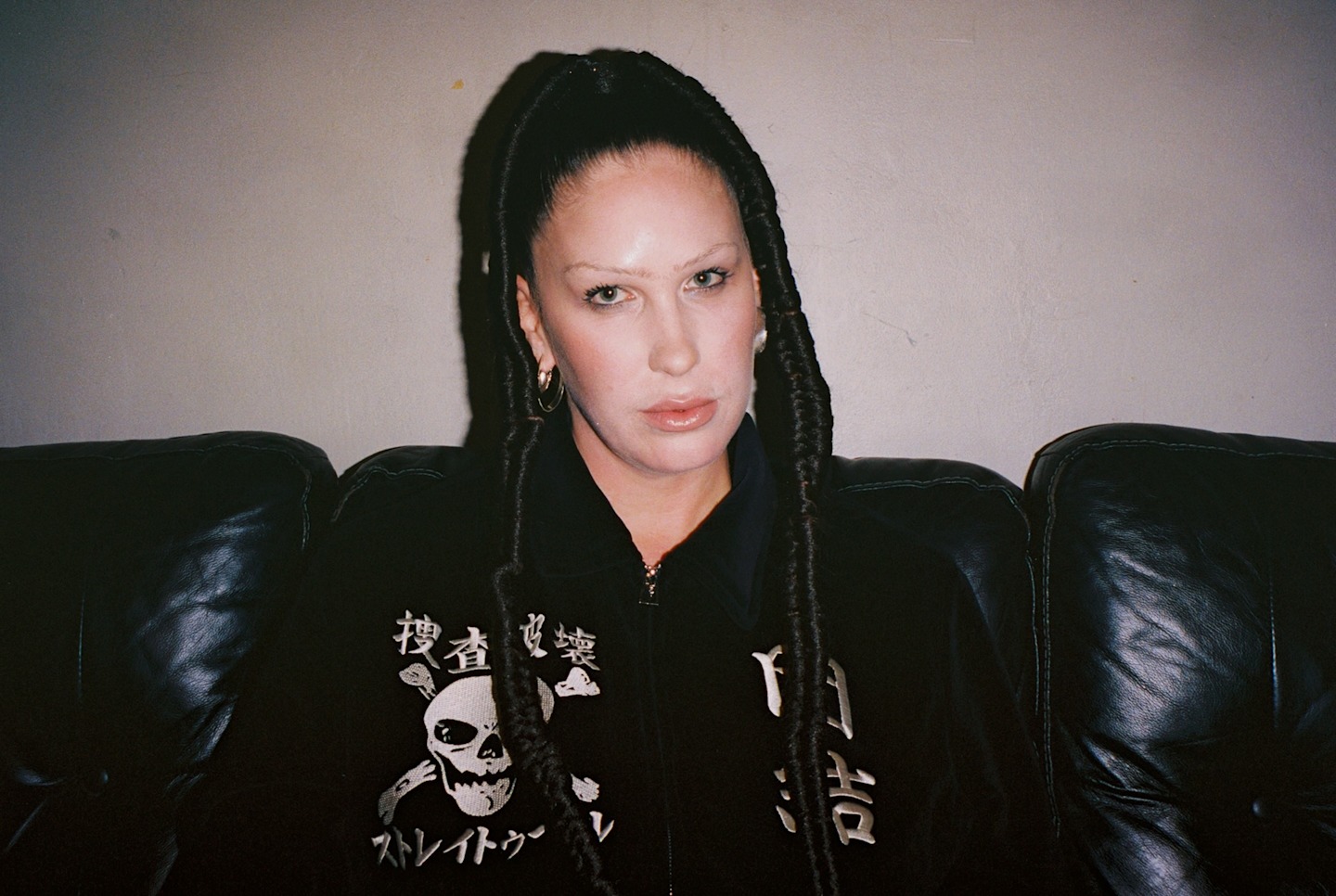 Vivian Medithi / The FADER