 Salwan Georges/Getty Images
If you pay attention to electoral politics in the United States, then you know last night’s midterm elections were a big deal. Despite hyperpolarization, gerrymandering, and voter suppression tactics, across the country, American voters overwhelmingly voted in favor of Democrats and against the incumbent Republican party, a clear response to rising unaffordability, the violent and excessive tactics of ICE and CBP under Trump, failed attempts at regime change in Iran, the ongoing genocide in Palestine, AI data centers being prioritized at the expense of everyday citizens, and more.
Still, the enormous shift from red to blue in some of Republicans’ most established strongholds – Texas, Alabama, and beyond – indicates a dramatic upswing in progressive political sentiment across the country, if not an outright fracturing of the Republican coalition. Here’s a quick look at 14 landmark victories from the 2026 midterm elections.
Keisha Lance Bottoms, Governor of Georgia
Key policy issues: Affordable housing, voting rights access, criminal justice reform, and economic equity.
Keisha Lance Bottoms flipped the governor's office in Georgia and became the first elected Black woman governor in U.S. history. Bottoms previously served as Mayor of Atlanta from 2018 to 2022, following an eight-year stint on City Council. Bottoms ran on a platform that included affordable housing and protecting voter rights.
Her campaign website also emphasizes her commitment to “transparent and ethical leadership” as well as “public safety and community support,” though her track record on those fronts is less than ideal. Back in 2017, then Councilmember Bottoms misused $40,000 in taxpayer funds to send out campaign fliers (she was ultimately fined $37,000 for the campaign finance violation), and her biggest win for “public safety” was the establishment of the Atlanta Public Safety Training Center last year, a sprawling, 85-acre training facility for the Atlanta Police department, colloquially known as “Cop City.”
Cop City has been a major flashpoint between progressive voters and Governor-elect Bottoms. The $67 million dollar facility necessitated major deforestation in Georgia, and an environmental activist Tortuguita was killed by Georgia State Patrol during 2023 protests against the construction plan. That’s on top of what critics see as a feedback loop where police brutality leads to more money for cops in the name of “training.” Despite the massive cost to taxpayers and sustained public criticism, including an extensive push for a ballot referendum, voters were never allowed to seriously weigh in on the proposed training center.
Deb Haaland, Governor of New Mexico
Key policy issues: Environmental protection, clean energy transitions, and federal advocacy for Indigenous communities.
The former U.S. Secretary of the Interior and Representative in U.S. Congress became the first Native American woman elected governor of a U.S. state. While she has a strong track record of Indigenous advocacy, her gubernatorial campaign focused heavily on education, affordability, and public safety. Haaland has said she wants to limit the areas where ICE can operate in the state while increasing police budgets to provide additional training, technology, and support.
Peggy Flanagan, Minnesota Senator
Key issues: Childcare affordability, paid family leave, public education funding, and Native American rights.
The Democratic Lieutenant Governor of Minnesota became the first Native American woman elected to the U.S. Senate last night, campaigning not only on kitchen table issues but a stridently anti-ICE platform following the murder of Alex Pretti by ICE agents in Minneapolis this past winter.
On her campaign website, Flanagan says “ICE is out of control” and calls for an end to the Trump administrations mass deportation policy, though she also wants to “modernize and invest in the technology and capacity needed to maintain orderly borders.”
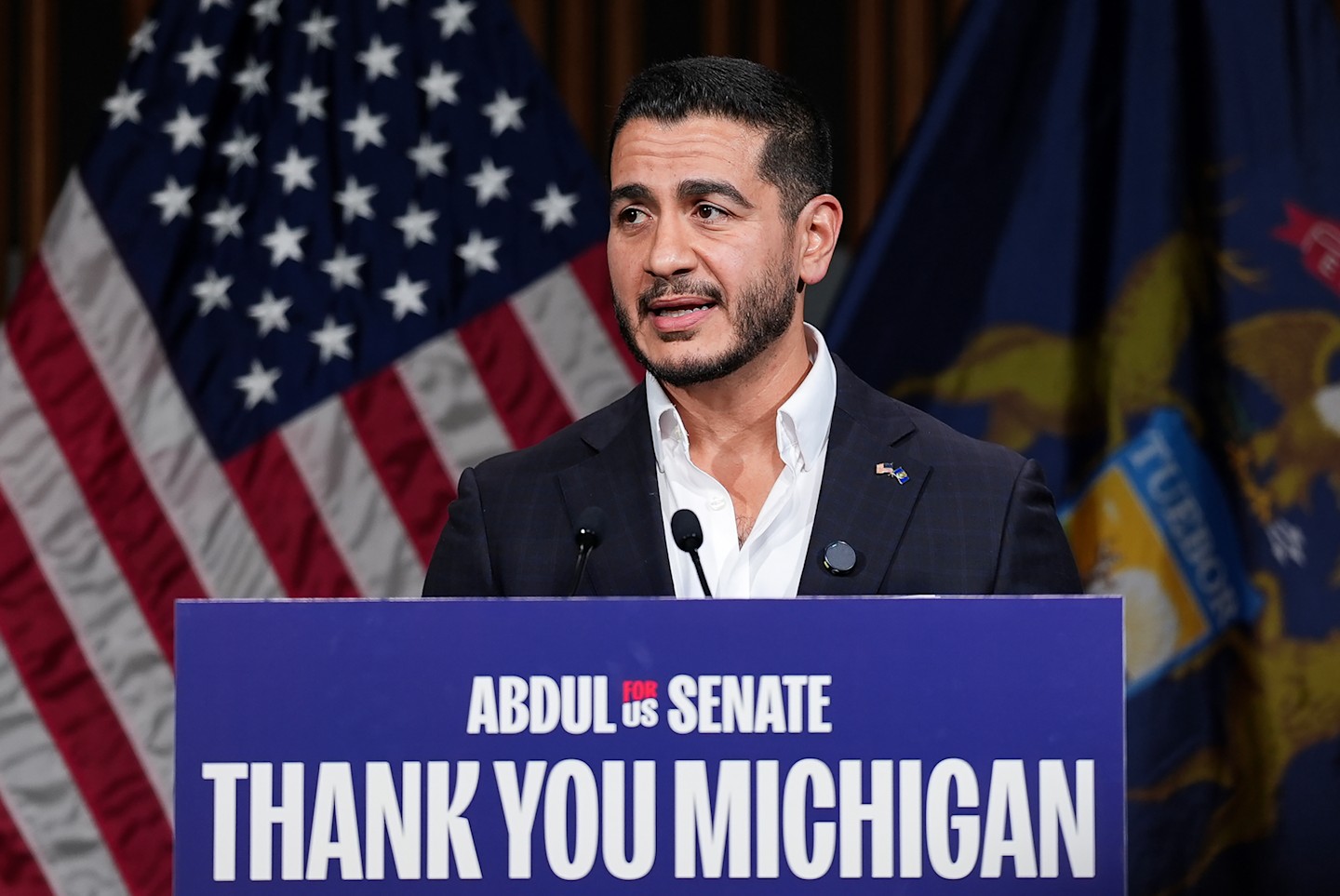
Abdul El-Sayed, Michigan Senator
Key Issues: Medicare for All, public health infrastructure, environmental justice, and corporate accountability.
The physician and former health director for the city of Detroit became the first Muslim member of the U.S. Senate after winning his election last night. His campaign summarized his sprawling policy platform as “money out of politics, money in your pocket, and Medicare for all,” though he’s perhaps best known nationally for his staunchly anti-Zionist, anti-Israel stance when it comes to foreign policy (and driving former primary challenger and AIPAC-funded U.S. Representative Haley Stevens to come out in support of his Republican opponent).
Chris Pappas, New Hampshire Senator
Key Issues: LGBTQ+ rights, lowering prescription drug costs, infrastructure investment, and veterans' services.
Previous U.S. Representative Chris Pappas became the first openly gay man elected to the U.S. Senate last night. Pappas ran on an anti-corruption agenda to get big money out of politics and end the so-called “revolving door” between lobbyists and legislators, plus affordability issus like healthcare and energy costs. As part of that affordability push, Pappas would like to lower taxes in New Hampshire and seeks restitution for small businesses affected by the Trump administration’s increased tariffs.
Gina Hinojosa, Governor of Texas
Texas State Representative Gina Hinojosa became Texas’ first Latina governor, and the state’s first Democrat governor since 1990, in a surprise upset over incumbent Republican Greg Abbott. Previously a pro-union civil rights lawyer and board member for the Austin Independent School District, Hinojosa ran on a platform prioritizing educational reform and a moratorium on data center construction, as well as baseline affordability issues. During her time in the Texas State Legislature, Hinojosa attempted to push progressive legislation to improve healthcare affordability, LGBT rights, and public school funding, though these efforts were often stymied by GOP majorities in the legislature. Her gubernatorial run was endorsed by the Texas AFL-CIO, The Texas State Teacher’s Association, and pro-abortion PAC Emily’s List.
Byron Donalds, Governor of Florida
Key issues: Fiscal conservatism, school choice expansion, Second Amendment rights, and border security.
The Republican U.S. Representative became Florida's first Black governor, extending a three-decade streak of GOP control over Tallahassee. The Trump-endorsed candidate is also the first Black Republican governor in the U.S. Prior to the 2026 midterms, only three Black (male) governors had been elected, with a couple more serving in the role via succession. Donalds’s campaign focused on affordability and “Backing the Blue.” Donalds also came out in support of data centers, though he clarifies that communities should have input and that the companies building these centers need to shoulder the responsibility for energy costs.
Adam Hamilton, Kansas Senator
Key Issues: Rural healthcare access, agricultural support, and reducing hyper-partisanship in Washington.
What does it take to win a Senate race in Kansas for the first time in 94 years? Being the Pastor of the largest United Methodist Church in the country can’t hurt. Senator-elect Hamilton made affordability a key tenet of his campaign, from rising energy and housing costs to lowering healthcare costs and addressing rising senior care costs. Hamilton has also said he would like to establish age limits for Congress members to serve and bar them and their staff from buying individual stocks, cryptocurrency, and wagering on prediction markets.
James Talarico, Texas Senator
Key Issues: Public education funding, lowering healthcare/insulin costs, and reducing the federal debt.
“The first set of legislation I will pursue in the U.S. Senate will be an anti-corruption package to ban super PACs and corporate PACs, ban partisan gerrymandering, and increase transparency and accountability in all branches of government,” Texas Senator-elect James Talarico says in his campaign platform. Tightly binding that message to rising costs for everyday Americans, Talarico managed to flip a seat for the Democrats’ first U.S. Senate win in the Lone Star State since 1988. Talarico is definitely a progressive, though some of his policies, like a Republican sheriff-endorsed border security plan that calls for hiring more ICE agents to “crack down on cartels,” reflect a less-progressive outlook than some of his peers both within and beyond his home state.
Annie Andrews, South Carolina Senator
Key Issues: Gun violence prevention, protecting Medicare/Medicaid, and expanding pediatric healthcare access.
Last night, the pediatrician and gun violence prevention advocate became the first Democrat to win a Senate race in South Carolina in nearly 30 years. Her affordability-focused platform focuses on cutting government spending and public funding for data centers while reducing costs for average Americans by ending tariffs and simplifying the tax code. Andrews would also like to end Congressional stock trading and introduce hard term limits for Senators and Representatives.
Amy Acton, Governor of Ohio
Key Issues: Rebuilding public health infrastructure, healthcare accessibility, and science-based public policy.
This physician and former director of the Ohio Department of Health became the first female governor of Ohio, and its first elected Democratic governor since the 2006 midterms. Acton was facing GOP darling Vivek Ramaswamy, a deeply uncharismatic entrepreneur endorsed by President Trump, Elon Musk, and incumbent Ohio Governor Mike Dewine.
Acton’s gubernatorial campaign focused on affordability, education, and investment in the state’s agriculture sector, as well as access to reproductive care and LGBT rights. Acton was endorsed by a variety of unions as well as former President Barack Obama, and saw increased support after Ramaswamy ran a political ad alongside her estranged mother in a move that was strongly criticized on both sides of the aisle.
Troy Jackson, Maine Senator
Key Issues: Labor union protections, working-class and logging industry support, and lowering prescription drug prices.
This state legislator and logger flipped a crucial Senate seat by defeating a five-term Republican incumbent. His healthcare-focused campaign advocated for Medicare for All and reducing the cost of prescription pharmaceuticals, as well as passing a federal right to abortion. Jackson’s campaign also called to completely abolish ICE, end the genocide in Gaza and U.S. funding for Israel’s military, and overturn Citizen United to get dark money out of politics.
Josh Turek, Iowa Senator
Key Issues: Disability rights, accessibility infrastructure, and protecting rural healthcare networks.
This Democratic state representative and Paralympic gold medalist just flipped a U.S. Senate seat in Iowa, a typically Republican state with the occasional pang of progressivism (Iowa was the third state to legalize gay marriage, following Massachussetts and Connecticut). Turek’s campaign emphasized rising costs for everyday Iowans, promised to codify Roe v. Wade, and called for conditions on U.S. aid to Israel. Turek also focused on improving access and reducing costs for healthcare, as well as improving support for fellow veterans post-deployment.