Boys Noize on ‘7LLVSION,’ Nine Inch Noize, and staying authentic
“I feel like techno’s a bit cooked right now.”


 Ian Buosi.
It’s Boys Noize’s party, and he’ll play what he wants to.
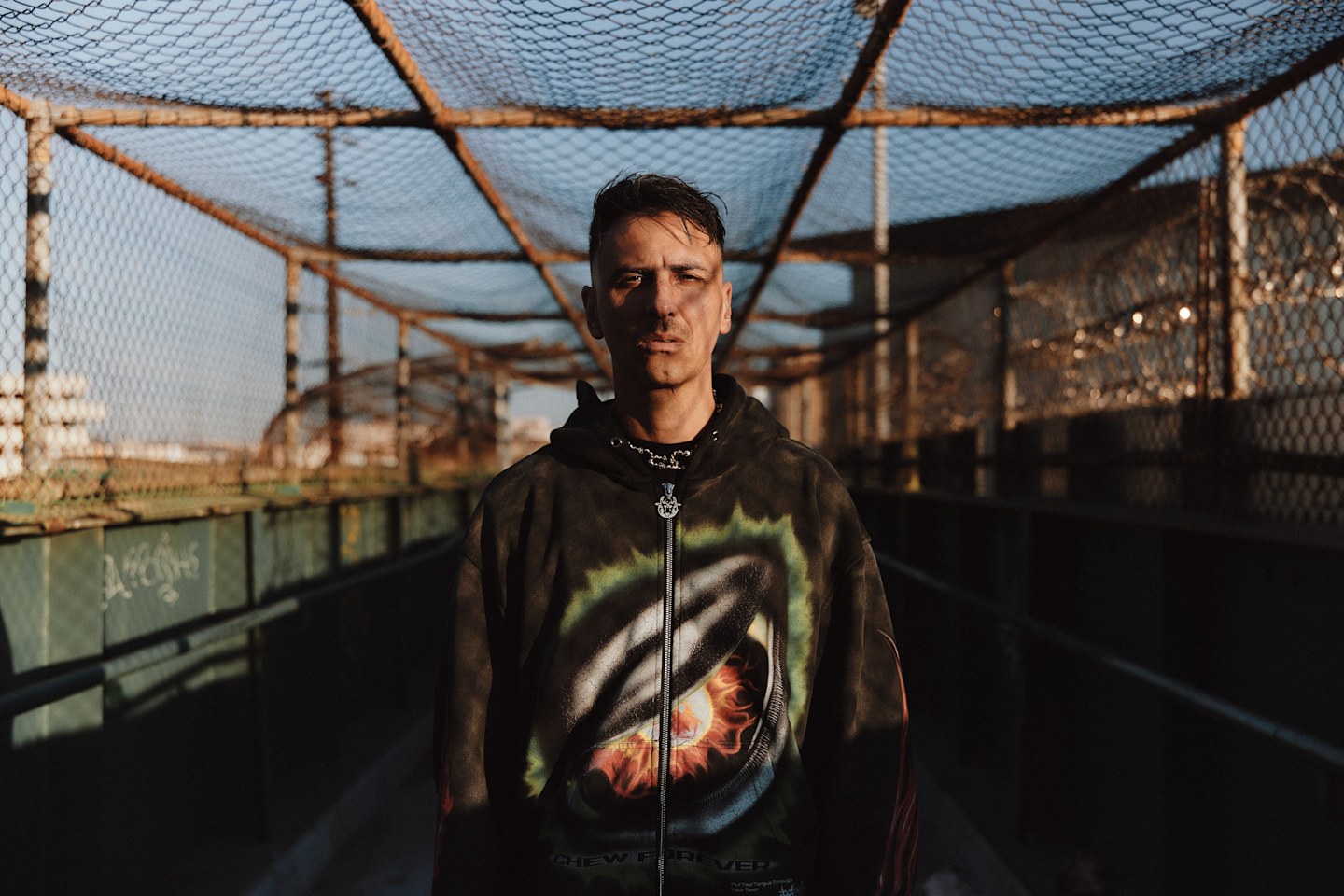
Since his last release, 2021’s +/-, the Berlin-based DJ and producer has been on quite the roll: working on soundtracks for Challengers and TRON: Ares, and collaborating with Nine Inch Nails on a joint Nine Inch Noize live album. Tomorrow, November 6, Boys Noize (Alex Ridha) is returning with his first solo album in five years, 7LLVSION.

Even with the dizzying success and diverse projects he's worked on, Ridha has become disillusioned by the increasingly market-driven and algorithmic nature of the electronic music landscape. “After +/-, I wasn't sure I’d do an album ever again,” he admits during an October video call with The FADER. “I love making albums, I love taking time for the art, but the actual release day and what comes after is weird because of the circumstances we live in. The album’s just a swipe away from the next.”
When crafting his latest release, he took solace in his role as a DJ first and foremost. “One of the premises for [7LLVSION] was to have 100% bangers for my sets,” he says. Channeling his frustrations and inspirations into an album devoted entirely to the club, Ridha’s taking the helm as Boys Noize again, with his always-evolving influences running the gamut from baile funk to punk to German Cold Wave. What he ultimately produced in 7LLVSION is brash and fresh: a middle finger to the algorithm, but ultimately a love letter to the dance floor.
Below, read Ridha’s discussion with The FADER about his return to releasing solo work, his collaboration with Nine Inch Nails, and maintaining authenticity amidst the commercialization of electronic music.
 Ian Buosi.
The FADER: What brought you back to solo work after five years?
Alex Ridha: I dialed into early-'80s synth-wave bands. I liked the idea of seeing what that would sound like with my machines; it’s also the music I grew up with. Also, two periods of time in German music: one, the Krautrock era, early electronic, Kraftwerk; two, anything that Conny Plank produced. He produced for Can, DAF (Deutsch Amerikanische Freundschaft), and Eurythmics. That was definitely a big inspiration.
I wanted to make this album because of the current state of electronic music in general. I needed more music for my sets that I was really excited about playing. I wanted to be able to play every song out, which wasn't always the case. [My album] +/-, for instance, was more conceptual: [it was] slower, slightly industrial, George Michael meets Nine Inch Nails sound. Sexy, but more for listening.
On the state of electronic music right now – how do you feel about the rise of genre fluidity as a whole?
I'm influenced by everything, but I'm mostly inspired by the music I play as a DJ. Over the past two years, I’ve definitely felt Brazilian music goes the hardest. I feel like punk is a big part of it, even though it’s not trying to be punk. But that's the expression I get. It's more about the feeling than trying to make something sound perfect or well-produced.
I play a lot of techno festivals, and I feel like techno’s a bit cooked right now. But it's fine; there's always been commercial music, and I'm not bothered by that. I just haven't gotten this radical feeling lately, except maybe the Brazilian sound. That definitely played a big role in making this type of record and even in going back a bit to where I started with [my album Oi Oi Oi], which was a similar electronic punk vibe with the idea of playing everything out.
“I feel like techno’s a bit cooked right now. But it’s fine ... I just haven’t gotten this radical feeling lately, except maybe the Brazilian sound.”
I’d love to hear more about “Nächstenliebe,” the Brutalismus 3000 collab.
It started with post-punk, early-wave, early '80s, late '70s songs. Synthy arpeggio stuff with really raw drums and [Brutalismus] freestyling over it. While producing their album, I played some of my demos and they really liked this one. I was like, let's do one on yours and one on mine.
There’s not really a word for “nächstenliebe” in English; I guess it translates to “love the other person as much as yourself.” The lyrics are about going out and feeling this anonymity on the floor. You don't know them and it doesn't matter; we dance together, or we dance apart or away from each other. We wanted to write something very minimal and repetitive that still means something.
How did you handle collaborations on this album overall?
I'll take the acapella [vocals] and mix a different record with it. I was doing a bit of that for [“Ycore” (featuring Mayah Alkhateri of Kiss Facility)], where I had the idea to just play bass over the beat, and within two hours I made this Arabic cold wave track with the acapella. I met Mayah through Sega Bodega, who’s an old friend of mine. It was cool because I wanted to try to do something Arabic; I’m half-Iraqi, but I’ve never done anything like that in my music.
With ZEP, I discovered his music and thought he was super cool. We happened to both be in LA and made two crazy tracks. He really loved this post-punk, German-wave-inspired beat that I made, and the song came so quickly. We talk almost every day now, and he's become a really good friend. I think that's the main thing on my album: it just has to feel good and be a no-brainer. In the end, it's just friends I work with.
With such a wide-ranging impact on electronic music, what are your thoughts on straddling the underground and the mainstream? Have your feelings changed as you've blown up?
I don’t think the term “underground” has really existed for a long time. What has changed a lot is ideas about integrity and community. Coming from Berlin and fighting against these really hardcore, idealistic guys with all these rules for acceptance – as much as I love music coming from something pure, I also never liked the idea of saying it can only be one thing. That's how it was forever: Berlin had techno and rave, Hamburg where I’m from had House music, and you had to play this or that. Thank God this has eased up these days.
In Detroit, there are producers that make records to play for next weekend’s party. I love this. That's how I started: making records for the parties I played. Everything’s allowed, and it's great. Many of my influences shaped this, like 2manydjs playing the Stooges with a techno record and then breaking it down to Beyoncé. I loved all this craziness, this freedom around the definition of a good party. But a lot has changed because of the digital stuff. I've definitely been questioning the idea of punk. What is the new punk these days?
 Ian Buosi
“Berlin had techno and rave, Hamburg where I’m from had House music, and you had to play this or that. Thank God this has eased up.”
It's really easy to co-opt certain aesthetics or figure out how to create certain sounds without actually caring for where it came from in electronic music.
It's way easier to be like, Yeah, the aesthetic is cool, but it's detached from the actual thing. It's about clout. Things have become a lot more commercial. I know cool people, clubs, and communities, and every place has good stuff. It's just this overall feeling of integrity going down the toilet.
But it also inspires me. That exact feeling made me do this album. It’s how I felt a few years ago, but then I had this drive, this new trigger of energy, and it was so clear. I felt like, Man, no one else is expressing what I'm feeling, and it was so easy for the music to come out. What really helped me make this album was just making it for myself, for my sets, because I don't have to rely on anything else. I’ll play it everywhere, and I don't have to worry about all this. It's a blessing to think this way, which is how I started making music.
 Ian Buosi.