

In the three years since Shygirl put out her debut album, Nymph, she entered her 30s and fell in love. Not the puppy love kind, but the real one, where it feels like your whole life force has become attached to another person. "As if I didn't exist before, you make me feel real," she sings on one of the songs from her sophomore record, Swallow!, her documentation of this chemical change happening within her. Releasing Friday, November 6, it is a project that reveals a new side to the London polymath who's already acclaimed for her production, remixes, club sets, and ability to set a party. On Swallow!, she generates a world that extends beyond the edges of a stage and sprawls infinitely outward. It's her most complete and full artistic statement to date.
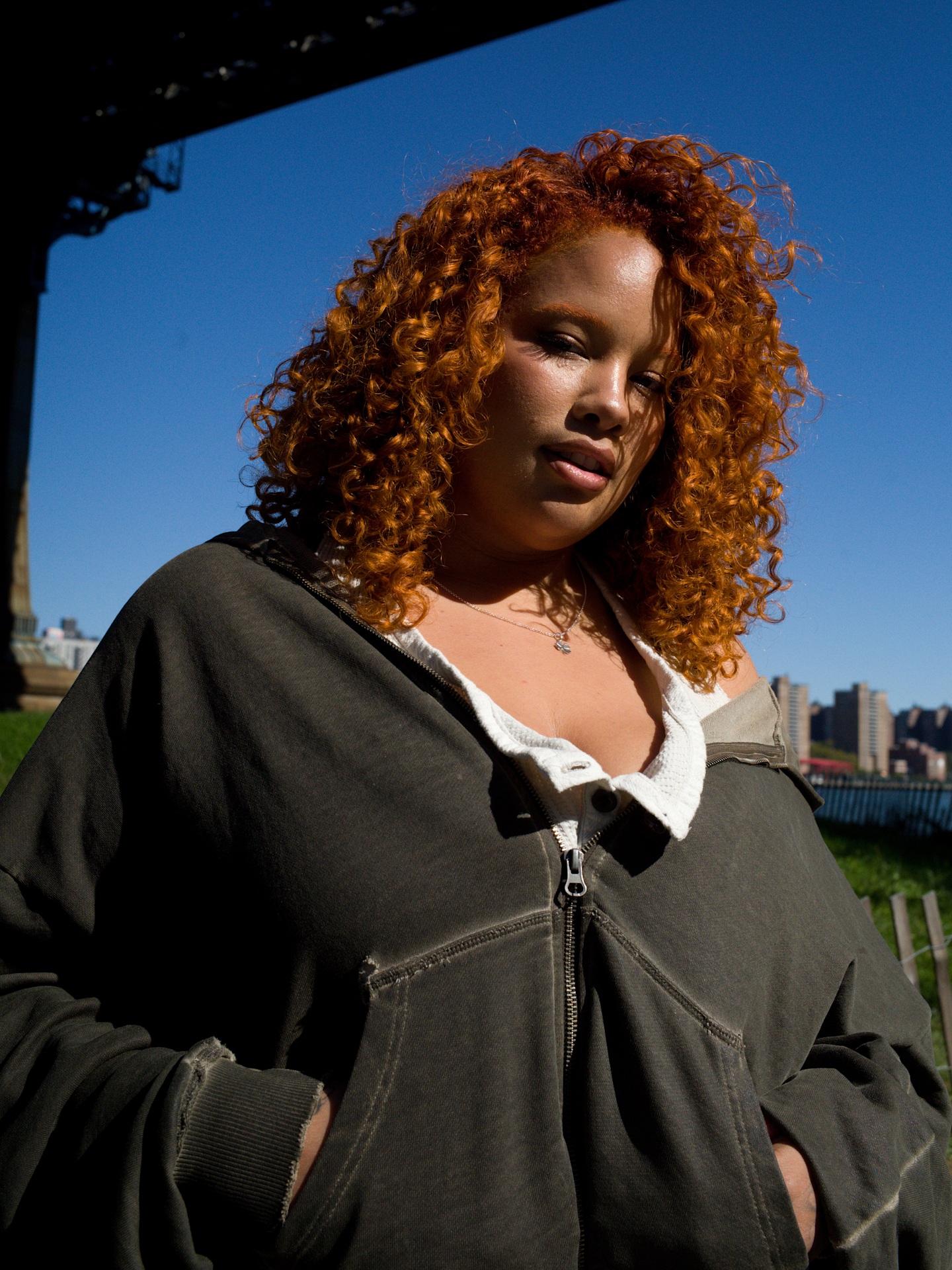
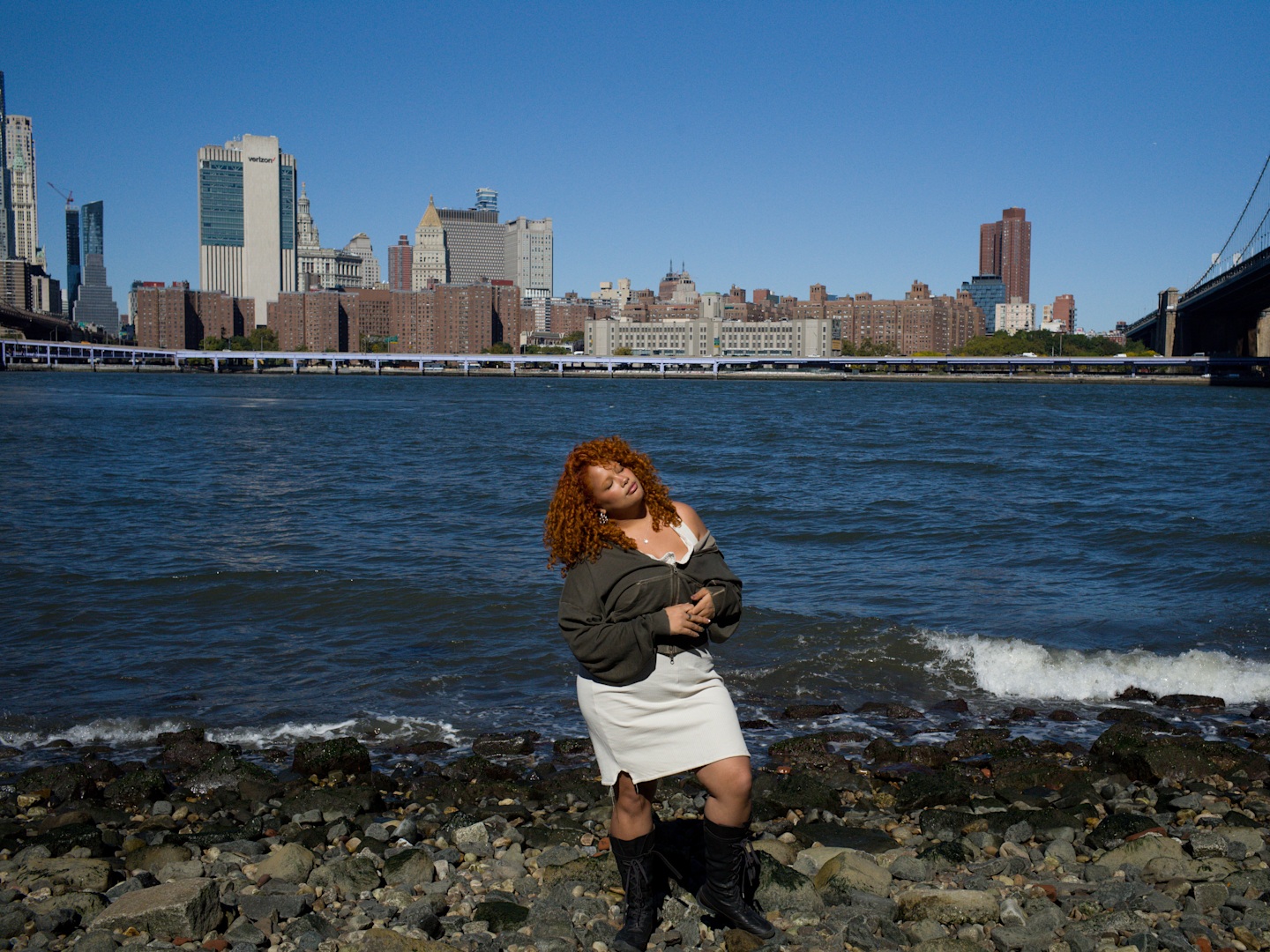
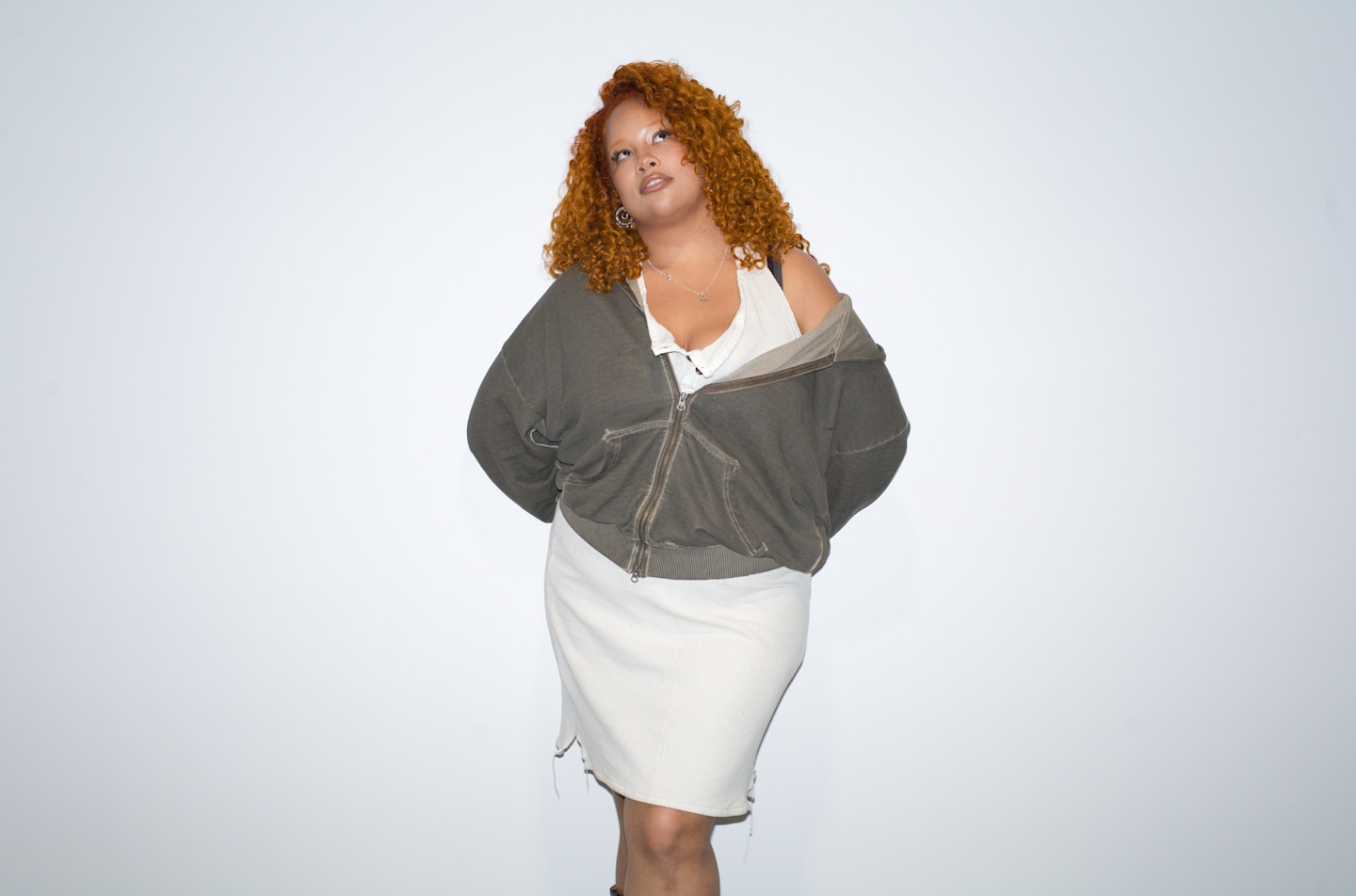
On a sunny September morning, Shygirl swung by The FADER offices with a head of perfectly coiled curls, feeling excited but also totally serene about the impending new project. The fact that love, perhaps the most written-about topic in the history of recorded music, was the impetus of Swallow! didn't seem to bother her.
“Love in itself is a cliché, you know?" she says in our latest FADER Interview. "All the times I've written about versions of it for myself, or read the books and watched the movies — now I was living my own kind of realistic version of it. And it felt so nice to be a part of that club."
In Shygirl's hands, the feelings of desire and passionate possession feel 3D and supercharged with bloody energy. Songs like "Real" and "Alyse" highlight a raw and primal-ness to the emotion. Part of it is due to the straightforward nature of the songs, her desire to say what she was feeling in the simplest and clearest way: "'I am so lucky' is just what it is," she said of her songwriting. Elsewhere in our conversation, she revealed that the album's intimate ambition allowed her to explore more complex ideas of how she wants her music to be received and interpreted by her audience — the constant gear-turnings of an artist striving for intention and meaning while operating in an ecosystem that frequently denies it.
Ahead, read a transcript of our conversation with Shygirl about Swallow!, writing about love, and the story behind its album cover. Watch the full interview above.
Video Credits:
Talent: Shygirl
Interviewer: Steffanee Wang
Creative Director: Nadine Ng
Director of Photography: Ethan Holland
Editor: Quinton Dominguez
Sound Mixer: Alexander Zooi
Score: Luisa Bryan
Executive Producer: Steffanee Wang, Jon Cohen, Anthony Holland
Special Thanks: Orienteer
The FADER: Hey, I'm Steffanee, I'm the editorial director of The FADER, and today we're joined by Shygirl.
Hey.
Shygirl is a London-based DJ, producer, singer, songwriter, whose amazing DJ sets and production prowess has led her to work with everyone from Arca and Björk to Charli XCX and PinkPantheress. On November 6th, she's releasing her sophomore album, Swallow!, which I feel like is a bit of a sonic turn for you.
Yeah.
Welcome!
Thank you. I love this little intro you gave me, thank you.
I hope you felt it was accurate!
No, yeah, I don't remember all those achievements. You're just in it, so it's quite nice to be reminded.
Yeah. I mean, speaking of achievements, it feels really surreal to say this is your sophomore record because I feel like you've had such a long career. How are you feeling?
I know. I just... yeah, it feels weird to be saying this is only like the second album, but yeah, it is only the second album. But there's been so many projects in between, which has been nice. It's so nice as a musician that we get to explore mixtapes, EPs, every kind of format that I guess shapes the intention behind a release. Like, having an album, you kind of go into it with a different mindset, because I felt like I needed to be a bit more cohesive and concise, and also be telling like a story that landed somewhere. So I hope Swallow! does that.
What made you feel ready to tell this story? I will say that the first time I listened to it, I felt like it's such a complete artistic statement from you. Obviously, your previous projects are amazing, but in such a different way. You know, we hear so much of your voice and your inner thoughts, and the sound is obviously different, which we'll get into. I mean, tell me, what was it like planning this?
I think it was all pretty intuitive. The timeline of it all: Swallow! was the first music I came to as soon as I finished Nymph. And obviously that's very different for my audience, because for them, after Nymph, they received Club Shy. But Club Shy was the vehicle in which I could hide behind and have time to finish Swallow!. And Club Shy was actually born before Nymph, in fact, the music. And I had been playing that music at afters and it didn't really feel accurate to put that out first, even though that was actually the first music I had made around the same time as like Alias and before Nymph, because it didn't feel as broad as what I believed I was capable of, and I didn't want that to be the first instance people kind of interacted with me and thought, "Oh, that's just what she is." I feel like Nymph did a better job of kind of a smorgasbord of "Here's all the genres that I like and here's a taste of it all." But also I wasn't as much of an accomplished performer, musician, as I would say I am now entering into the world of Swallow!. I think I had to have Nymph and Club Shy, room one and two, to kind of give me the tools to learn and improve and kind of try out the early stages of my ideas, and then return to them in this record.
I like that you said Club Shy was a moment for you to kind of hide behind, because Swallow! is quite a vulnerable record.
It's really vulnerable.
Like, did you, I guess you felt like you needed some time to like prepare yourself to like, "Okay, I'm going to, you know, open up about this," or?
Yeah. I think I was living in it entirely. Like what I'm writing about in Swallow! was happening in that moment. And which is why, you know, I started it end of summer 2023, and only finished it December 2025. So it really encapsulates all that time. It's about falling in love, you know, and also acclimatizing to a new environment I had found myself because I was making music. You know, to be perceived as I had been during the sweat tour, like all of that was happening as I was finishing this. Um, also just being aware of people interacting with my music and who those people were. On that journey, on those shows, I was meeting people and actually like seeing the people who were buying the records, and they were telling me their stories about what the words meant to them, what parties they'd discovered it in, or who had shown it to them. The world was a lot more tangible to me now, and I was seeing myself through their eyes. So it was really nice to kind of land and be like, "Who do I want to see from me, not just what do people want from me?" And I think Swallow! is the conversation of that.
Yeah. Like let's get into, you know, what spurred the record, which you said is falling in love. You turned 30, and it's a very…
[Laughs] Oh my god.
I feel like it's a very just kind of like blossoming into yourself and and the new phase of your life.
Yeah, it's such a cliché, and you know, being in your thirties is realizing that, boy, you have encountered all of the clichés up until that point, you know? Before that, you'd like to think that you're an original and that everything you're doing happened for the first time through you. But I feel like I found so much comfort in my thirties knowing that I wasn't the only one thinking or feeling the things that I was going through, and that there were others before me and they'd come out the other side or they were experiencing it in that very moment. So I found that really comforting, and also the whole thing of falling in love in that moment felt very gratifying, you know, to be a version of myself that I was so happy with, but also a culmination of all the other parts of me before that I perhaps were embarrassed about or, you know, the typical cringe things that happen when you're in your early twenties. And now sitting with them and being like, "Oh, thank God that happened, otherwise I wouldn't have landed here." And love in itself is a cliché, you know? All the times I've written about versions of it for myself, or read the books and watched the movies, and now I was living my own kind of realistic version of it. And it felt so nice to be a part of that club, you know?
Yeah. Well, you end up learning why clichés are clichés, because they're so... there's so much truth in them, too. What was interesting for you to want to communicate about your experience falling in love and romance?
I think I just needed to understand what's happening. And the feeling was so visceral and so tied to someone else. You know, there's an external power over me, and as much as I was engaging with it, you know, it felt like something that was all-encompassing, and I needed to understand this environment. And also I had this idea that when you're in something, you can never accurately view it, so I needed to write about it to then be able to review it in hindsight. And I'm glad that it took that length of time. You know, it wasn't like I was working chained to the studio for three years.
I was still doing all the videos and the club nights for Club Shy, so there were things that took me away from it to be able to re-engage. And I would do like a week or two in the studio. Obviously I was with my partner, experiencing each other and learning about our worlds, and the honeymoon period came and went, you know, and then it came back again. And that's all things that have informed the writing of this album. But you know, I'm a romantic at heart, I always have been. You know, all my music in some form has been about love, or lust, or desire, you know, pulling at the thread of what I want. And Swallow! is me investigating what about this is worthy, you know, what about this is so momentous that I feel so struck by it. And there were moments that I was like, "Oh, now I kind of understand how someone feels like they've heard the word of God and why they would have so much conviction." I would relate to that similarly with my attachment to love, you know, and the pursuit of it, and to put myself in that vulnerable position, because to love is to know that you can be hurt. I don't think you can accurately love someone unless you admit that they could hurt you, or that you could be hurt by the experience.
It reminds me of your song "Real."
Yeah.
I think this intertwinedness with someone of like, "You make me feel real, like a real person."
When I started writing "Real," and I say writing, I literally just I wrote like three lines and then it wasn't working as a song, and so I just got on the mic and I just started speaking, you know, and I started investigating the intensity of the words that I was saying and repeating them. And with each repeat, they held different meaning for me. I was accessing different memories, and particularly the memory of the moment I attribute falling in love with my partner, and the idea that I'm able to now revisit that memory that perhaps in real time was only like, you know, a couple minutes in the day, and now it stretches out for eternity in my mind, colored by the experiences we have in present tense and the hope that we have for each other in the future. You know, that moment now means something different than it did in the moment. And I love that about, you know, falling in love and life, that everything is colored by the choices that you make in the day. So, yeah, af- after I wrote that song, I actually went back home to my partner, and I was like, "This is how I feel!" [laughs] And like, there's so many moments when you're, you know, especially if you've been with someone for a while and you've said, "I love you," how- however many times, it doesn't quite match like how you feel anymore.
You got to change it up! Like, yeah!
Yeah! Like, what do you do to say, like, how much you love that person? And the song for me is that. That's how much I love him.
How has it been sharing the music with your partner?
He don't care. [Laughter] No, I think he's never dated a musician before, so he just thinks this is what it is, like, [laughter] no, he does, he cares. He also works in the arts as well, so we're both kind of used to exaggerating our feelings, being like, "Oh my God, the drama of it all." I think he finds it interesting, you know, cause it's such a foreign thing to what he does. He's an actor, and he's actually singing on "Alyse."
Wow.
Yeah, so...
Oh, that's his voice at the end then?
Yeah, so that was kind of scary because I think we were dating for three months at that point, and it's not a small thing to invite someone on a song, especially on a record that I really, you know, was so precious to me. Um, but it was about taking that risk and not feeding fear into my decisions, you know? Anytime I felt something that was like, "Oh, should I do that? Is it going to be embarrassing if we break up?" Like, I was like, "Fuck it." Like, to be embarrassed about something that was so real for me in that moment, how could I, you know? I need to be able to face each version of myself, and that version that asked him to be on that song was someone who is hopeful, and daring, and open, and that's the person I want to be.
Oh, that's really beautiful. I want to talk a little bit about the songwriting. I read a couple of interviews that you did about this project and you kind of made a distinction with this record in that your previous records were built around creating a hook of the song and playing with that and manipulating that, but for these songs, they felt like you wanted your words to take up more space or you wanted your words to sprawl.
Yeah, I think there were a couple of things in the songwriting for this record where I, number one, I wanted each song to feel like regardless of the production, whether it was with a guitar, with a piano, by itself, it would still feel like the song. That you would still feel the sentiment of the song, the intention would be there. So that was the driving force, you know, however we started the record, like each song we would be like, "Okay, let's just start with guitar, let's just start with piano."
And then also, I just needed to say what I meant instead of finding double entendres all the time and like seeking to hide behind double meanings of the words. Cuz it is, like when you write any song, it's like re- writing a diary that someone's going to read, so sometimes you write in code. And at on the other songs, in the other projects, I still always was led by a feeling, and I want people to feel this when they listen to something. But I would probably hide my intention slightly, so that if you really knew, then you would understand, but I didn't want to just give it away so easily.
But I think this record, because I'm talking about something that is so broad in people's experiences, you know, like not everyone has experienced the love that I'm experiencing or believes in it, and um, I wanted to accurately portray it, even for me, like if we ever broke up or if I ever fell out of love, that I would be able to access it again. So I felt like I had to be really literal, and songs like "Lucky" and "Real" are me being just saying what I meant in that time, and there is ways that I can draw a double meaning for it, but the words are very literal. "I am so lucky" is just what it is. Like, I I didn't even write that song before speaking it out loud on the mic, and that was the first, one of the first songs we wrote for the album. The oldest song that is on the album as well.
But I was just like, "Look, I'm just going to hold the mic and I'm just going to speak from the heart, honestly," and phrases like "I'm so lucky" is something that would have never come out of my mouth before that time, because I would just never have been so literal and owned it, you know? I I did feel really lucky then, but at the same time, I felt deserving, and that's something that's really important about the intention of the album. It is about holding my choices and owning them, and loving myself as much as I love my partner, and being able to access that through this relationship.
Yeah. I think you can really tell that intentionality through the music. A couple of these songs were also coming from poems that you had written?
Yeah, "Alyse" is a poem. It started off as a poem. I write poetry all the time. Um, I have a really kind of hard relationship with it sometimes, cuz...
Well, tell me about your poetry practice.
[Laughs] Well, because poetry sometimes feels so… I don't know, it feels too self-flagellating in a way. And sometimes I find it cringe when people read out poetry, or and I really want to investigate why I feel that way, or why it has that reaction with me. So even at the moment, I have a Substack as well, and I was pushing myself to just take some of these writings, or of prose, or whatever, out of my Notes app and like just put them online, and in a way to just make me be able to like see it and move on, because writing for me is about letting go as well. And I think there's something about poetry that feels too faux-intellectual sometimes.
It's very like, precious, I think, a lot of bad poetry.
Yeah. But I do, but I do really love poetry, and it is my earliest access to writing, you know, that has been in my life since be- you know, as long as I could write, you know, something my mom used to do, she used to write poems on and make handmade bookmarks and give them to us, me and my siblings. And we would always like write poems and cards to each other, and it's how we expressed love and intention to each other. And it felt that's not like I didn't come from a household that, you know, could afford much time on the arts, you know, everyone was working. But the little time they did have, they would be doing something that felt intentional like that, so that's kind of how I start making songs.
I want to talk a little bit about the album cover, which, if people haven't seen it yet, it is of a chick emerging from an egg?
Well, it's funny you say emerging, because that's up to the audience, yeah.
It's up to interpretation. But you said something about the record when you were announcing the project, you wrote, "Sometimes you have to break something to..."
"To make something." Yeah.
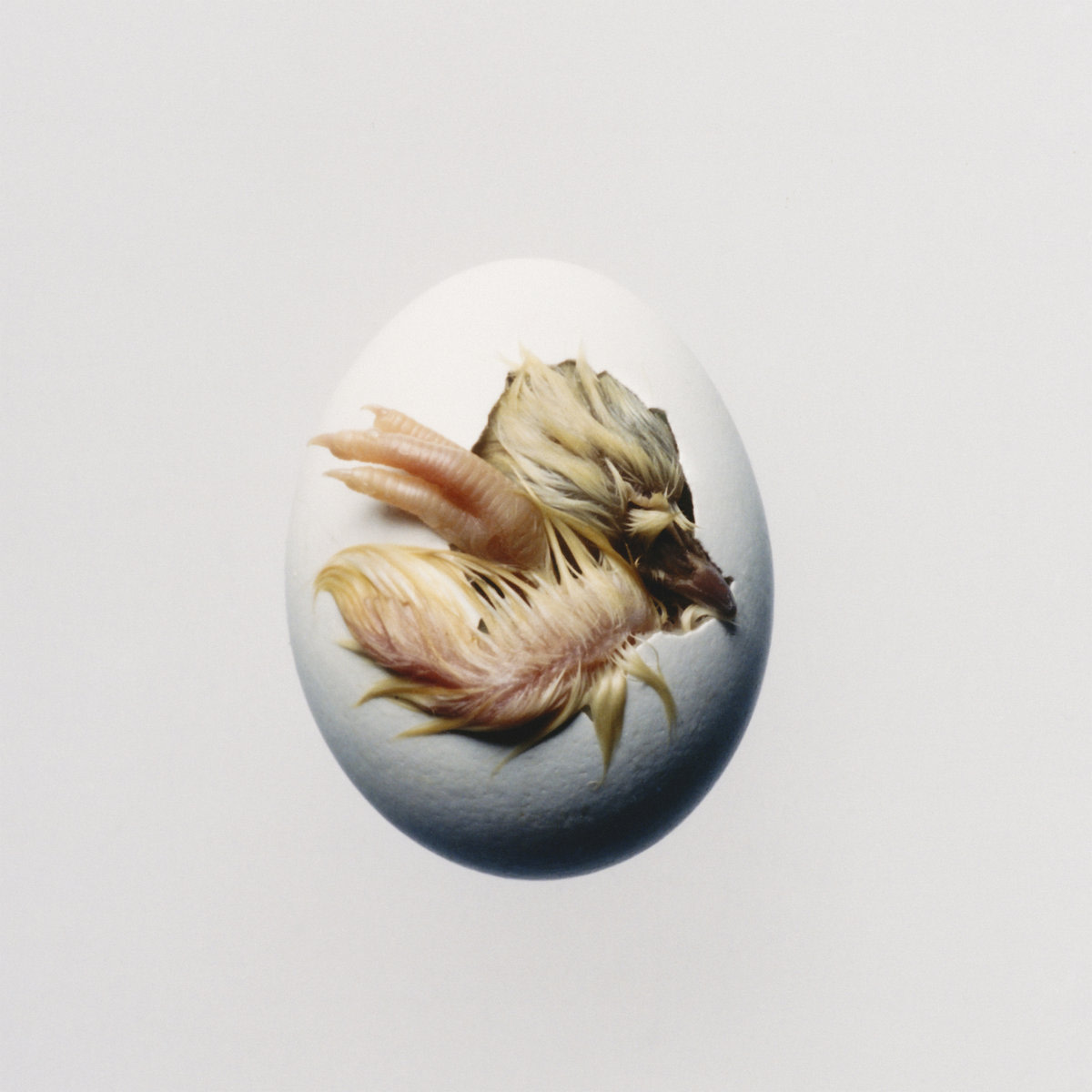 The cover of Shygirl's Swallow!
"...to make something." Tell me about the creative decision behind this album cover.
There's so many parts to this. For a while, you know when you're making something, you are looking for things in the work to see what you mean, you know? For me anyway, I'm working quite intuitively. I'm pulling things together, whether it's imagery or, you know, other songs that exist, film, other turns of phrase that I've heard elsewhere, like I write them all down, and just seeing what that says about the moment that I'm in. Like, why am I gravitating towards these certain things? Because it's not the same things throughout my whole life, you know, but I try and look at where I'm at that moment.
And one thing that kept coming back to me was this idea of hard and soft, or this idea of abrasivity and the juxtaposing of, you know, things that are opposing ends of something. And for me, this idea that you have to break through, or you know, this form that's made that's naturally hard like the egg. You know, the idea of an eggshell to me is really interesting, and even like the act of the chicken and the egg. There's so many things around that have just embedded into your psyche from the world. And I came across this image from an art exhibition, and it was a picture of a bird leaving a mouth, but you couldn't quite tell if it was leaving or being consumed. So that was actually the starting point for our development for the artwork, and it had been on like I'd kept the flyer and it'd been on the mood board of all the demos for a while. I wanted something that allowed the audience to be accountable for their perception, you know? I needed something that showed an almost decisive moment, like the in and out.
We actually do have an image of the bird leaving the mouth, which is the tour tour poster image that's coming out, but for the actual artwork, I landed on the egg because it felt so removed from context, and that's how I often feel, you know? Constantly trying to rebuild context in my work, but I live in the context of me, you know? I know that, but my audience doesn't always, they live in their context. So their perception will color their reading of the album. As much as my intentions can be present, it's removed as soon as I put it out. And I like that about art, I've always liked that about art. One of my biggest inspirations to pursue a career in art was I think I was like 10 years old, and I went to a gallery and saw a pile of bricks on the floor, and I loved that in the setting, oh it was at Tate Modern in London, in that setting, people were considering it as art, and that it becomes art because of the the environment. But it is also the same thing that I would encounter on the street, so why don't we consider that? And that is the conversation around it. So I did want to present something that had an organic structure, but was put into this sterile environment, you know, and in that sterility I was reminded of humans, because that's what we do, you know? We take things and we study them, and I love that privilege as a human to do so. You know, it's what we've done when we, you know, enjoy cinema or TV. We draw the lens into a certain position and get to enjoy a view that perhaps we wouldn't have been able to if we were seeing it in real life. So that's what I wanted from the album, and what I hope, at least with that starting image, we get it into people's minds that engage with it slightly differently than you would have before, you know? Ask a question before you presume an answer.
I love that you said that you want to encourage your audience to kind of think about, you know, the context or think about how you're approaching the work. I feel like a lot of, you know, I don't know how often you are online or just…
I'm always online. [laughter]
But I feel like so much of it is, you know, compressing that context or removing the context. I mean, like what is it like for you to kind of see how people discuss art online?
I think we all have the choice, you know? And just because things are presented to me in a way doesn't mean I have to accept that as my truth or not ask a question and provoke more from the things I'm consuming. I think everyone is capable of doing that, and I hope that my work can encourage that, but also, you know, it's up to them. And I like that about life. I like that, you know, there's privileges that you can gain from taking a slightly harder route and asking questions that make you and the other person uncomfortable, or you could sit in something that feels comfortable and not get those privileges, you know? That is something that exists, that's real, and that the reality of it makes me feel good, you know, cuz that's the truth that I have experienced, so that's validating.
I think the thing about being contrary, and especially in that artwork, because I was aware that the title is Swallow!, and that someone would read it as the bird, you know? And it can be the bird, it can be that, but it's an action for me. It's something that I wanted people, as much as I'm telling you to question and decide what you want, I'm making something, and this is what you are going to get from me, like take it or leave it, or swallow it, you know? And that was something that I had to say to myself to keep the conviction, to serve myself and not think about anyone else, you know? So, yeah, I think these things are subliminal and that's what hopefully you shouldn't be so aware of so early, it should just be something that is felt, and then you're provoked because of it, you know?
I guess my last question for you, I mean, approaching this record and, you know, I would say being about a decade into your career…
I know, it's crazy. I only just realized that the other day. You live in slow motion when you work like this, yeah.
You do. And yet it also goes by so quickly. But I mean, what are you looking forward to? Is there anything new that you haven't done in your career that you're looking forward to doing around this record? Or like, what to you makes a successful release?
That's the question, isn't it? For me, I don't know, for me I'm really content, and it was the one thing that made it hard to put this record out at the end. Once I finished it, I was like, "Oh damn, like I'm going to do something that could disrupt how content I feel." Because as soon as you put something out, I really see that as material that can change your life, you know? But I had to accept that inaction also does that, and that that is honestly the journey in the middle of this record, to say that choice, you know, does something better than standing still, cause that's also still a choice.
I don't know what would be successful for this album, which is why I like to share my work, you know? Because it brings in the unknown, and I don't like being in control so much. I often am, but I consistently put myself in positions to counter that control and to curb that side of myself, because control is a fallacy. So I quite like to have all these unknown elements, and you know, being able to put this work out and share my perspective feels like such a privilege, honestly, to experience something that I have got so much from and learned so much from, and to be able to say thank you to everyone who's listened to me, to have a body of work which I actually, honestly feel is deserving of their attention. And the other work I love so much, but I didn't even know anyone was going to hear it, really, you know? This one, I was like, "Thank you so much. Here's my dissertation." [laughter] Like, "Here's what I've learned under the study and tutelage of this experience." So, yeah.
Well, it's a beautiful project.
Thank you.
Well, thank you so much, Shy. It's great to have you.
Thank you. Thanks for all your questions, they're so good. [laughter] Bye.