 Dasom Han @dasomhahn
On their first album in seven years, South Korean indie rock luminaries HYUKOH are having an existential crisis. “Somehow I’m still stuck in this same,” frontman OHHYUK groans on the intro “Godspeed!” Throughout the 14-track album, OHHYUK’s husky voice sounds like a pressure cooker about to burst. He ponders when relief will arrive — and he’s begging for it. “Truly, I walked through debt and time, paid it every dime all my life,” he reflects on “KoK.” “Shall it be the big day coming?”
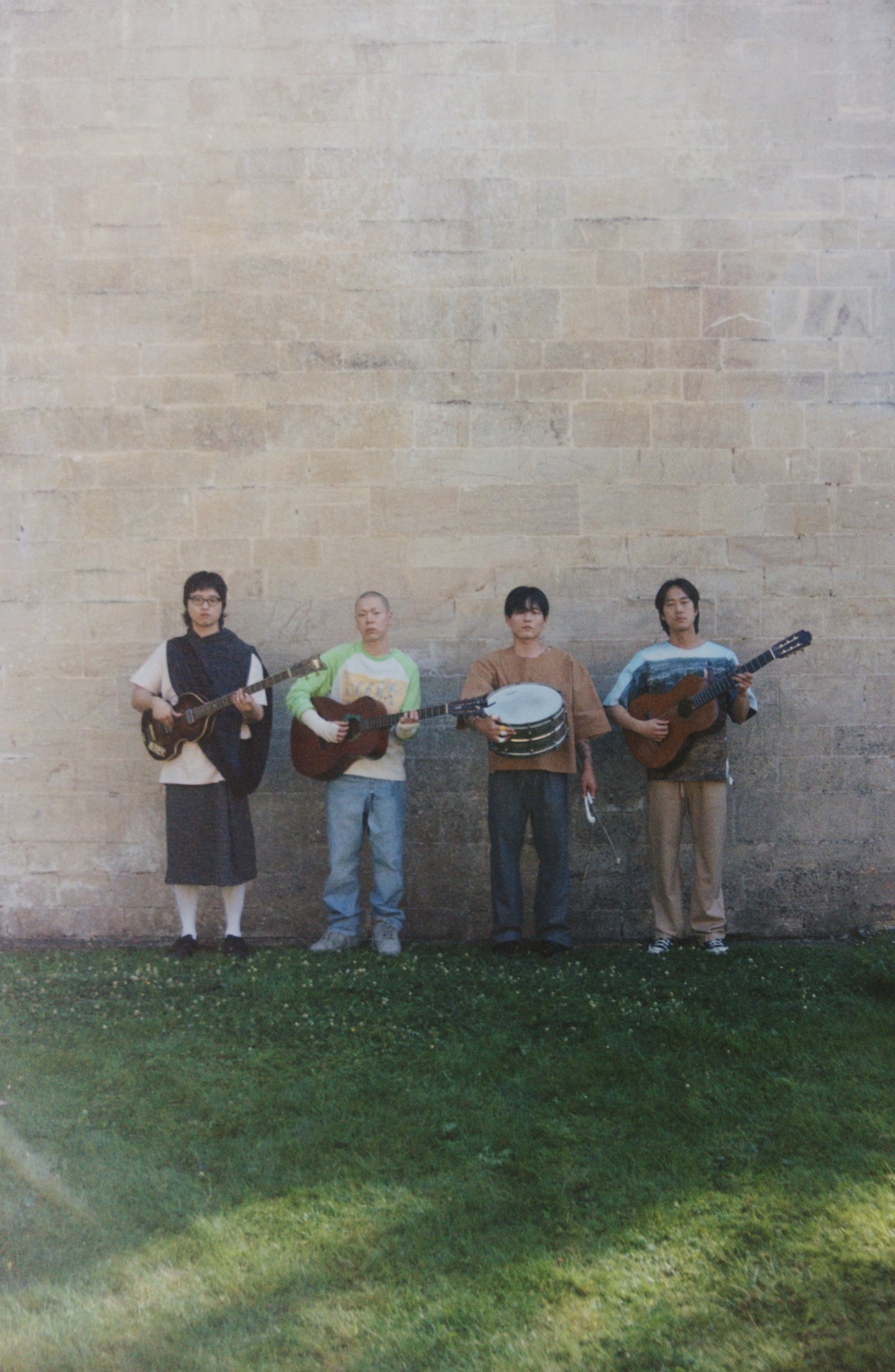
The silent acceptance of the surrender of life is the cynosure of the band’s latest album 33 — at least, that’s what I gathered from meeting with the band at the DooRooDooRoo office in Seoul. The four-person group includes guitarist HYUNJAE, bassist DONGGEON, and drummer INWOO, alongside OHHYUK; Singer-songwriter and producer JNKYRD acts as an unofficial fifth member. For a group of rockers, the bandmates are introverted. When the topic pivots to the album, they start fidgeting in their chairs and doodling in their notes as if their minds are scrambling for answers.

“The premise [of our work] is no longer, What do I need to do to become happy? as sadness and anxiety are always present,” OHHYUK says of the project’s main themes in Korean. “The real question is how we process them, accept them, and make our decisions through them.”
 Dasom Han @dasomhahn
The premise [of our work] is no longer, What do I need to do to become happy? as sadness and anxiety are always present. —OHHYUK
 Frank Lebon
33 is understood best as a 14-part compilation of diary entries about love and life in a constant state of flux — except, the pages are frayed with guitar riffs, a pulsing beat, and electrifying synths. The band says that its title, 33, continues the logic behind previous records like 24, named after the bandmates’ collective age when they made the music. On its songs, they’re zooming in on a familiar core message — having an attitude of trying to love everything that matters deeply. Only this time around, they’ve come to a painful realization: love and happiness aren’t a final destination, but a state of being. And that is agonizingly mundane.
“There’s a clear element of contemplation and observation — acknowledging that these things have always been here and always will be, so there's no need to drown in sorrow over them,” OHHYUK adds.
To make 33, the group spent six years writing, plus three years recording and mixing across cities like Seoul and Berlin, and the English countryside of Bath. Topics of existentialism and heartbreak were the natural conclusion of starting from “practically nothing” and jamming together “from that blank slate, which took it to an entirely different dimension,” says JNKYRD.
The songs oscillate from psychedelic, bossa nova, and electronic pop just as much as the lyrics flow from Korean, English, and Chinese — a practice inspired by OHHYUK's upbringing in northern China before moving to South Korea. To make the music, the band used everything from the expected — electric guitars — to the unconventional — like a Terra synth that has no keys and only buttons that spit out sounds.
Since its inception in 2014, HYUKOH has never been tethered to a singular genre and has only expanded its palette. HYUKOH’s emergence in the mainstream coincided with a period in South Korea where indie bands were few and far between. Their debut album, 23, embellished with hit tracks “Wi Ing Wi Ing” and “Comes and Goes,” propelled the group to the forefront in 2015, flooding music charts and Tumblr feeds alike. At the time, their buzz cuts, mullets, and piercings on Korean television and headlining festivals offered a striking contrast to their polished K-pop counterparts.
A decade later, they’re still hyperaware of the space they occupy in the music scene and the way they’re perceived. In 2023, alongside Taiwanese quintet Sunset Rollercoaster, they started AAA, initially a touring project — and named after their 2024 eponymous collaborative album — between the two bands with a mission to bring Asian representation to the forefront of the indie scene, culture and language barriers aside. Its acronym: “all areas access.”
“When we played prominent festivals abroad, we ran into the same cohort year after year,” OHHYUK says of how the initiative came to be. “Seeing the same faces continuously led to close friendships, but it also highlighted a clear barrier: only bands fitting a very specific mold can break through. Asian bands only started gaining real overseas visibility less than a decade ago — honestly, right around the COVID era. So that dynamic still needs time to unfold.”
Only bands fitting a very specific mold can break through. —Oh Hyuk
Since HYUKOH’s last record, the state of music has drastically shifted — now, there are algorithms to appease, and AI to contend with. But the indie band isn’t feeling pressure to stay relevant or keep up with trends. If anything, they return with a newfound sense of conviction: they’re committed to sticking to their craft despite their ever-changing surroundings. “If we consistently execute what we believe in — just as we are doing now — the audience that appreciates it will grow,” OHHYUK says.
HYUNJAE adds, “I’ve always been the type who rarely pays attention to things outside what I personally love, and nowadays I feel even more comfortable living that way. In today's world, that mindset — which might have worked against someone in the past — feels increasingly vital: having a firm grasp on what you genuinely love.”