

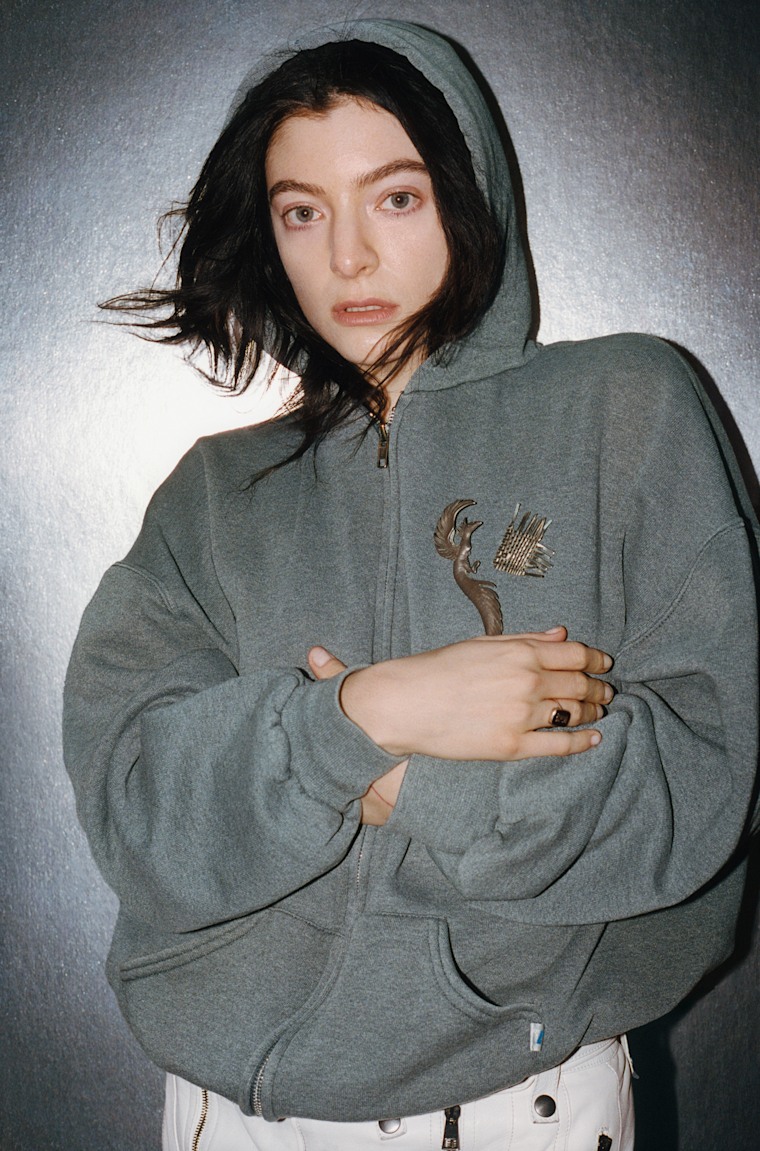
On Friday, June 26, Lorde celebrated the one year birthday of her lauded 2025 comeback Virgin with a 49-track dump of the album’s demos — or as she called them “XRAYS" — alongside newly released photos and digital artifacts.
“Last year we played around with making an album worth of these skeleton versions, cool composites of a few different versions [of songs from 'Virgin’],” Lorde shared in a newsletter. “But on Sunday night, I realized the true X-rays of ‘Virgin’ would be realer, funnier, more revealing of crookedness and slant, less about where we ended up than celebratory of the way of traveling, the repetitions, the acne, the journey.”

The final result is a series of files shared via the music technology platform [untitled]. The company’s co-founders Dan Lilienthal and Jose Chayet confirmed to The FADER that Lorde’s use of the platform for the major drop was “organic” and not a paid partnership. The company itself only learned about the pending drop a few days before it happened. The move by the newly independent New Zealand megastar, who only recently left Universal Music Group after 16 years, was an example of how independence can further allow major artists to share work with fans directly.
On XRAYS fans can hear songs bloom into the form the world first heard last June, when Virgin was officially released. For example, the project’s first “track” — “HOLDING A HAMMER 131123,” the beginning sketch of what would become the album’s incantatory intro, “Hammer” — features a never-before-heard brushed drum pattern and a cloying synth arpeggio. Lorde’s vocals are muttered, moving between gibberish and lines which either are the lyrics or close to the final track’s words. Over five versions that can be heard on XRAYS, the song solidifies into something closer to, but not quite, the final version, with its famous scraping and strange synth line and headline-making lyric: “Some days I'm a woman, some days I'm a man.”
Lorde’s move towards transparency and process mirrors other artists who have thrown it back to the file sharing days of Limewire to great cultural effect; Charli xcx famously shared her pandemic project, 2020s’ how I’m feeling now, with fans via Zoom as she was making it, asking them for feedback and insight. James Blake partnered with the subscription platform, VAULT, allowing fans could gain access to ideas, demos, and unreleased music for $5 a month.
Bringing fans behind the scenes into the most nitty gritty elements of one’s musical process is a way of furthering a sense of intimacy and connection in an era that is fueled on such fan-artist connection.
Some of music’s most major artists have deployed the strategy to chin-scratching effect, like Drake who flooded the digital zone during the peak of his Kendrick-led comeuppance with 100 gigabytes of unreleased music, studio sessions, and B-roll footage via his website. Taylor Swift too has added voice memo demos to the deluxe versions of her albums — prompting some to accuse her of using the add-ons as pretext to somewhat artificially boost sales and further cement her position in the charts.
For Lorde’s Virgin, there’s a synchronicity in this artistic openness, given the album’s X-Ray album cover and her lyrical approach to clear-eyed observation. This follow up to her dreamy and cheeky Solar Power has been about emotional and imagistic clarity. Like on “Broken Glass” where she speaks about her recovery from an eating disorder with striking candor, or on the epic “David” where she sings of existential agony plainspokenly: “Why do we run to the ones we do? / I don’t belong to anyone.”
These demos are an extension, and a practical version of, such transparency, and the fact that it was done out of a spirit of commemoration and artistic generosity makes the drop all the sweeter.
 Thistle Brown.