Max Wolf Friedlich’s The Holes pokes holes in the male loneliness crisis
The rising NYC playwright talks about being inspired by Bladee and confronting masculinity in his new dive bar-set play.


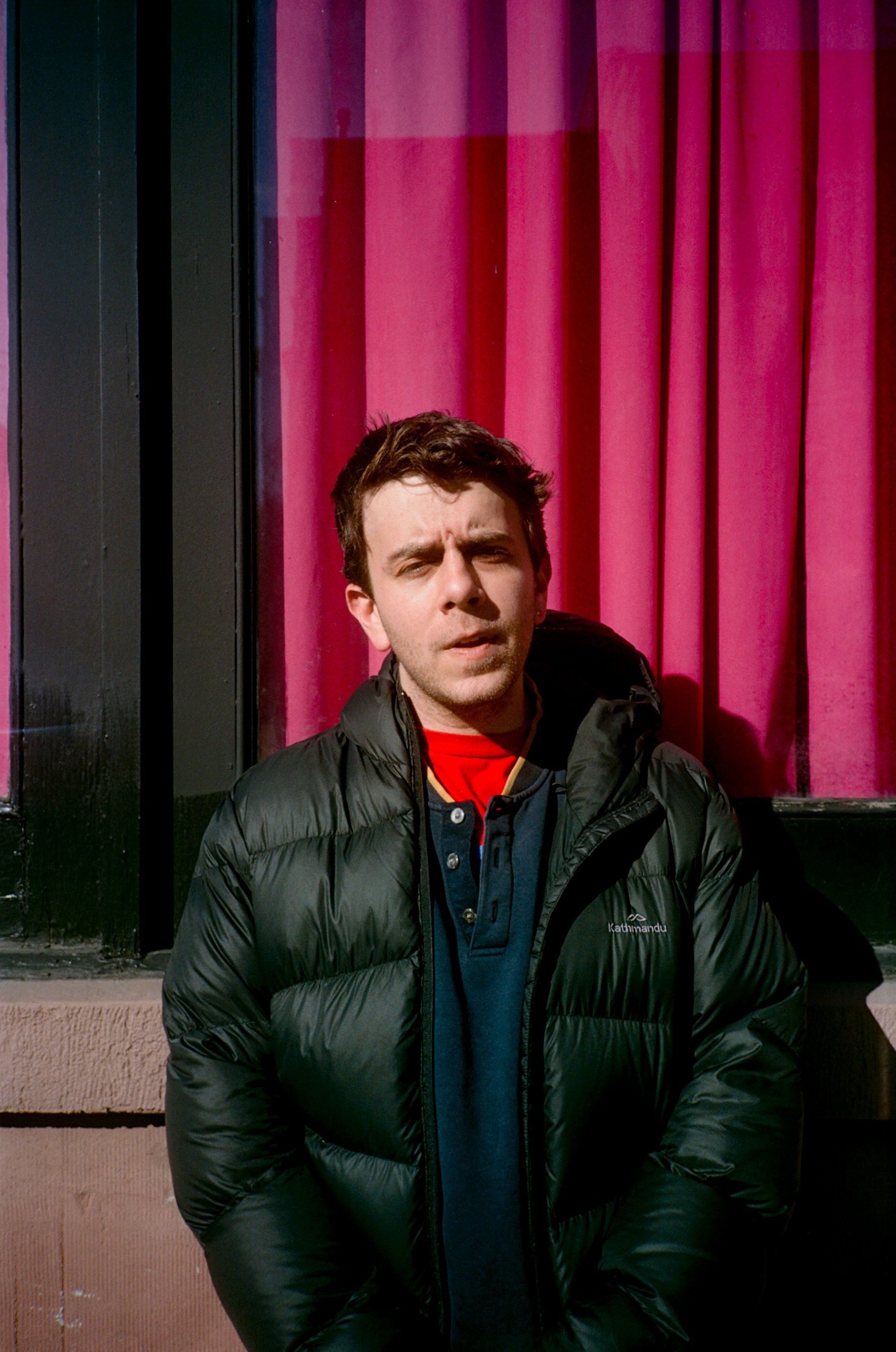 Stefan Kohli.
“I think of my work and the marketing [of my plays] in terms of music more than theater,” playwright Max Wolf Friedlich tells The FADER following the first previews of his new play, The Holes. After all, “People like music more than theater,” says Friedlich.
Indeed Friedlich, whose new play is the follow up to his Broadway breakout Job, is speaking The FADER’s language when he calls his newest theatrical work his Cherry Bomb, referring to Tyler, The Creator’s controversial, experimental swing of an album from 2015 — which came after a period of consistent and blistering success. “I could totally see someone not liking or connecting with this play,” he says of his newest work. “It's not for everyone and I think that awareness really calmed me down.”
Friedlich’s zen acceptance of how the world will take his new play, following his somewhat unlikely rise as a young, thematically cantankerous playwright, is basically unwarranted. The Holes is already a New York Times critics pick, has the backing of Robert Pattinson as a producer, and has already had its run at wilds project in the East Village extended through November 15.
 HanJie Chow.
The Holes is a surrealist story of a young man’s quest to keep his father’s dreary Kingston, New York, bar afloat by utilizing a mysterious service in the business’s backroom. It’s hard to describe the plot without revealing its delicious twist, but as its protagonist tries to commercialize his bar’s backroom, he ends up contending with the macro-forces of tech-oligarchy, the gentrification defining his upstate milieu, and what is oft referred to as the “male loneliness crisis.”
Friedlich, never the narrow ideologue, take on such gargantuan theme with a generous approach, introducing us to a cast of characters which includes a city-dwelling Black tech entrepreneur, a local alcoholic who’s dyingly loyal to the bar, a young working class man trying to find his way, and the bar’s young proprietor, a gay man down on his luck who pounces upon his golden ticket. Readers of The FADER may take particular delight in the play’s musical interludes, which were composed by Zack Villere.
The FADER chatted with Max Wolf Friedlich about treating play rollouts like album drops, masculinity, and logging off.
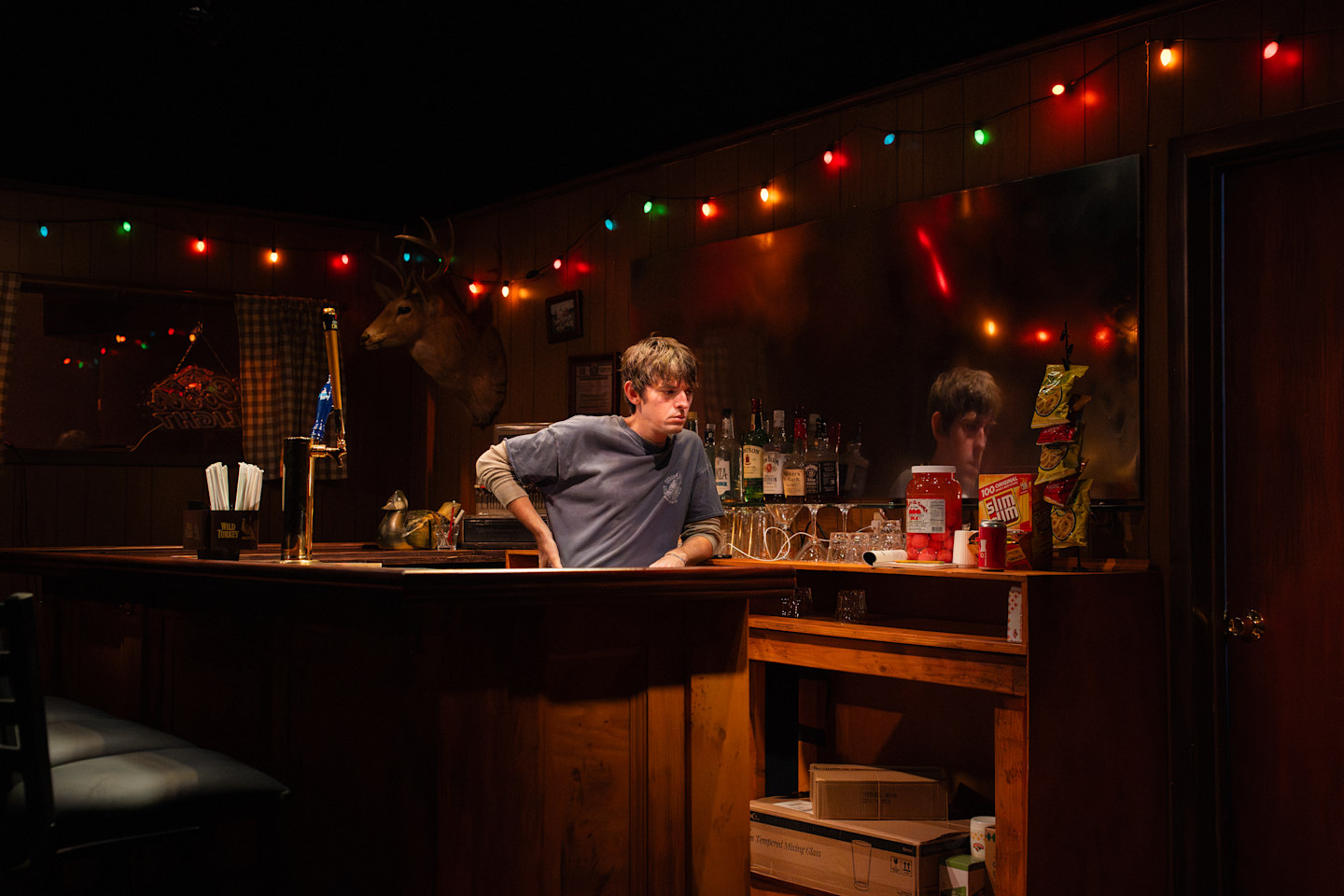 HanJie Chow.
The FADER: I know that the idea for the play has been with you since you were 14. How baked was the idea then?
Max Wolf: It [has a] reveal and was the whole idea. I picked it up at like 22-23, so the play in its current form has been cooking for like eight or nine years. But that initial idea, I just really couldn't shake it. It made me laugh every time. But the idea really grew and changed with me as I grew and changed. That's the joy of working on it. Wesley [a character in the play], the tech guy, has had like 20 different jobs in the last eight years. His job wasn't crypto in 2017 and that’s why the play is set in the end of 2022 into 2023, both because of the degree of gentrification in Kingston [in 2017] and also because where crypto was at that time post-Sam Bankman Fried fucking everyone over.
The details have changed a lot but then also like the seeds are kind of the same. I was writing it from the perspective of an eighth grader who was thinking about jacking off a lot and like there is kind of a straight line that leads to where it ended up.
The play is, among other things, about the topic of male loneliness — which has become a topic people debate in recent years. What was swirling in your mind around this discourse as you were finalizing the script here?
[I was thinking about the] commodification of it, both from the Andrew Tates of the world, but even from the well-meaning infographic people of the world. Anytime you're taking a gender or a race and putting an emotion behind it, we're speaking too broadly. Do we need to be talking about female greed? Asian wanderlust? What is male loneliness?
I understand that there's data that supports the idea that men are more isolated now, but men have always been lonely. There are facets of our gender expression and the way we're socialized that I think are more conducive to being lonely. But I also think that people being like, We have to talk about this … I'm like, Who wants to talk? Am I talking? And a lot of the talking about it is: “I need to subscribe to your thing to read that article and then I'll talk about it in my own life,” which I guess is fine but doesn't sound that fun for me. Is it not lonely and isolating to be anyone and we just kind of give a shit about men more? I think non-binary teenagers are probably pretty fucking lonely. As coastal men, [many ]are like, “It feels like I'm more lonely than I should be.”
I think the essential thing in the last 10 years is how do you teach people to question facets of their identity while also not hating themselves, because that's what the right has exploited so effectively. Part of why I, as a straight, white guy, wanted to write this play, is that you can't just tell a generation of people that they're innately evil and then be like, “Figure it out.” Some of them will, but others will be tempted by someone going, "You're not evil. It's actually the people who told you that you're evil that are evil." How do we make men more resilient and less fragile so that they don't turn into Nazis when anyone suggests that their life is easier than it is for other people, which is sort of empirically true.
The other primary theme is the increasing voraciousness of our tech-based oligarchy in the ages of Kalshi and Klarna, etc. Obviously that’s rapidly changing every year. How did that and these past few years inform how you finalized the play?
I think about these companies as the extension of their founders. Thinking about how lonely men express themselves in the world … sometimes it’s by building a company and wanting everyone to think and feel the way that you do, which I think is the loneliest thing imaginable. Thinking about Mark Zuckerberg as someone who really can't communicate, and him being like, “I want to live in a world mediated by screens where I am the coolest person and I control the social atmosphere.” Someone should make two movies about that.
Wesley in our play, who I have tremendous affection for, I do think his love language is business. There are many people in the world who can't eat focaccia in a little village in Italy without being like we need to bring this back and scale it. They’re just thinking about the world in terms of its potential for profit. It feels like we never had an age of tech literacy. Tech was novel and then it was ubiquitous. With my plays, I'm really trying to go back and find this middle area where It's like, Whoa, whoa, whoa. What's happening? What is this doing to us? What is it making us feel? How is it changing our thinking patterns in ways that we aren't aware of?, I was so depressed in the pandemic obviously. I listened to this interview with Stormzy where he said that he deleted Twitter and felt closer to God. And I was listening to this podcast on a walk through the snowy woods in upstate New York. I deleted Twitter. The amount that my mental health improved was astronomical. I think the answers might be much more simple than we think they are. It might be time to log out. That would change literally everything. I don't think it's that hard to conceptualize a world without these things.
The Holes is now showing through November 15. Tickets are available for purchase here.
 HanJie Chow.