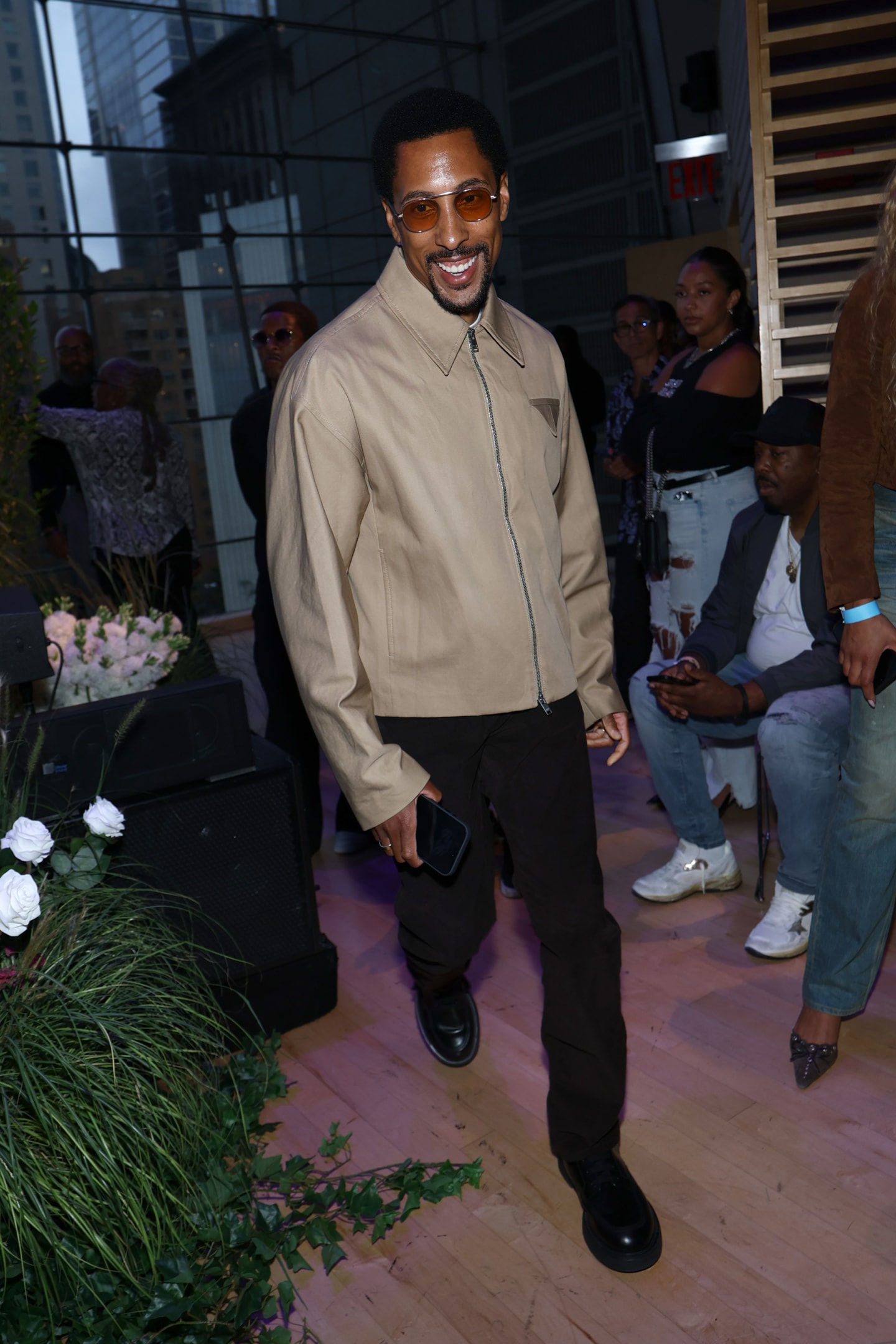
 Arturo Holmes/Getty Images
Larry Jackson is in the business of manifestation. The 45-year-old founder and CEO of distribution company gamma. is more than used to proving his detractors wrong, but he’s recently taken on a Herculean feat: resurrecting the career of Kanye West.
Over three decades in the biz, Jackson has been responsible for signing Jennifer Hudson, Fantasia, Lana Del Rey, Chief Keef, and more. Alongside Dr. Dre and Jimmy Iovine, Jackson launched Beats in 2006, growing the company until it was acquired by Apple in 2014. At Apple, Jackson was Global Creative Director for eight years, securing several exclusives for the company’s streaming platform. Then in 2023, he launched gamma., which is a music and media company, not a label, and quickly became home for Mariah Carey, Snoop Dogg, and Sexyy Red.

As the last of those artist names might suggest, Jackson is used to swimming upstream in an effort to push the culture forward. But even considering his long-standing relationship with Kanye, which encompassed key stretches working together around Yeezus and DONDA, his latest partner offers a unique challenge as West works to make amends and reenter society’s good graces following antisemitic outbursts, sexual abuse and harassment litigation, and years courting the alt-right.
Still, in an interview for Bloomberg earlier this week, Jackson struck a mildly celebratory tone regarding West’s 12th studio album BULLY, saying the reception was, “wildly beyond my expectations.” The wins include a No. 2 Billboard debut with 152,000 album equivalent units and two sold out LA concerts grossing upwards of $30 million in ticket sales alone. And although fans and critics alike remain uncertain of how truly “rehabilitated” West might be, maximally visible apologies in WSJ and Variety have evidently moved the needle for industry decisionmakers. Following a private listening session for Spotify and Apple Music executives, BULLY received decent playlisting and platform support, if not quite as extensively as his past releases.
This success feels so tangible because of how far Ye’s career has receded over the past half decade. Setting aside audience preferences for his music from the late 2000s and early 2010s, and the often half-finished quality of “releases” like DONDA 2 and BULLY V1, West found his career stymied following his 2022 outburst that saw Adidas, GAP, and Balenciaga cancel contracts with the rapper.
Around the same time, it emerged that West was no longer signed to Def Jam, though it was unclear whether that decision was related to his antisemitism or not. Though his admin deal with Sony Publishing ended earlier that year, the company told Variety at the time they would continue to administer his work for an unspecified period thereafter.
In the years since, West’s solo releases have been sporadic; his biggest success came with “CARNIVAL,” but both VULTURES and VULTURES 2 benefited from collaborating with Ty Dolla $ign, an artist deeply embedded in the major label system; even if they were totally self-released (the P-line says YZY), Ty’s co-billing helped to keep Ye close to the center of culture even as extramusical antics pushed him away.
Against that backdrop, Jackson bringing Ye back into the conversation for major streaming companies is a serious coup. Though the financial details of West’s arrangement with gamma. have been kept confidential, it’s clear that the embattled artist has benefited dramatically from the more traditional infrastructure the company can provide.
“Our participation with Ye is not that of a traditional label. All of the decisions he’s been making as of late, [...] I’ve been an active advisor,” Jackson told Boardroom earlier this month. “That’s one of the things I thought was really conspicuously missing from a lot of these companies — that level of strategic value and detail-oriented thought leadership with artists.”
Jackson’s hands-on approach extends to all his artists – he fondly recounts 5:30 a.m. calls on Saturday mornings trying to secure Mariah Carey’s Winter Olympics performance slot – but inadvertently or not, the campaign for BULLY has centered Jackson as much as the artist he’s promoting. West’s recent public statements have occurred almost exclusively through emailed statements to publications, denying reporters the chance to assess his condition for themselves.
Jackson has never been media shy per se, but a handful of interviews with GQ and others this spring about signing Ye suggest a desire to prove his artist’s contrition to others, if not an outright defensiveness. For some, the chip on Jackson’s shoulder could be off-putting, but it seems the natural result of consistently proving your taste knows better than the naysayers. As the cancellation of Wireless Fest in the U.K. this month shows, there’s quite a bit of room for improvement when it comes to Kanye West. But that challenge – and of course, the tantalizing specter of a lucrative upside – is likely what’s drawn Jackson back to working with West at this particular moment.
“The job is entirely predicated upon finding things that aren’t yet in their fully realized form and bringing them into existence,” Jackson said in a 2019 interview. “The creative geniuses I work with show me the power of believing. They visualize and then they make it so.”
An earlier version of this article misidentified gamma. as a distributor when it is a music and media company. We regret the error.