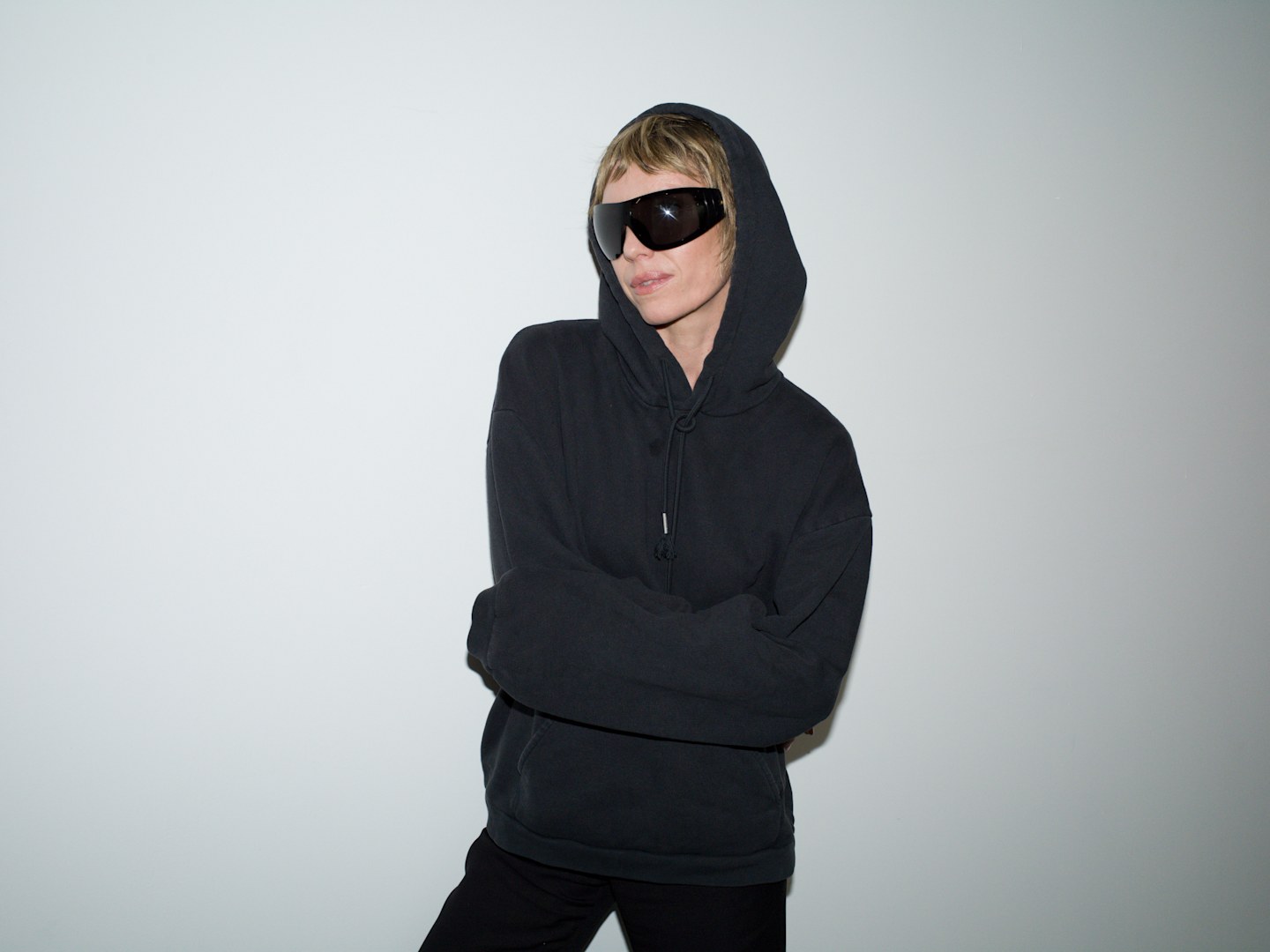


Lykke Li is being confronted by her 24-year-old self.
In her hands right now, maybe for the first time in 16 years, is the winter 2010 issue of The FADER of which she’s on the cover. Every now and again, she lets out an Oh my god and aw as she cautiously flips through its pages, reading her interview. A pair of huge, black sunglasses hides most of her face and whatever emotions being stirred up from seeing this. “Reading this, I'm like, this is still me,” she says with what sounds like a hint of disbelief. “Just walking the streets really lonely and crying on a plane.”
Over the last two decades the Swedish native has forged quite a career from all that crying on planes: six albums of potent, melancholic dance pop and a generational, enduring hit in “I Follow Rivers.” On May 8, Li released her sixth studio album, The Afterparty, a project that she’s said will be her last. When I ask her about that in person, however, she offers a more gray-area answer. “I can’t imagine myself not making music,” she says. It turns out a habit of pouring your heart out into songs for decades is hard to kick.
A constant in Li’s career has been her commitment to open-wound songwriting, and on her latest record that unrestraint stirs up some of her biggest existential questions — about life, death, beauty, and aging — of her career. Ahead, read a wide-spanning conversation with the pop iconoclast about grinding as an artist, facing life at 40, her love of writing, and whether or not The Afterparty will be her final album.
The FADER: How are you feeling seeing this magazine? What's being stirred up?
LYKKE LI: I don't know, it's so cute because it's like oh, I only had this one bedroom, I had like no furniture.
The article's like, "there's a table and a chair and a bed."
And also here, it's like, "You just toured the same record for so long." And it's like, yep. You had like one album, you know what I mean?
It captures your career at a crazy time. You'd just made Wounded Rhymes. And you talk about getting out of a bad breakup while your career is taking off. What do you remember about that time?
I felt really lonely at that time, I remember.
You have a quote where you talk about how it's hard to build relationships as an artist. I can read it for you: "When you're always touring, it's going to be really painful if you miss people all the time, so you just have friends everywhere, you can't be too attached. This life is bad for relationships." Do you still agree with that?
Um... I'm in a very great relationship now, but there is something about this industry that is... we've seen it over and over again. It breaks you. I was just reading Famesick by Lena Dunham. I ravaged through that and I was like, wow. This was a bit my life, except the nice hotels and money and present parents. But I think as a touring musician, it really is made for a person that is very young with no strings attached. For anyone, I think you have to leave everything at the door. Your health, your boundaries, your need for stability.
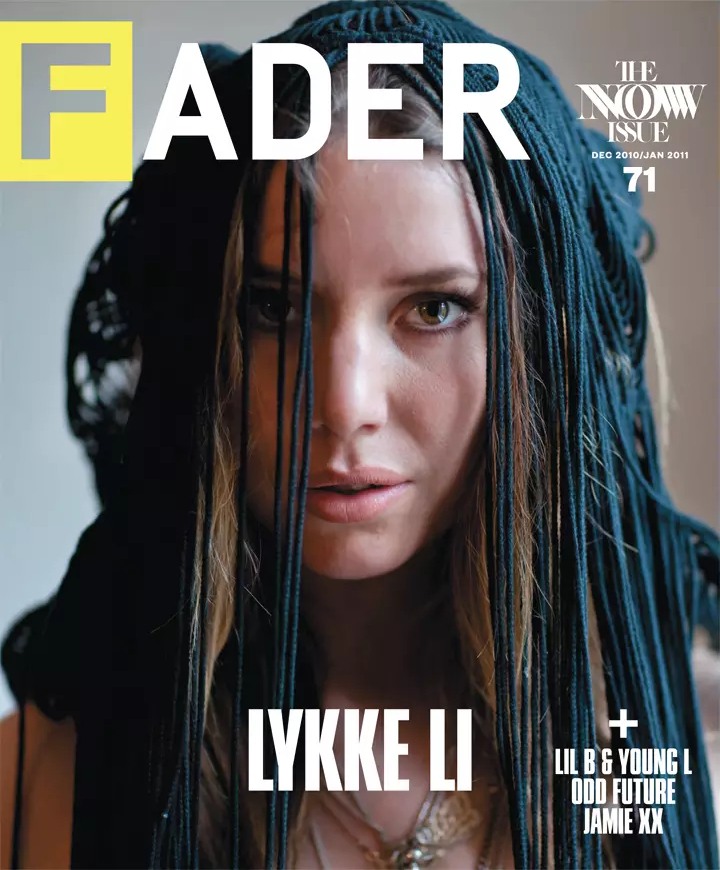 Lykke Li on the cover of The FADER issue 71.
Do you feel like you've developed tactics to protect yourself from that over the years?
Well, it's funny 'cause I'm in this cycle again where I have many tactics, like how to have a life at home and routines but that all gets uprooted once you're on the road. I'm still understanding if there's a way or not.
Reading that quote really resonated with me and I was thinking about your discography and your career. Mark Ronson called you "the high priestess of heartbreak and sadness." Do you think the nature of your career helped with writing such evocative, melancholy, sad, sexy love songs?
What do you mean "the nature"?
Like being an artist and feeling lonely and not being able to make deep connections.
I mean, at least I made a career on feeling, so in a way I'm grateful that I was able to channel all those feelings and experience into something. My question for normal people is, how do you handle life without making albums?
Very difficultly.
Like what do you do when you're heartbroken or sad and all those things?
I guess listen to your albums. How is your writing practice these days?
So on my last album, I wanted to break up with the breakup album. I felt like everything was just becoming a loop. And I think in many ways I did. So this album I have unlocked something new as a writer, which is very exciting to me.
[Touring] is made for a person that is very young with no strings attached. You have to leave everything at the door. Your health, your boundaries, your need for stability.
Tell me more about what you think you've unlocked.
I think the first albums were quite navel-gazing, quite diaristic. Hopefully now I'm able to zoom out a bit and have a more existential take on things.
To hear you characterize your last albums as navel-gazing and diaristic, is that something that you wanted to grow out of, intentionally?
Well, I just love and respect the written word so much. And even now I feel like, oh I wish I would have studied. I actually got in to do literature after high school, but then instead I went to New York and did this. But I long for a more formal education in the written language just to know more.
Have you thought about going back to school?
Well, I don't even know what type of school would take me at this point. I'm in the school of life, which is also serving me somehow, but I would love to become a better writer for sure.
That's crazy to hear since you've written so many iconic songs. I think so many people resonate with your writing. Obviously your biggest song, "I Follow Rivers," which I feel like every few years has a resurgence of people finding it. What's it like for you to see that song of yours have a life of its own, being discovered by new generations who find the rest of your catalog?
It's such a gift to me that that has happened. It's like, if you can have one of those songs in a career that keeps on getting covered or going in different directions is just the ultimate desire as a writer. I kind of can't believe that I have one of those songs that I wrote. I'm very grateful and fortunate. I guess it validates me as a writer.
Who are some writers that you look up to? Who have you been reading recently that you resonate with?
Yesterday, for example, I went to the bookstore and I bought Annie Ernaux, Simone Weil, Helen Garner... I tend to crave female writers who are going through it the most. I love a hardcore memoir. I read Liza Minnelli's memoir, which I loved. I guess I'm gravitating towards those coming-of-age stories, but they almost always have so much tragedy in them as well. The ones I read, it's pretty brutal, all of them. But I think life is kind of brutal.
That's a good segue into the record. The elephant in the room is that you're calling it maybe your last record, is that right?
I mean, when I'm in the process, I live that process so intensely, I put all the chips on the table, so that I think okay, this time I'm gonna truly walk away from this. But I can't imagine myself not making music. I think what I am really craving is to step away from this person. This. [Points to the magazine.]
Your album is structured around the metaphor of an afterparty. To me, afterparties as a concept contain a lot of conflicting emotions. There's desperation, euphoria, fear of missing out. Was there a specific quality of the “afterparty” that you wanted to channel?
For me, the title came to me. And like they have done for all these albums, I'll receive a title and then the album becomes a journey to understand what it is, what does it mean? I had this feeling like, wow we are really at the afterparty in the world. I don't know if we can go much harder, it's so balls to the walls and politically, no one's thinking about tomorrow. So for me it's like 5 a.m. and shit is about to hit the fan. And then, even just in the short time that I started writing, every day you open up the news and you're like yes! Or the fires in L.A., for some reason, that image I had seen. Don't you feel it too? I mean what is the plan? And I think when you're at the afterparty, there is no plan. You just want to rage.
What is the antidote to that?
Well, if this time on Earth, or just the time in the night before the sunrise, is finite, what do you want to do with those hours? And I want to make art. For me that is a beautiful offering and action that I can do as a human being. And I think that is the beauty. We have nature and we have art. That is the beauty of the world. The rest is pretty horrific.
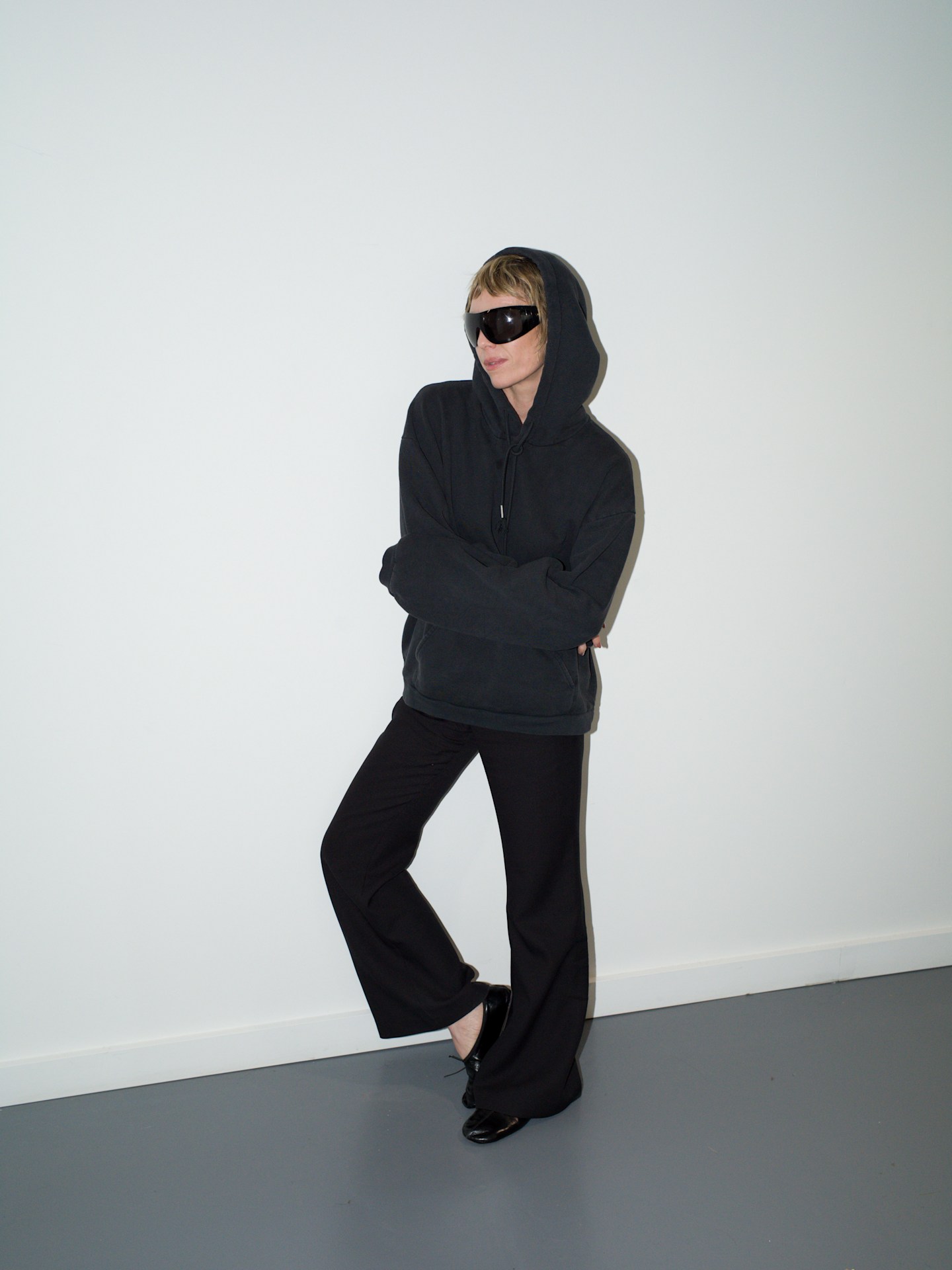
I think what I am really craving is to step away from this person, [Lykke Li].
I'm curious to know how much of this album is also about aging and getting older.
Of course, these thoughts come with that, every season of life offers a new topic. That's where I'm at in my life. And that is really sticky and really hardcore, but it's also as a subject matter, really interesting.
What for you was interesting to parse apart about that?
When I look at this [points to the magazine] like, oh, a 24-year-old girl. I was not aware that I was exactly what the industry wanted at that time. A young, no strings attached, baby-faced girl. It's only when you are not anymore...
I was so young for so long, you know, everyone around me was much older, I had done so much for my age. And now of course, there's many new batches and then you're like, oh, okay. Now I'm here. Now it's my turn to deal with this stage of life and my career. And I think when you look at maybe female artists in music, there's not many examples I think that I could turn to and feel inspired by. So I turn to writers or, like, Marina Abramović, a modern artist. I think you have to decide when you come to this age: am I agreeing to the terms of this industry or all of it.
Those are also terms that you as a woman have no power over.
You realize that the whole world is built on patriarchal structure, so it's difficult for any woman. And when you really start waking up, you're like wait, but I don't agree with this. I don't want to be a part of this. But then, where is there a space for who I want to be? Or do I have to be that? There's no map.
Would you like to see more art about aging?
Yes! I'm dying for answers, for guides, for voices, for heroines to look up to. I think when you look at the older generation, I get really scared because of how... especially with all the plastic surgery, it sends really scary messages to me. Like terror instead of acceptance. It's panic.
I guess what really happens for older artists is they follow a legacy path, like Stevie Nicks just came out at the Met Gala and performed. Are you interested in that route?
But I mean, they also had an extreme amount of success. Weren't they also like number one this, number one that, you know? I'm still an indie artist, so I have to figure out my own way.
So there's not really a middle class of older artists.
I watched this meme or something the other day that was so funny. They're like, "If you're 40 and you're still out there making art, let me tell you, you missed the exit a long time to become normal and now you're kind of just staring into this bottomless pit." It's true, I think after a while things become really hard and you give up, right? That's for everyone in life. And then I guess the people who don't give up, they're the ones that are still there. But I mean, I'm still just hustling in the same way as when I was 19. I'm still in the same van, in the coach.
Does that feel like it plays a role in maybe wanting this project to be a last album?
Yeah, I think so. I'm grateful to have that thing inside of me 'cause it keeps me continuously on my toes, but the grind... that can become a bit tough. You want to evolve, right? And I'm evolving artistically and spiritually, but I think in terms of capitalism, blah blah blah.
I want to talk about your long creative partnership with Björn Yttling. 'Cause this is y'all's fifth album together. What's the biggest piece of wisdom you've learned from your years working with Björn?
I think the gift of my life and my career was meeting Björn at that time to help me, teach me how to write songs, to define my sound, to really have a partner. I wouldn't be here without him.
Does it still feel new working with Björn every project?
Yeah, because we go away and years pass and children are had and then we come together. We're always evolving, so like yes, in every album you start at zero with a blank page and you have to reinvent the sound and the frames for that album. It's amazing.
Do you guys communicate when you're not working?
No, we don't talk much. And then years pass and then I'll be like "Okay, let's get in." And then we start writing. And then on this album, he's like "Yeah, we're making a rock album. Like it's time." And I feel like it is time after 20 years to be like, Okay, rock and roll.
It’s interesting hearing that it feels like a rock record to you. It still sounds quite pop-y. Tell me about the sonic direction.
When you work on something, you have an idea that you think it's gonna go this way and then you end up somewhere completely different. But the references and the way we structured it for us was rock and roll. Like guitars, live bongos... I'm saying rock and roll Rolling Stones Sympathy for the Devil era.
But also, I read this quote by Elton John and he said something like, in rock and roll you can be whoever you want to be. So for me rock and roll is more like "what is rock and roll?" Is it a genre or is it a feeling? I think it's about wanting to be free and experiment and fly. And use that kind of masculine life force.
I love that. Do you think of your music in masculine, feminine verbiage at all?
In the last years through a lot of psychedelic therapy, I realized that my feminine side is very wounded. And my masculine side is very strong and it's what I built my whole career on. That kind of like "fuck it, I'm going to do it." Whenever I go on stage, even from day one, I was tapping into that masculinity, really, that we all have inside of us. And then I think my feminine sides is where I really struggle.
Do you feel like the masculine side kind of stepped in to help you get through the industry chaos shit?
Yeah. I love to be in touch with my masculinity. I struggle with... well, femininity outside of what it looks like, I guess it's also sensitivity, empathy, feeling intuition. So of course I'm tapped into that. My femininity came with so much self-hate about my looks. Which I still have. I really struggle feeling like a beautiful woman or whatever. But then it's kind of like, why are we supposed to be beautiful? But there's a lot of pain in that side of things.
It's hard to unlearn a lot of that.
But I think that's also going back to the industry and aging, there is a lot of pain, right? For women. And like “beauty is pain” and all of this shit.
Why do we have to accept pain?
Exactly. Why?
We have nature and we have art. That is the beauty of the world. The rest is pretty horrific.
Maybe this is controversial, but I feel a big topic in pop culture right now is this rise in plastic surgery in young girls, and, you know, skinny is in. What’s your response to that?
It hurts my heart because I feel so much for these girls [on] Instagram, TikTok ,where all that matters right now is being hot. And that is just the worst life path you could ever go down. So like, it hurts. When I meet young girls I'm like, "Fuck that. Learn how to write, learn how to do something, that's the way out." It's super tragic.
And they're 27 with their whole — it's like, you're never going to be as beautiful as this time when you think that you're not even beautiful now. I don't know, it breaks my heart.
After you're done touring this record and doing everything you need to do around it, what do you want to focus your time on?
So many of my friends growing up, they had to struggle in their 20s into their 30s really figuring out what they want to do with their life and like, I just went, you know? Now, I'm gonna have to go into that completely not knowing what the next thing is. But that's also life, we don't know what tomorrow brings. So I wrote in my diary today, "be brave." I don't know. And that's the thing when you finish an album, too, you don't know what you're going to make next. You have to stay in that not knowing. Which is like an abyss.
I hear you have a serious meditation practice. Can you tell me about it?
Yeah. So I met David Lynch after my second album and I was going through all of these feelings that are in this article, I just was so restless and uncomfortable and lonely, and I told him that. And then he's like, "But why don't you just meditate?" David Lynch has a transcendental meditation foundation, so he sent me to his person in New York and I learned to meditate. And that changed my life, saved my life. And then I've gone through phases of really intense transcendental meditation and then I moved into more yoga nidra, and now I do some type of guided somatic meditation every day. Even if it's just nine minutes in a taxi or something.
Has that been your therapy?
Yeah, but the thing that is interesting about that, like the more I meditate, the more I stay in this realm… like because the whole point is to dissolve your ego and be nothing and just be in energy, I think the more I meditate, that's why it's almost pulling me out of this industry somehow. I'm so much more interested in something very pure and fluid.
You're going on tour. What are you looking forward to on tour if anything?
Whenever I go on stage, I have an intention with the show, it's almost like a theater show for me. I have to be completely present and I have to challenge myself as a performer. These last tours, I got more into physicality and the arc, storytelling, just really starting to get into [my] mastery really. I've done this for a while so it's time to show off. I was feeling that, too, when I played Coachella. 20 years of doing this, there's no shortcut for that.
It's amazing that it can still feel challenging.
Oh it is, because I raise the bar every time and I make it more difficult for myself. I think times are different now because you can have a song on TikTok and be huge and you don't have to schlep around in a bus for seven years. But there is something very beautiful about that schlepping around in the bus. The blood, sweat, and tears, and actual dedication and time too. It builds character. I'm at the point of my life where I really like that in other people too. I like things that have a lot of depth, character, age. I'm obsessed with Isabelle Huppert, the French actress, and she's like 70. I find her so much more interesting than like a young person. We need more of that to look forward to.
Lykke Li's 'The Afterparty' is out now.