Shot by Cozyy
If one wants to understand just how far Afrobeats has come over the last decade, talk to Davido.
Back in 2016, the Nigerian superstar remarked in his FADER cover story that "sometimes it can feel like only one person [in Afrobeats] will win” — a scarce but very real perspective back then. At the time, the landscape of global music only had room for a handful of African artists to eat — and even then, not without a tooth-and-nail fight to be heard by the mainstream. Catching up with the 33-year-old 10 years later over Zoom, Davido’s taken over by optimism. “The sky is big enough for all Afrobeats artists,” he says, smiling.
Davido came into the music game with something to prove. The son of Dr. Adedeji Adeleke, a well-known businessman and Seventh-day Adventist in Nigeria, Davido’s genuine passion for music was often questioned by his critics. But 15 years later, one only needs to look at his deep musical catalog — A Good Time (2019), A Better Time (2020), Timeless (2023), and 5ive (2025) — to get a sense of his work ethic and love for his artistry.
His latest album, Oriadé, released July 31, continues to highlight the three qualities that have defined his musical output thus far: faith, love, and openness toward new artists. Davido met R&B rising star Leon Thomas after attending the same church and recruited him for the new track, “Tell Everybody.” “Gimme Dat Ting” features the next-up Nigerian talent NO11, whom Davido discovered during a late-night TikTok scrolling session. Davido stumbled upon the freshman artist and reposted one of his videos without a second of hesitation. He says the song blew up immediately.
On the love front, Davido, who’s now married, recorded Oriadé in a vastly different headspace than that which precipitated his previous projects, swapping out jam-packed studio sessions with forty plus people for intimate recordings at his home, surrounded by his wife, family, and a tight circle of collaborators. An interpolation of Elvis’s “Can't Help Falling In Love” on “Already Falling” is one of many instances on the record where Davido pays reverence to romantic love. As he stresses on the album’s opener, “I still make time for family and friends 'cause all work and no play, makes Davido another man with no face.”

Across Oriadé, Davido sings like a grateful veteran who’s proud of the legacy he’s built. Today, as waves of African artists like Wizkid, Burna Boy, Rema, Tyla, Ayra Starr, and Tems collect Billboard hits and Grammys, one can’t help but think the world owes a serious shoutout to the Atlanta-born, Lagos-bred legend who helped pave the way.
Ahead The FADER spoke to Davido about turning down $800,000 paydays to spend time with family, his relationship with Afro-stars like Omah Lay, and Wizkid, and the making of the love-centered album that celebrates his legacy, Oriadé.

The FADER: In your 2016 FADER cover story you said, “I think there's enough for all of us to eat, but then sometimes it can feel like only one person will win,” in regards to African music. How do you feel about that perspective now?
Davido: That was 2016. That was what? We're talking 10 years ago. We were just trying to get through the gate. At that time, they weren’t playing African music, not even in the clubs. It was looking like they just wanted to let one person in, but if you look at the situation now, it's like 20 of us that's mainstream, globally. The sky’s big enough for all of us. Now we have our own backing, we have a whole continent that's behind us. I'm talking a billion people. Spotify is in Nigeria, Apple Music is in Nigeria, we have our own festivals, we have our own award shows. We're in a different space right now
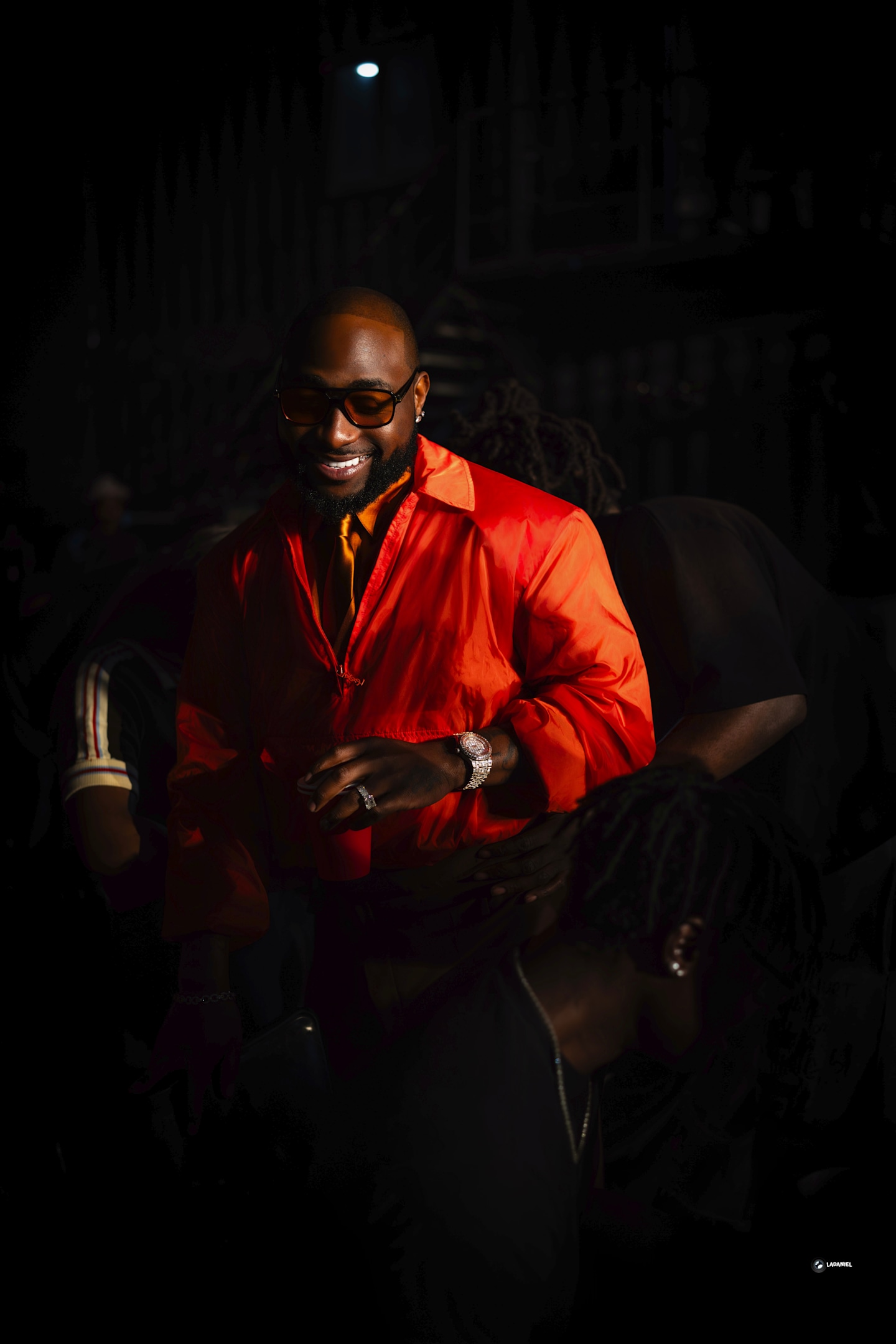 @shotbycozyy
On the intro track “On The Road you sing about always being on the road but also finding time for family. How do you balance the two?
You just have to make time. Even though I’m making money on the road, sometimes I tell my manager like, “Yo, I know they want to pay us $700K, $800K, we might have to let that go. I need to go see my wife,” because that’s my backbone. When everything’s over, she’s the one that’s going to be there. Being on the road 24/7 mentally, it gets draining and sometimes I just need to go back home and feel normal for a while.
Are your kids musical at all?
They love music, they dance to all my music. I think my second daughter, I’ve been noticing, like, her voice is actually very, very good. Just little things that you notice from somebody, they'd be like, “Yo, this person is actually kind of musically inclined.” I think I’ve seen that from my second born daughter.

Has the competitiveness between you and Wizkid changed since those early days as well?
I'm 33 years old, I think [I’m] still competing. My head is just at making good music, whoever I make it with doesn't matter to me. Division right now would make us weaker.
What was different about recording Oriadé versus your previous work?
I'm married now, I'm in the house — I'm not living with the boys no more (Laughs). We got to keep the music a little bit low. Funny enough, I kind of preferred recording this way. I feel like I had more concentration because, obviously, there was less people. I can't have 1,000 people in my house like before. It was me, engineer, producer, probably one or two people, my friends with me.
The Elvis Presley interpolation on “Already Falling” is so great. I notice love being a central theme across the album.
I mean, what, I don't carry guns around, (giggles) what you want me to sing about? If you listen to African music, it's all about positivity, celebration, love.
Your new song “Gimme Dat Ting” with NO11, how did you link up with him?
First of all, shout out to NO11!. Right now Nigeria has a crazy, big underground scene. Early in the year, I was on TikTok and I had seen this video of 11. I think that was one of the first videos he posted of his [song] “How Far.” I reposted it and then he just blew up. I liked how it was so original. He was carrying everybody [in the Nigerian music scene] along. And with me, I make music with anybody. It’s not about how big you are.
You seem to really connect with people through your album collaborations. I talked to Omah Lay two months ago and he referred to you as a true friend.
We are like opposite types of people. (Laughs). He’s more of an inside type of guy, I’m more of an outside type of guy. On my last album, when we put out that Omah Lay was on the album, a lot of people were like, How is a Davido and Omah Lay song gonna sound? They're totally different kind of people. And we ended up having the biggest African record last year. He's a different guy to understand, but he's so talented.
When you have a massive record like that that ends up Grammy-nominated, do you feel pressure to top it?
I’ve had five songs nominated for the Grammys. Every time I was making a record it was never like, Oh, this has to be nominated for the Grammys. I've just always gone in the studio doing my job, and that's how it’s been for the past 15 years. But if I tell you that there’s no pressure anytime, I’d be lying to you. Everybody wants a successful record. You have to understand that music is very spiritual. Funny enough, the song with me and Omah Lay, which was the biggest African record last year, that wasn’t even my top 5 for my album. You can never ever call it.

You've previously said that you make music for passion rather than money. How has that influenced your work ethic after 15 years?
The money’s great, let me not lie to you, the money’s amazing (Laughs). But I don’t think I’d be 15 years in if I hadn’t been doing this passionately. If it was money, I’d have retired two years ago. I’ve made way more than enough. It’s because I love music. I love my job. I feel like if I didn’t love my craft, I don’t think I’d be able to still be passionate about it, still be excited about getting on stage, still be excited about writing music, getting in the studio.
The song “Tell Everybody” with Leon Thomas, how did that happen?
I met Leon a couple years ago at the Grammys, and it’s so funny, our first conversation was about church because we go to the same church. I think he just won a Grammy that year and I was like, “Yo, congrats on the Grammy, yo, we should make some music,” and he was like, he's a big fan. The first song I sent him, he fucked with it, and then we just did it. That's one of my favorite songs on the album.
Sometimes when bigger artists link up with smaller artists, there can be online discourse about what genuine support looks like versus riding a new wave. How do you make sure your co-signs remain authentic?
I don't care how long you've been in the industry, how big of a big dog you is, you gotta stay tapped in. That's one thing I love about Drake. As big as he is, he still stays tapped into what the real listeners are listening to, and those are the real people that catapult these artists. I have a lot of younger brothers, younger cousins, younger friends that keep me tapped in with the new sound.
What is one thing you hope that people will say about your impact on African music?
That I gave a helping hand to a lot of people. A lot of people used my platform to grow, you know, to build, to change their generations. I grew up with my parents doing a lot of philanthropy and helping people in the community. I want to be remembered for great music, selling out shows, breaking records.