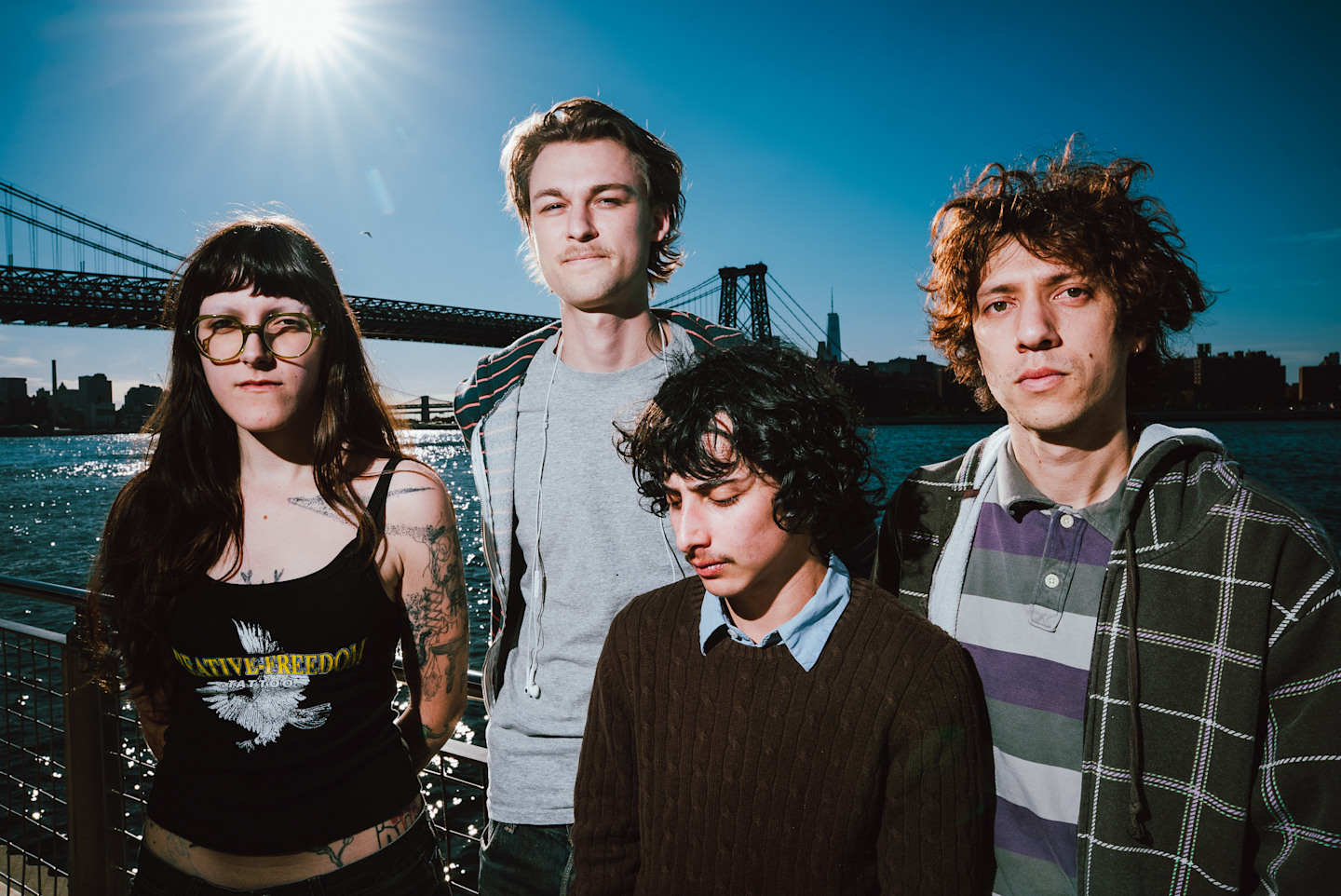
Holidays in United States bend the boundaries of midwest emo
The indie rock quintet don’t shy away from their inspirations, but on How to Count to Five their ambitions are bigger than genre nostalgia.


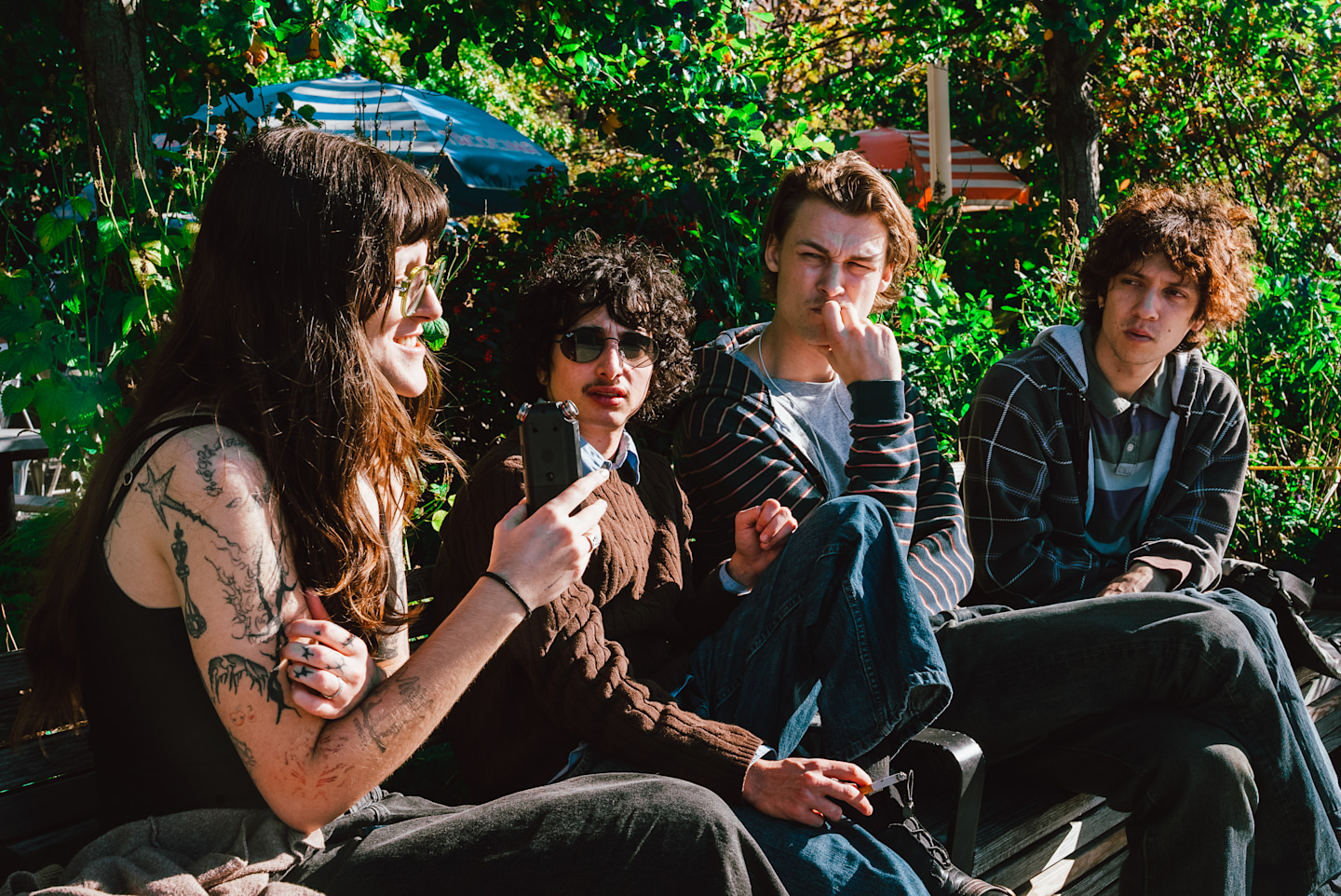
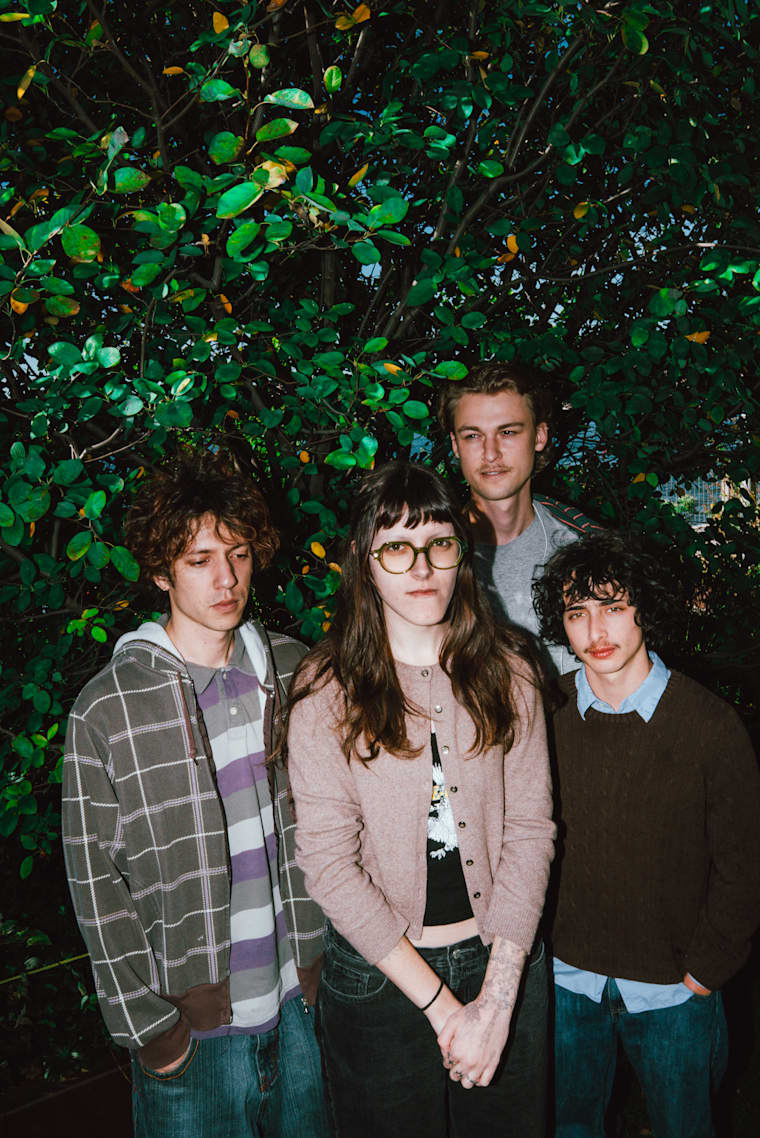
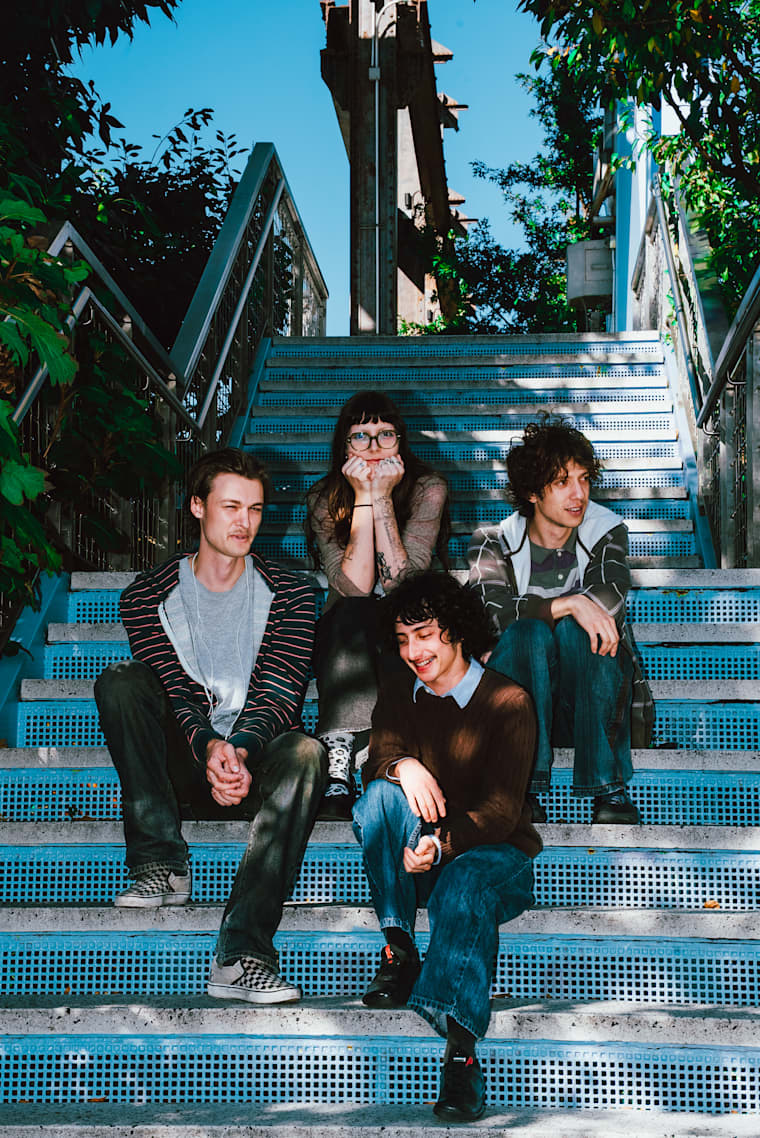
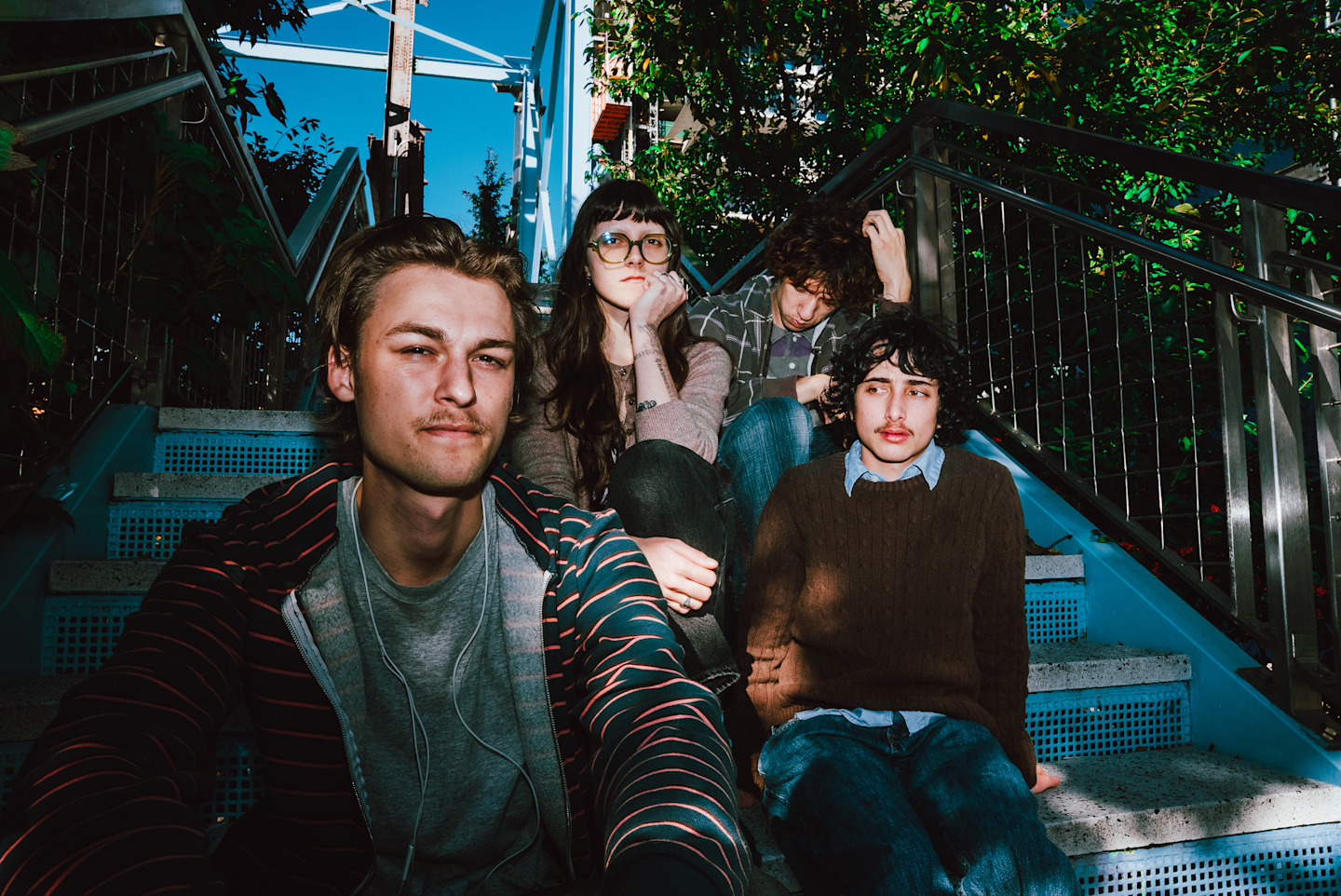
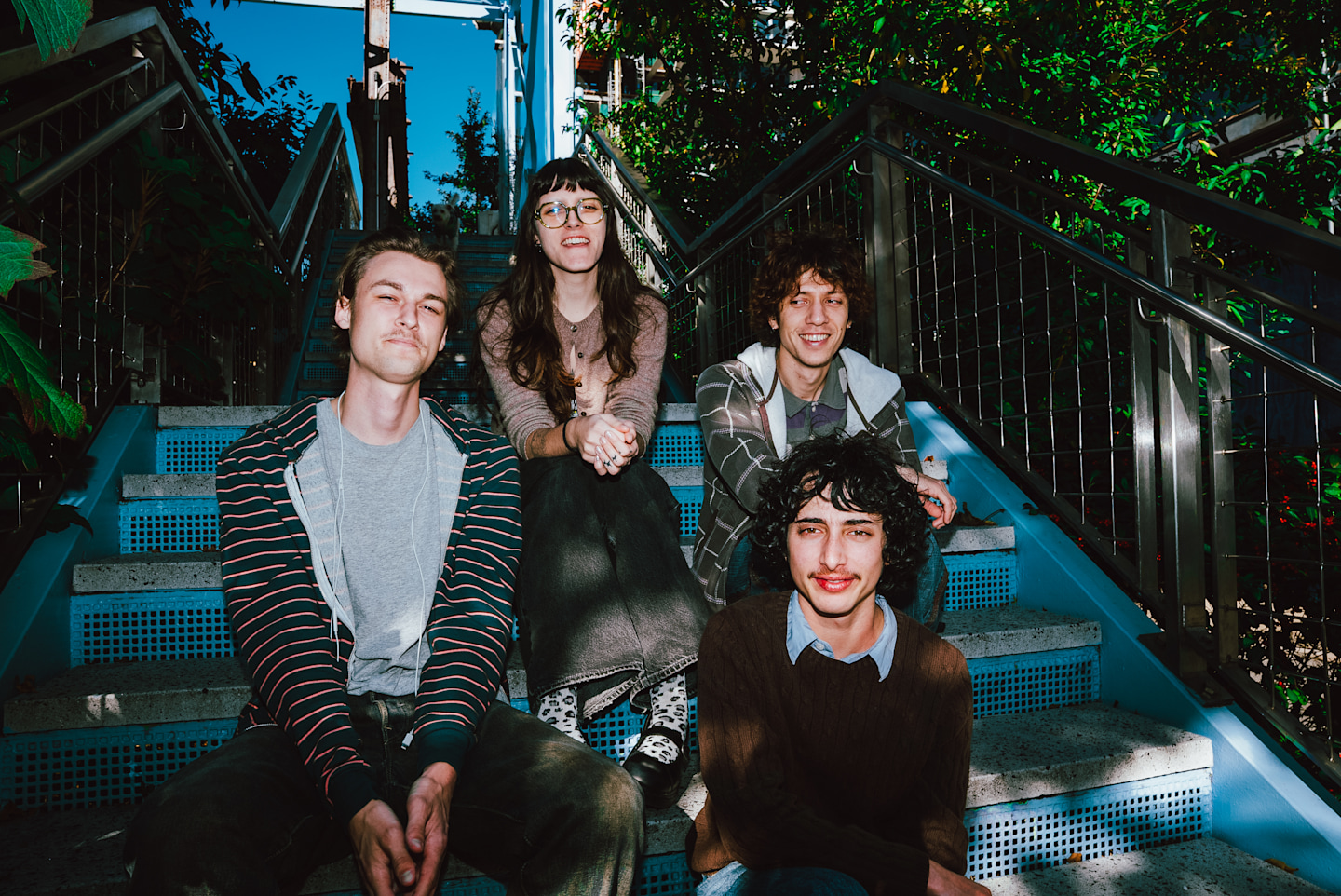
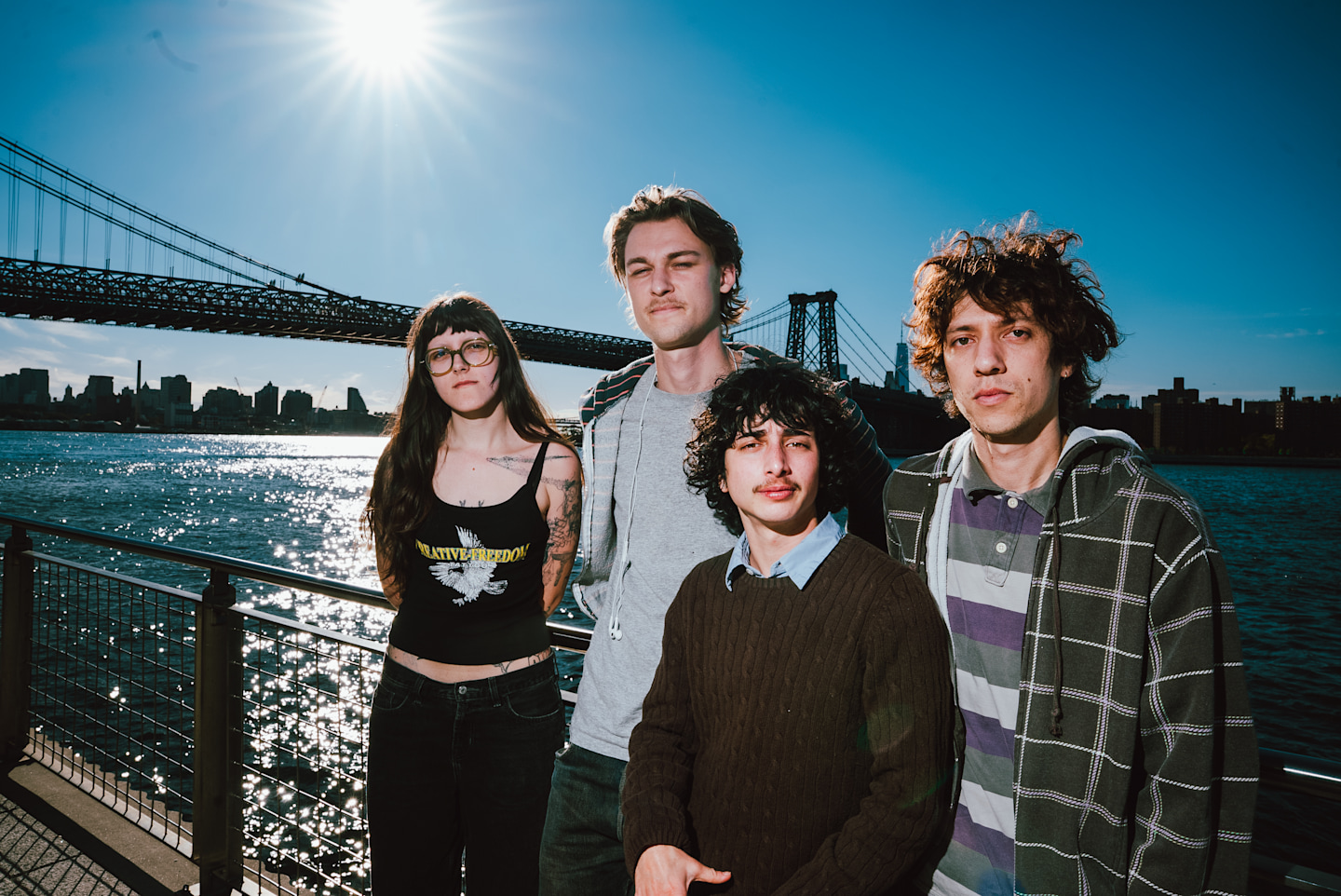 Annika Haakonsen, Connor O' Doherty, Kali Priya Flanagan, and Garrett Winston of Holidays in United States (L to R).
Narayan Naidu / The FADER
When we arrive at Trans-Pecos around 7 p.m. on a fast-cooling autumn Friday, the line for Holidays in United States is quite literally wrapped around the block. The indie rockers have been building a fervent audience for a few years – first as a trio, then as a quartet, now as a five-piece distributed through NTS Radio – but even the band’s founding members were surprised by the robust turnout. “Shockingly, a lot of new faces,” Garrett Winston muses the following Thursday afternoon. “Like, a bunch of people that I had no idea who they were, which was cool, and newer for our New York shows — which are always a lot of homies.”
There were a lot of homies on the lineup too, from Jersey screamo pals Glen Vine to one of co-vocalist Annika Haakonsen’s other bands Aeiou (which also features Simon Rosenthal on the drums). Up-and-comers LiveYou filled out the “full emo” lineup and won the crowd over with their slippery and intense jams, which fold saxophone and cello into a more traditional rock ensemble.

Holidays in United States like midwest emo, and their music sometimes traces back to those influences. But in other places, they pull from math rock and bedroom pop, jazz and Latin rhythms. As I chat with four-fifths of the band on a beautifully sunny afternoon at Domino Park in Brooklyn, their ambivalence about genre labels strikes me not as offense at being labeled an “emo band,” but the laziness this shorthand might enable, for listeners and critics alike.
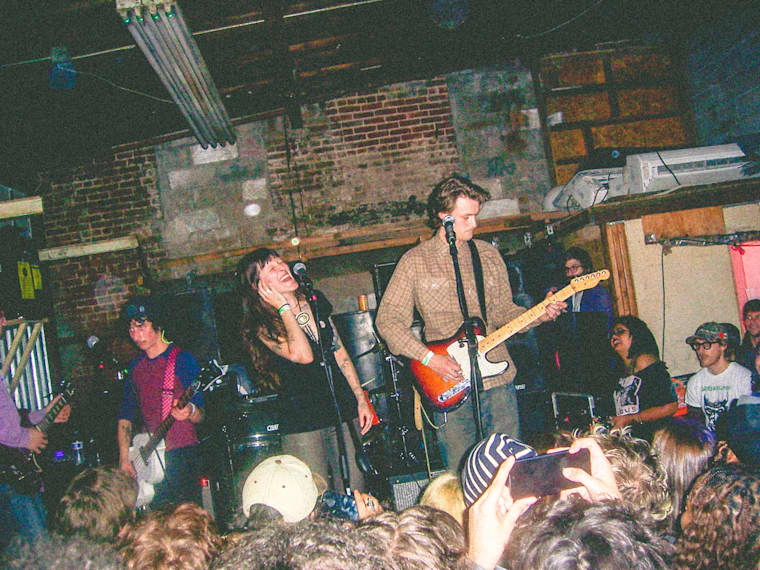
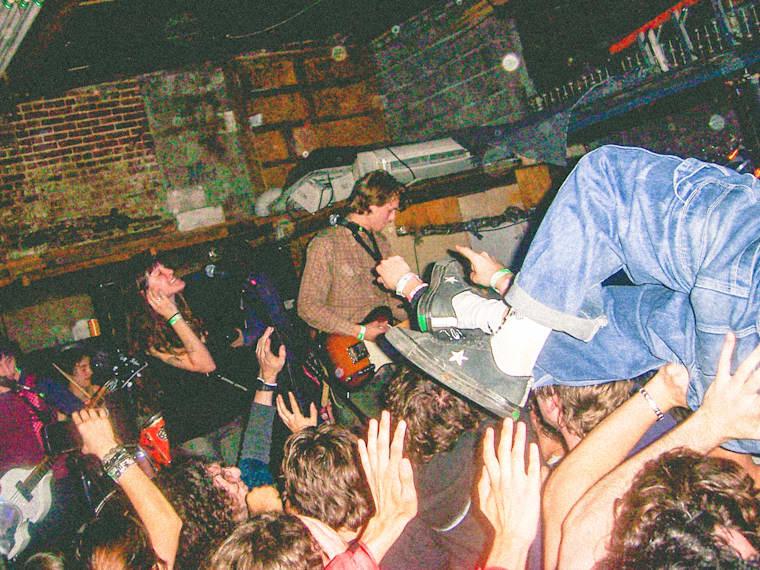
Particularly on their latest album How to Count to Five, Holidays maintain a wry humor and an expansive vision of contemporary emo. You could chalk that up to the album’s free-wheeling, instinctual recording sessions, facilitated by the new addition of Haakonsen, whose songwriting chops as a vocalist proved the missing catalyst for the band to speed up an already-quick writing process. Haakonsen’s toplines chart a new path for the emo band: on songs like “Edward vs. Jacob vs. Simon” and “Girl Problems,” their undulating flows seem to steer the instrumentals around them, even though they were recorded after the band laid down backing tracks. Consider it audible proof of the band’s innate synergy.
In conversation, Annika Haakonsen (Vocalist, 24, Trumbull, CT), Connor O'Doherty (Guitarist/vocalist, 26, Portland, OR), Garrett Winston (Guitarist/vocalist, 25, San Diego, CA), and Kali Priya Flanagan (Bassist, 22, Los Angeles, CA), are thoughtful about the evolution of their indie rock sound and the songcraft that went into their latest album (drummer Simon Rosenthal unfortunately couldn’t make it). The quartet exude an easy comfort with each other as we smoke a few cigs along the waterfront on a beautifully sunny afternoon.
The FADER sat down with Holidays in United States to chat about midwest emo and the recording process behind How to Count to Five.
The FADER: When you guys initially started as a three-piece, maybe without intentionally setting out to make a Midwest emo revival record, you were taking a lot of cues from the genre. This album cycle, it seemed more like, "We’re pushing past that. We don't really see this as a Midwest emo record." What do you feel defines Midwest emo, and how do you feel you guys are pushing away from that?
Connor O’Doherty: I feel like we're still trying to make Midwest emo music, for sure. At least I feel like I am! But we're not stressed about it if it goes off and becomes something else. Like "sybau" — that's not really a Midwest emo song, but it's a good-ass song, so fuck it.
Garrett Winston: The core things we're pulling from are still rooted in and coming from that genre, but I don't think any of us are very concerned with keeping it as rigid as the past projects maybe have been.
Connor: I think it's more interesting to just let it go where it goes, and if it sounds good, then great.
Kali Priya Flanagan: For me with Holidays, I think about it very much on an individual part level. That's something that's really special about the band: everybody's parts are so distinct to their style. Simon brings a lot of different drum influences — he can play all kinds of music, and he'll bring in Latin influence and jazz influence into the records. I play a lot of melodic
bass lines. And with Annika joining, the fact that there's just so many more textures and voices involved, inherently we ended up relinquishing to just leaning into our instincts instead of making something reminiscent of our influences.
Annika Haakonsen: I totally agree. Letting genre dictate the scene in such a rigid way really closes the door on things that are new and exciting. With this record, we're trying to break out of that a little bit.
Connor: Also, we're definitely not trying to be a revival band. That's like the number one thing: "Oh, it's a second-wave emo revival band." It's not! I don't think any of us are trying to sound like that.
Garrett: We're not trying to be anyone part two.
Connor: I would prefer sixth-wave to second-wave revival, but I don't care about the waves.
Annika: That phrase in itself has become such a buzz phrase, where you go on TikTok and see all these posts: "What are some second-wave emo revival bands that we should all be listening to?" And it's just a list of emo bands! Letting genre dictate what you should sound like boxes you in. With this record, we let things take shape the way that made sense for them.
Connor: Real emo only consists of the '90s D.C. hardcore scene, so there's nothing to even talk about.
Speaking about the recording process, this album seemed pretty free-flowing and intuitive without a lot of nitpicking around parts. Annika, your flows as a singer are really sick. Can you talk to us a little bit about your creative process before coming into the band, and how that evolved in the recording process?
Annika: Definitely. I don't play any instruments, so whatever I write takes shape around what these guys are doing — trying things out, jamming together. I try not to think too hard about it, especially in the beginning parts of making a new song. I just do what feels natural, or try something a little bit weird to see what scratches the itch. If I think about it too hard, then I try too hard and make something that I don't actually like.
Kali: In our rehearsals, Annika will be in the corner on their phone writing lyrics, and then it's like, "I have a vocal idea." It's just very natural. When we went into recording, the production is just rooted in the fact of our playing. We just play the songs live and try and get that sounding how we want it to sound.
Connor: There's no studio tricks.
Garrett: All the recording stuff is just live. Kali’s bass is recorded to a live take, and Annika as well, just because we wouldn't be able to get a naturally good vocal recording if it was at full volume in the room. Not being so nitpicky is really important to how every single song we've written as a band happens. They're not rushed, but they're written so fast without overthinking. You commit to an idea super fast and you're like, "Okay, I guess that's the song."
Connor: It's the most collaborative process. Max preparation we have is one of us comes with like a guitar part, max two sections, and then we build off of that. For "My Highness," I had a bunch of guitar parts written at home and had a vision in my mind of how that intro would
sound. Then Simon did like the dancey beat (ts-ts-ts), and I was like, "Oh, that's not the song I was picturing at all—this is way cooler."
What was the hardest song to finish on the album?
Connor: Maybe "My Highness," just because it's got so many parts.
Kali: I feel like "Edward," for sure. Because that was one of the only ones that we waited until we were actually recording it to finalize a lot of parts.
Garrett: Yeah, I was going to say "Edward." I just remember there was a long time we sat with the outro.
Connor: Longer for us is like it took three days instead of two [laughs].
Speaking of "Edward vs Jacob vs Simon," that was probably one of my favorite songs off the record. Could you walk us through how that song came together?
Connor: I had that intro riff one time when I was just fucking around while those guys were doing something else. Simon was like, "Is that a new riff?" and started playing drums, and then everyone else comes in.
Garrett: We had the melody that we end up singing pretty shortly after.
Connor: I had the little walk-down guitar part in the second half of the song that I had in a voice memo. We probably took a breakfast burrito break and were like, "What does this song need?" But this all happened in the course of probably four hours, start to finish.
Annika: For this one, I remember working on it and coming up with vocal melodies, and then going home and reworking some of them. We had the first verse, and we were like, "I kind of want to do something different for the second." So I remember writing that vocal melody at home.
Garrett: The first and second verse used to both have the same melody, but that felt too simple. Annika wrote that next part at home, which is my favorite part. And the part where it goes, "Away, away, away" — we wrote that when we went to record. That happens with most of the harmonies: we don't write them until we're recording because I can't sing while playing the guitar.
Annika: I don't know why it turned into a Twilight song! I feel like it came from the title. We were talking about Twilight, and I was like: "Jacob vs. Edward vs. Simon... fuck it, Twilight song."
Holidays in United States have expanded from a three-piece to a five-piece. Was there a specific moment where you decided , "We're locked in with these people?"
Connor: For Annika, definitely. With Kali, it was just like—
Kali: I just showed up.
Connor: Kali took us on tour! Our first couple shows, we opened for Superfan. So Kali played bass, and we were like, "Well, this works great, they're already here."
Kali: Garrett had sent me the mixes for the very first Holidays project. At that time, Garrett was giving me an educational tour around the genre. Then he sent me the project and I was just really into it, so I said, "I would play bass if you guys need it." Then I just came in one day, and it was simple.
Connor: Anika is a bit more of a story.
Garrett: The first time I ever saw Annika was when we played a show together, a Zachshots show in Ray's basement. I didn't know Annika at all at the time. I think I was kind of scared and intimidated.
Annika: You are still!
Connor: When we finished This Is My Second Rodeo, we had started writing "Girl Problems" and "Dainty Flower Song" and had the instrumentals done. Simon had brought up the idea of having Annika sing on a couple songs. There wasn't a plan; it was just: Annika is really talented, it would be cool to do a couple songs.
Kali: It didn't feel clear what was going to happen—it was just like, "Oh, we should do songs with Annika," and then they became a part of the band because it was so natural.
Connor: I just heard them sing "Girl Problems" for the first time, and I was like, Damn.
Garrett: Annika came to the next practice with "This is the list" and the counting part already, and the chorus. Annika was like, "You're going to sing this part in the chorus, echo me," and we were just like, “Wow, this is amazing.” Then every week after that, it became our regular workflow.