 Narayan Naidu.


This story contains spoilers for the film 'Club Kid.'
There’s a scene in Jordan Firstman’s dramedy Club Kid where his character Peter, a forever-on-a-bender party promoter, gets an unexpected visit from his uproarious queer chosen family. The timing is unfortunate: about a week prior, Peter found out he’s a father; his biological son Arlo (Reggie Absolom) was delivered to his doorstep by the rogue best friend of Arlo’s mother, who just passed away from suicide. (Peter had forgotten Arlo's consummation and had no idea of his existence).
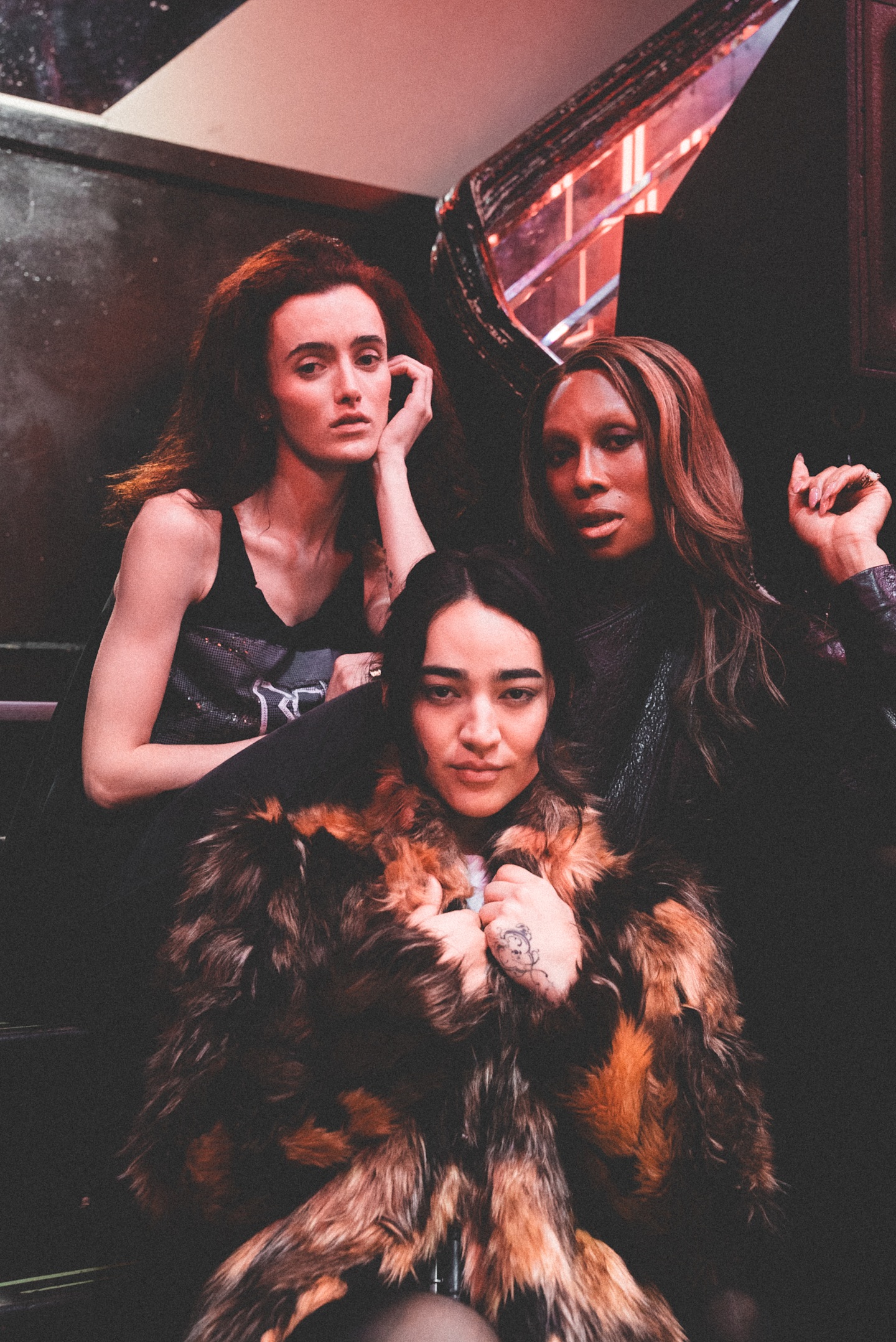
When Peter's friends — including Almi (Miss Benny), Hana (Alaska Riley), and Saffron (Saturn Risin9) — arrive at his downtown Manhattan loft, Arlo innocently asks them “Are you trans?” What could have become awkward, or written as a didactic moment for teaching, becomes a truthful and hilarious depiction of how a child would fit into the film’s world. Saffron responds with a smile and a nod: “Yes, we are.” Arlo retorts that he “loves dolls” and that his mom was friends with them in London. The crowd laughs.
The scene is one of several moments in Club Kid that capture the rhythms of queer life in technicolor clarity. Shot on location throughout New York City’s queer club scene and featuring cast members taken directly from it, the film is a strikingly authentic depiction of a world that, by its very nature, exists after hours and hidden from outside view.
 Narayan Naidu.
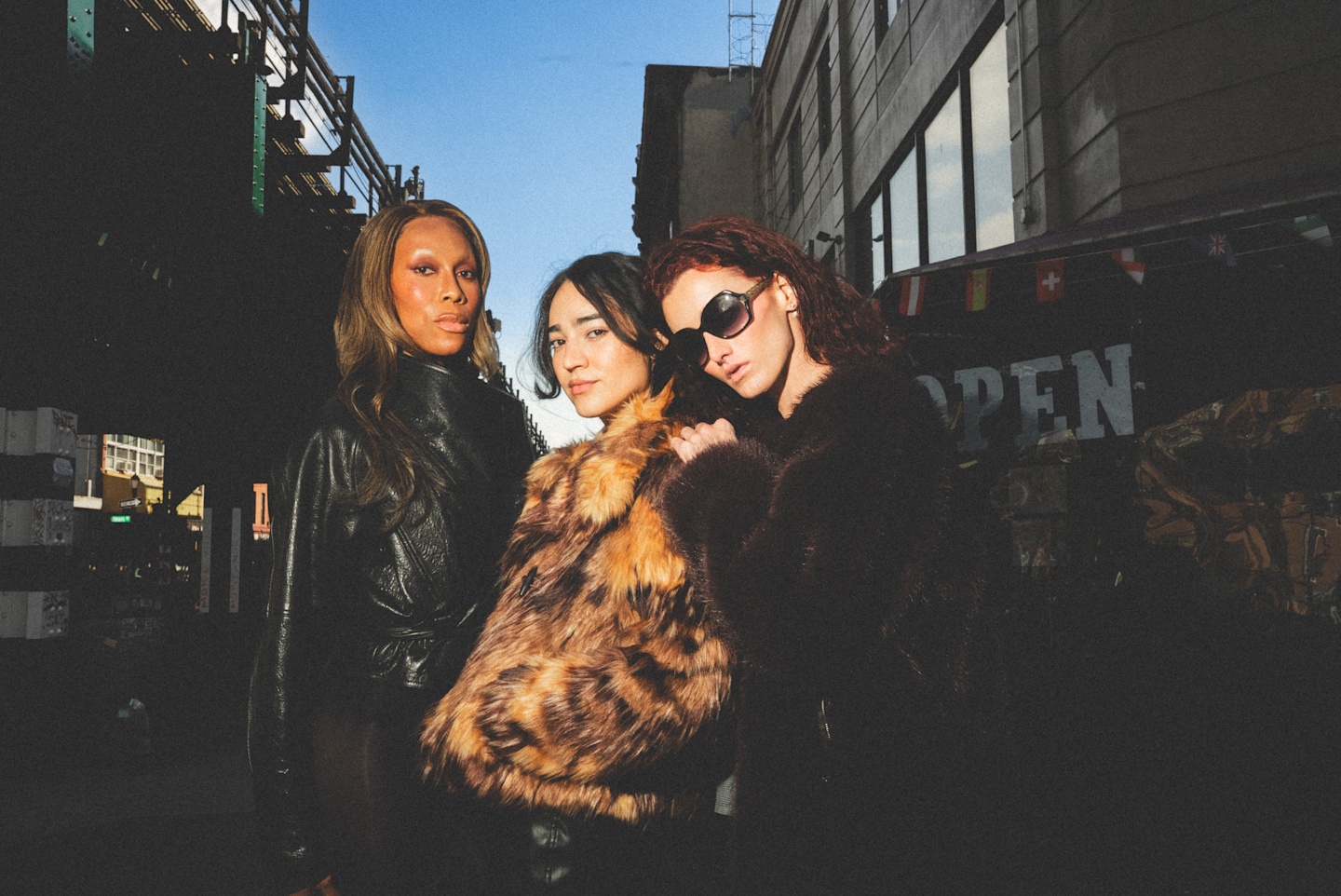
“If you're ever going to talk about [being trans], talk about it in the way it would happen in the world,” Saturn Risin9 says with a warm smile on a suspiciously perfect October day. She, Riley, and Miss Benny are cozied up on a couch by the front window of Paragon, a popular nightclub in the city. They're feeling tired and fuzzy after the film’s celebratory premiere the night prior.
Even though Club Kid is a movie and its characters are characters, it’s hard not to feel like Saturn, Riley, and Miss Benny are still operating in the world of the film as they speak. Across the street is Market Hotel, where the movie's opening party scene was shot. (Club Kid also filmed at nearby clubs H0L0 and at the popular party Pit Stop). Plus, all three actresses are actually involved in queer nightlife. Saturn DJs and performs in Los Angeles, while Miss Benny and Alaska both live in New York City and frequently attend scene events.
Another similarity between art and life is the lingo and the buzzy pace of their reference-dense conversation. A key scene in Club Kid references an infamous tweet by Gina Rodriguez that’s parroted by a coven of queers sharing drugs at a party; the moment becomes a Chekhov's gun-style device for the plot. As they take photos for this feature, Saturn and Miss Benny chat about the hubbub of film promo and bond over one particular Lady Gaga quote from her documentary Gaga: Five Foot Two when she’s sobbing about the trauma of overexposure: “I’m alone Brandon every night, and all these people will leave … everyone touching me all day.”
“Anytime I meet someone who gets a reference that I've held special and watched over and over, I'm like, Oh, we rot the same way,” Miss Benny says. “[Queer culture] just has an appreciation for all types of people, things, and pop culture.”
 Narayan Naidu.
 Narayan Naidu.
“Anytime I meet someone who gets a reference that I’ve held special and watched over and over, I’m like, ‘Oh, we rot the same way.’” — Miss Benny
Club Kid follows Peter who has spent “a decade or so” partying and employing a come-one-come-all attitude toward substance use in the city's queer underground scene. Existing in the scene was once life-affirming for Peter, but it has now become a soul sucking, and at times, life-threatening affair. This is the state in which Arlo arrives. Peter is in no role to be a father, but he finds connection and clarity through taking care of Arlo, who is artistic, precocious, and generous. And eventually Arlo, too, finds solace in Peter and his world of queer artists and personalities, even taking up DJing. The film, which begins in a state of caustic hedonism, thaws into a true “feel good” cinematic experience.
Over the two weeks I spend talking with multiple people involved in the making of Club Kid and others who inhabit the scene it’s depicted, not one person debated its accuracy — which is a feat given the propensity for LGBT+ community members to cringe at mainstream depictions of queer life. (Firstman, for what it’s worth, got in an online kerfuffle for cringing in response to the queer Hockey soap, Heated Rivalry, noting it’s “not how gay people fuck” to Vulture.)
The film captures the micro-details of the scene post-Covid, which has been a time of growth. “This is a special moment in New York City nightlife, and people want to see it preserved,” says Zak Stone, a New York City booking agent, promoter, and the film’s associate producer.
The first time I watched Club Kid, the primary feeling I left the theater with was of warmth and comfort. The world I saw on the screen reflected my own, not due to its debauchery, but the sincerity and hilarious unseriousness of the world it depicts. To an outside viewer, however, the film's salacious elements, mainly its open and multitudinous drug use, may be one of its key takeaways. Days after I saw the film, a close friend of my mom’s caught an early screening and, upon hearing that it depicted my general social scene, called my mother to initiate an intervention. Then, ahead of its New York City premier, Noah Sacco, Head of Film at A24, mischievously introduced the film by saying attendees would learn what “gundle” is — slang for the party and sex drug, GHB.
At the moment, it was funny to laugh at the absurdity of hearing that word in a theatreful of people, but afterward I questioned how I felt about the general population, the straight world, knowing such niche and intra-community terms? In our quests for representation, sometimes I wonder if being “seen” can raise more spectres for judgement and surveillance — especially in a wider anti-queer and trans political culture.
 Narayan Naidu.
At Paragon, I pose these questions to the cast.
“I was definitely afraid at first that it would be some N.Y.C. junkie exposé,” Riley says. “But I saw Jordan really take the underground people seriously and bring so much heart and warmth to it.”
The actresses wonder aloud if the partying and drug use in the film is even all that remarkable. Saturn shares a memory from the film’s premiere at the ritzy Telluride Film Festival. “There were people from all walks of life who were like, ‘I used to party like that,’” Saturn laughs. “Our world is a little less conscious of time and ‘growing up.’”
Ludwig Hurtado, a New York City-based filmmaker and journalist with a memorable cameo in the film, also thinks the film’s accuracy is a vehicle for connection. “The beauty of the script is how honestly and accurately it depicts a group of friends in the language that they use,” Hurtado says over the phone. Does he think an A24 film with strong awards buzz could pose any risk to the privacy and safety of the queer nightlife scene, given how truthful the film feels?
“Subcultures have always been at risk of being mined for capitalist gain,” he adds. “Those who exist in subcultures have always found ways to move even further underground and find new ways of gatekeeping and keeping ourselves safe.”
 Narayan Naidu.
 Narayan Naidu.
 Narayan Naidu.
As Firstman’s character Peter grows closer to his son and steps up as a caretaker, he increasingly distances himself from partying and the underground. He finds comfort and solace with Arlo’s social worker Oscar (Diego Calva), starting a relationship that evolves into a deep romantic connection. After my screening, I heard a few attendees debate if the film was implicitly espousing “conservative” values by connecting Peter’s healing to domesticity, fatherhood, and partnership.
A few days after the New York City premier, I call Jordan Firstman to see what he makes of this critique. He’s in the middle of getting an IV treatment and his agent is beside him; life is busy. “Some people are cut out to be in the scene forever. And for some people, it's a moment,” he says in his recognizably gregarious voice. “The club is not jail. You can come and go.” He adds that Peter is “not strong enough” to casually be around the thrall of the party while figuring out who he is and processing how his new role as a father has changed him. “He needs that time to figure out who he is.”
Firstman also wants to clear up the other “Twittery” critique he’s seen online which takes issue at the fact that Peter and Oscar appear to end the film in a traditional and monogamous gay partnership. “They are not monogamous,” Firstman says with a laugh. “They’re open. Mostly threesomes.”
 Courtesy of A24/Cinetic
“Some people are cut out to be in the scene forever. And for some people, it's a moment ... The club is not jail."
At Paragon, the actresses also disagree with the assertion that Peter’s healing being connected to his move away from nightlife is an implicit condemnation of clubbing.
“There's times in my life where I crave the party when I'm not at the party,” Miss Benny says, calling her nightlife rhythms “seasonal.” Riley interprets the ending as Peter contending with the weight of life’s shittiness, and how new responsibility and connection brought him purpose. “Giving these characters the grace of normalcy is so compassionate. It would be so easy to tell this story of a failure of a father, in a way that was a little bit gritter,” she says. “It’s shedding a light on the fact that life just fucking sucks some times.”
“More than not, we handle it,” Saturn chimes in at Paragon, kicking off a riff-session on the 2010s girl boss maxim: “Put your hair in a messy bun and handle it.”
Club Kid is now playing in select theatres.
 Narayan Naidu.