Alarm Will Sound on recreating SOPHIE’s “Faceshopping” for a chamber ensemble
“If a vacuum cleaner tube attached to a snare drum is what it takes to bring a demonic processed vocal to life, so be it.”


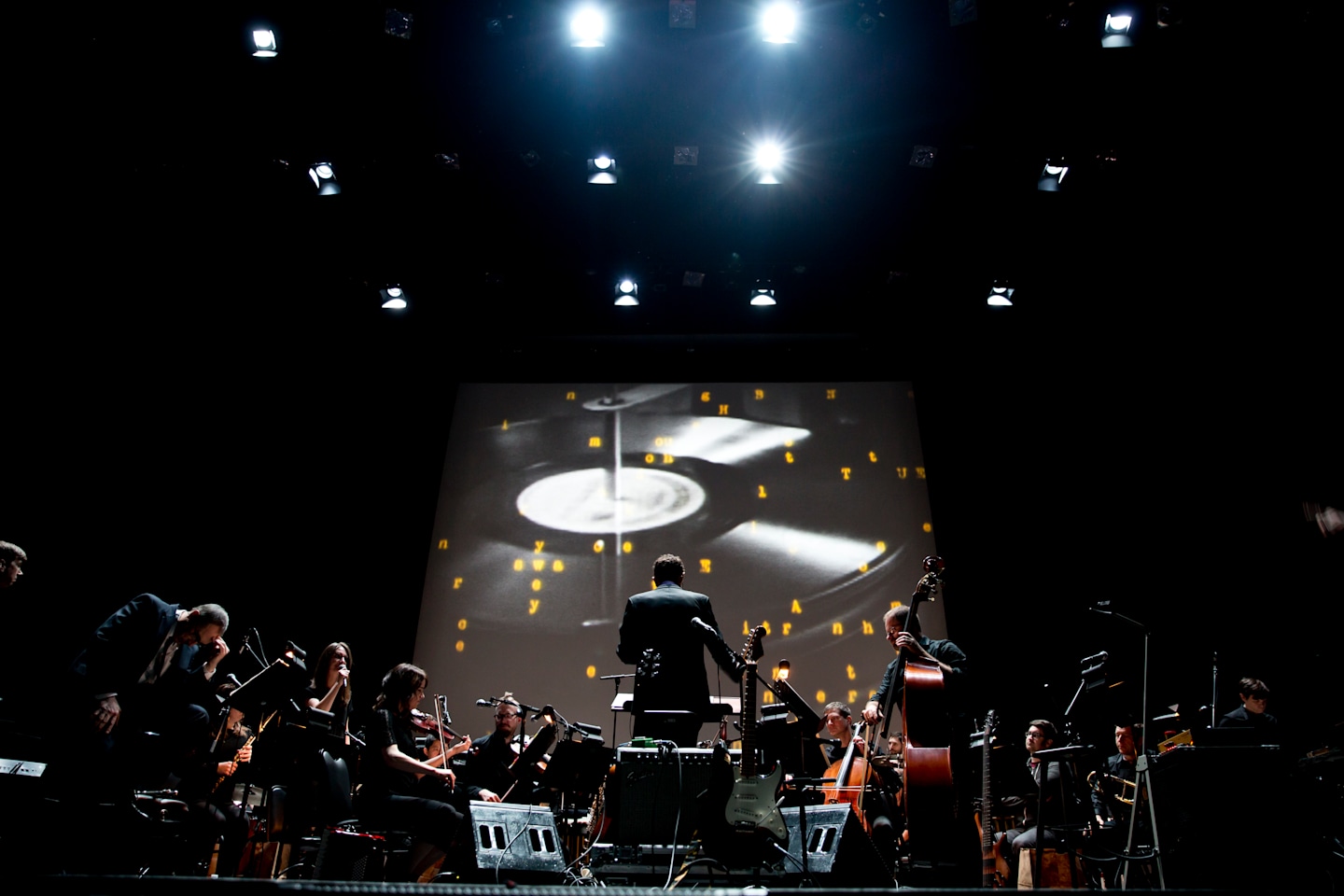 Ryan Hartford.
Who knew SOPHIE needed the acoustic treatment?
There’s an answer to that question and it’s the 20-member chamber ensemble Alarm Will Sound. In 2005, Alarm Will Sound recorded their instrumetnal translation of Aphex Twin’s complex electronic compositions on their album Acoustica. In October, Alarm Will Sound released a sequel to the project New Acoustica, which reimagined electronic works by the likes of Jlin, Lucretia Dalt, and the late, groundbreaking producer and artist SOPHIE, among others.

Alarm Will Sound has a distinct mission to “move art out of the concert hall and into everyday conversation,” trombonist Michael Clayville tells The FADER over email. That certainly happened when The FADER posted a video of Alarm Will Sound’s chamber rendition of SOPHIE's “Faceshopping” on TikTok.
The performance went viral and sparked a flurry of questions (and hot takes) about the ensemble’s striking rendition. It even led to a moment of genuine discursive crossover between the electronic and classical music communities. One top comment on the video from TikTok user @losterverses._ reads, "I've been saying SOPHIE fans would [fuck with] Stravinsky's 'Rite of Spring' for years."
"SOPHIE was an artist whose work continues to stir our imagination and move us deeply so I’m not surprised that people feel strongly," says Alarm Will Sound Executive Director and producer Gavin Chuck. "I bet fans of SOPHIE’s music are surprised to hear her music — especially an iconic song — done in a new way. We hope that feeling of surprise opens people to discover even more meaning in her musical world."
Alarm Will Sound was in touch with SOPHIE's team prior to her tragic passing in 2021; they even shared the original stems to the song (including Cecile Believe singing the bridge, which is used in the ensemble's recording). “That allowed us to listen to each individual layer of her meticulously constructed sound world,” says Chuck.
As one can imagine, it was quite the task to translate SOPHIE’s alien sonics to acoustic instruments: “Nearly everyone in the ensemble used their voice in the arrangement in addition to playing their instrument,” says Alan Pierson, the artistic director of Alarm Will Sound, conductor, and co-arranger of “Faceshopping.” “We spent endless hours discussing and tinkering with ways of acoustically manipulating our voices to try to reflect the genius of SOPHIE’s digital manipulation.” Tools included playing kazoos, helium, which was inhaled to modulate vocals, jaw harps, and speaking and singing into instruments. Pierson also lists “scratchy strings, bowed styrofoam, and boinging door-stoppers” as the out of the box devices used to translate SOPHIE’s electronic production to the IRL world.
Below, read The FADER’s email interview with Alarm Will Sound members about how they approached orchestrating SOPHIE’s music, their sonic experimentation, and what they make of the online reaction to their version of “Faceshopping.”
The FADER: What is the hardest part of translating electronic music to acoustic arrangements?
Chris P. Thompson (percussion; arranger): Keeping the gear requirements under control is next to impossible. Often the performance challenges end up feeling totally manageable compared to the problem of figuring out how to make a sonically faithful representation of, for example, a track that has six different snare sounds. Is that octave of metal plates important enough to ask our bassoonist to play it? And how does it get to the gig? With each track we arrange, the gear and personnel demands for a single show multiply exponentially. Our production manager, bless his patient soul, finds a way.
Courtney Orlando (violin, voice, keyboards): The most difficult – but also the most exciting and interesting – part of translating electronic music to acoustic arrangements is playing around with traditionally classical instruments to find creative ways of interpreting the electronic sounds. This can mean listening to a track a hundred times in order to truly grasp the nuance of a specific sound, but there’s nothing more fun than working through a track with the whole ensemble. Players come up with the most novel and surprising ways of playing their instruments when art is on the line.
John Orfe (piano; composer): “Translation” is really the perfect verb here: pitches, rhythms, and dynamics remain essentially consistent whereas timbre, blend, and articulation (to a point) offer great imaginative possibilities. The great translations in poetry or literature seem to carry the essence of their sources into the new language or medium.
How do you pick the tracks you want to cover?
P. Thompson: Despite being created by machines, some electronic music feels like embodied human genius. You can close your eyes and see it being produced by people, and more importantly there’s this feeling that something will somehow always be missing unless we can figure out a way to bring that to reality. The tracks we choose give us an itch: this is so good... listening isn’t enough, I must participate. A good candidate for an arrangement feels like an imaginary band we want to join. Or start a bar fight with.
There’s also the crucial question of whether a live performance has something to add: to bring elements out of the original that were hiding under the surface and hold them out in front of the audience’s face. A great arrangement doesn’t just recreate the original, it amplifies everything good about it.
What made you want to create a follow-up to Acoustica? How did you pick the songs for New Acoustica?
Michael Clayville (trombone): Alarm Will Sound’s mission is to move art out of the concert hall and into everyday conversation. I want people at the dinner table talking about microtonality, Pauline Oliveros, Steve Reich, opera, and SOPHIE in the same breath.
We picked the songs the way most things get picked in this band: somebody falls for a piece of music and can’t leave it alone. We loved playing Jlin’s “Black Origami” so much that we asked her to write “Back Against the Wall” for us. We wanted to be inside the sound world of “Faceshopping.” Every track is here because we love it and respect the artist who made it.
Tell me about creating the arrangement for “Faceshopping.” What made you want to create an arrangement for this particular song? What was the biggest challenge in creating it?
Alan Pierson (Artistic Director and conductor; co-arranger of “Faceshopping”): We were drawn in by "Faceshopping"’s exploration of authenticity: SOPHIE’s idea of manifesting your true self in the world by transforming your physical self to reflect who you really are. But it was the way that she expressed that idea in sound that made us fall in love with the track: the relentless, extraordinarily imaginative digital warping of her own voice.
The biggest challenge was to do justice to those hyper-manipulated vocals through purely acoustic means. We’re usually combining different vocal and instrumental sounds to recreate SOPHIE’s digitally manipulated vocals. I think it’s the most obsessed-over four minutes of music in Alarm Will Sound’s entire catalogue.
Tim Leopold (trumpet; co-arranger of "Faceshopping"): Her team sent us the stems, and I spent days transcribing what I heard, identifying pitches and rhythms, and unpacking her multilayered techniques. The challenge was immense. We quickly realized that orchestrating these sounds would require more than extended techniques and traditional notation.
How does using non-traditional instruments inform the process of creating arrangements?
P. Thompson: We invent or discover what doesn’t exist through endless trial and error, and rule out nothing. If a vacuum cleaner tube attached to a snare drum is what it takes to bring a demonic processed vocal to life, so be it. We bring mallets to Home Depot for inspiration. Also obviously having a bunch of weird shit on stage is just really a scream for everyone.
In our TikTok, you see a lot of folks earnestly debating the arrangement. Has anything surprised you about the reaction? What would you like to clarify for anyone who’s just learning about your work now?
Gavin Chuck (Executive Director; producer): When SOPHIE heard that we wanted to make an acoustic version of "Faceshopping," we were honored that she shared her original materials with us. We’re so grateful because that allowed us to listen to each individual layer of her meticulously constructed sound world. Our version was not merely about re-creating her digital music for our acoustic instruments; it was also about matching her artistic intention with our own. I do wish the TikTok snippet would lead people to find the New Acoustica album and listen to our track in its entirety.
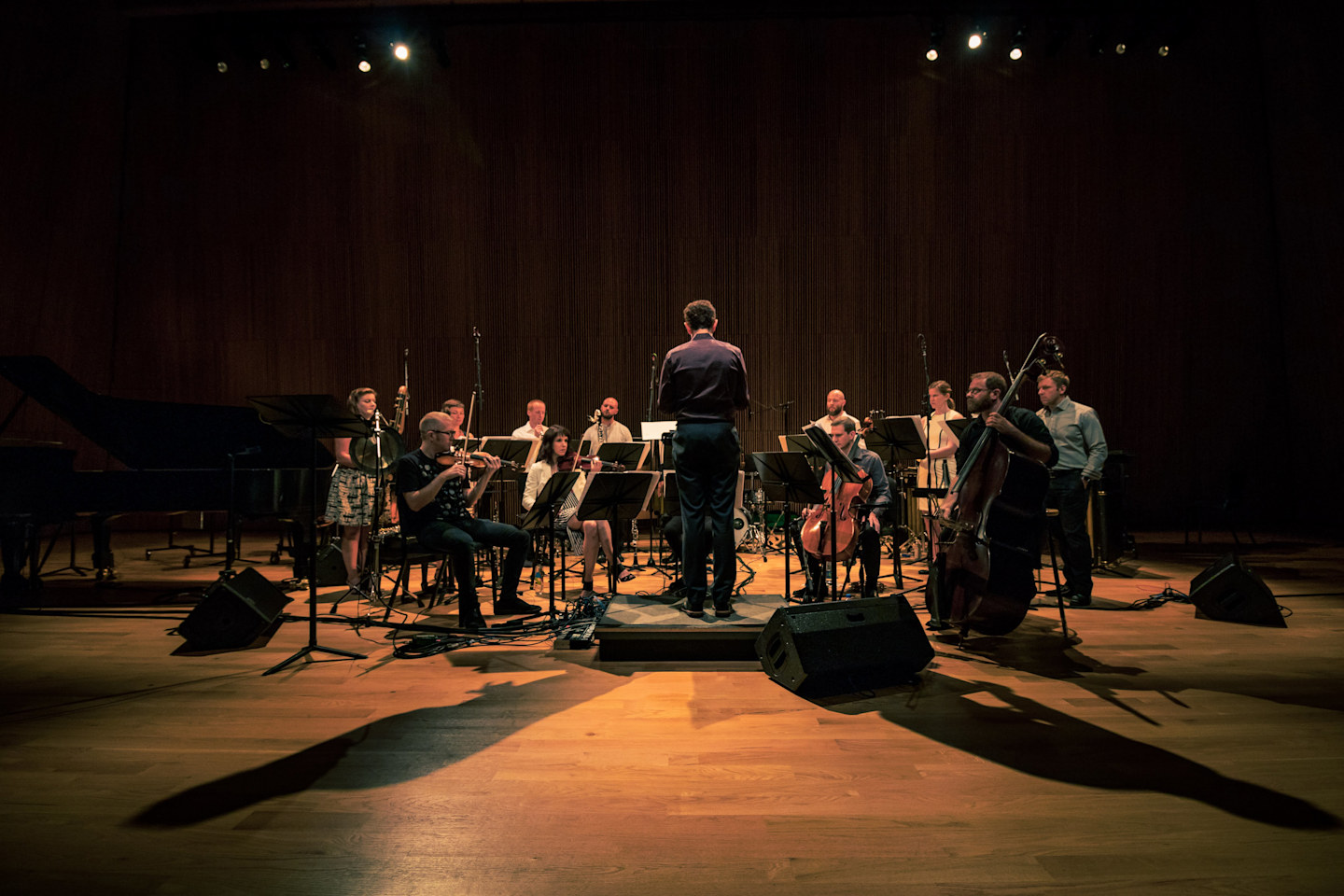 Thomas Fitcher.