

The tape starts: "... This is a time when the fruits are growing out of something that was sown a long time ago. It’s not like these are the fruits of just liberation. Those kids who grew up so fucked up, the people who were tortured in the ’70s and ’80s—they’re 30 now. That’s where a lot of the crime also comes from—people who have been like, dehumanized, and they feel no hope. Hopeless. If you were to kill everybody and start anew, then stuff would be anew and then you could have hope for a new day. But the fact is, those people are still alive." Because while you're preparing for an interview with Nthato Mokgata—bka Spoek Mathambo aka the man formerly known as the gentle voice behind such sweet Sweat.X sex jams as “I Got Pussy On My Mind”—to open slowly and be about whatever, he's already asked how much you know of South African politics during the State of Emergency while the car rolls past a park where he says they used to find bodies when he was a kid. “When we grew up here it was where you’d be scared of somebody stealing you away, where snakes were. We used to hear stories about a big snake, kind of like a ghetto anaconda.” Not exactly party time. Spoek Mathambo is just that, though, a playful guise for a smart kid to get the word out, an inside joke with deep truth underneath. With a subtle bit of subterfuge, he’ll make you think about things you don’t want to.
The park Mokgata’s talking about is in his old neighborhood in Soweto, where he grew up the youngest of four in a nice brick house the same honey brown as all the others, and the soil and the sun at dusk. There are no more bodies there, and the snake in the grass is gone. Despite the horror stories in the media of rampant crime and homicide in Johannesburg, it feels pretty safe here—the only funny looks come from the little kids whose street soccer game we almost inadvertently walk through. Yet no one will argue that Jo’burg and Soweto aren’t still dangerous places. When Mokgata, as Spoek Mathambo, performs some creepy, cracked SA house with his voice pitched low, singing Don’t be scaaaaaaaaarrrred, the locals laugh, knowing that “don’t be scared” is the only logical response to endless reports of murder and mayhem. What else can you do? Don’t be scared of the car driving slow. Don’t be scared of the government failing. Don’t be scared to laugh at how the world sees you. They laugh at the mention of his name too, because it’s taken from a popular sitcom, Emzini Wezinsizwa, in which five migrant workers from different tribes live in a township hostel together and butcher each other’s languages to great comedic effect. His music is filled with double-talk, hard to decipher if it’s grist for fearful outsiders or comic relief for weary fellow citizens. He’s gone from sex-obsessed South African Spank Rock to the subversive leader of some new front of political dance music (and he’s only slightly less obsessed with sex).
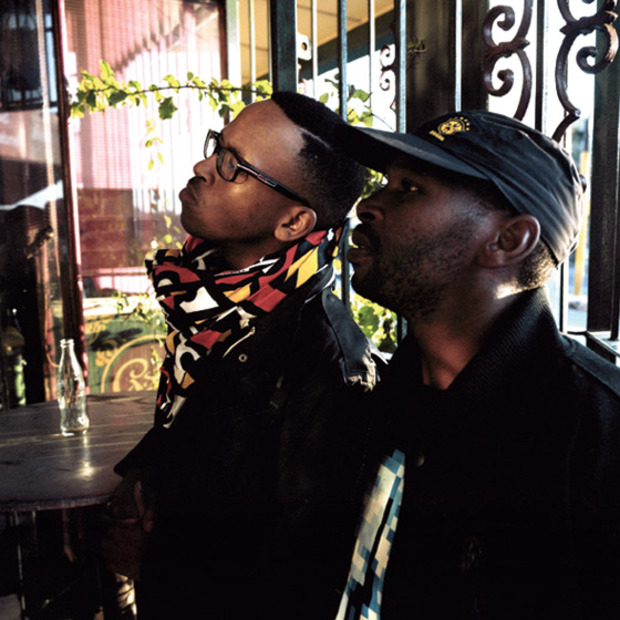
Spoek Mathambo roughly translates as “skeleton,” and Mokgata uses the persona to let some out of the closet. As Mathambo, Mokgata can couch his personal history, and by proxy South Africa’s, in sly, softly uttered phrases buried under word-blurring bass, or he can just come right out and say it. The name of his band, his album and his lead single is “Mshini Wam,” a contraction of “Umshini Wami” (trans. Bring me my machine gun), the Zulu war song favored by the military wing of the African National Congress, Umkhonto we Sizwe, in the early ’60s, then led by a young Nelson Mandela. Spoek Mathambo’s version is jacked-up dancehall challenging an unnamed, suspect politician “pumping his fist with the ANC T-shirt” to come meet the township boys who throw molotovs and grip AKs. As a signpost for his new direction, it’s potent. The fist-pumping pol in question is presumably the embattled South African President Jacob Zuma, a man once central to the liberation whose supporters, with his encouragement, sang “Umshini Wami” as he was tried and acquitted of rape in 2005 and evaded corruption charges in 2007. It was a gross appropriation to gain support, and Mokgata takes offense.
Mokgata’s activism on these matters comes from experience. When he was growing up during the State of Emergency, army tanks and security forces patrolled Soweto to prevent rival political loyalists from killing each other. They weren’t all that successful. The shortest, simplest explanation of this time is as follows: In 1984, with African National Congress leader Nelson Mandela still serving a life sentence on Robben Island for conspiracy against the state, a widespread uprising against the exclusion of African representation in a newly formed parliament began and intensified throughout the next year and a half; In July 1985, after increasingly deadly clashes between protesters and police, the government declared a partial state of emergency in some areas; At the same time, the ANC and Inkatha Freedom Party battled for control of parts of KwaZulu-Natal in the southeast regions of South Africa; International banks and companies withdrew completely and isolated the country, exacerbating the political violence with economic despair; In June 1986, the government declared a national state of emergency that lasted until February 1990, when it was lifted under increasing international political pressure, despite continued bloodshed between the ANC and Inkatha, the latter with alleged support from a “Third Force” within the government; On February 11, Nelson Mandela was freed from prison, the ban on the ANC was lifted and negotiations began for a democratic election between all political parties in South Africa, which eventually took place in late April 1994, with Mandela and the ANC taking over majority control of the national government and effectively ending the decade of violence. Between 1984 and 1994, over 20,000 South Africans were killed because of their political beliefs. This reduces an entire country’s history to a chronological list, but it’s the legacy Mokgata is speaking of when asked if things have gotten better.
“It’s a lot better,” he says. “That’s why I’m so pissed off about people bitching so much. I’m really happy, man. I’m really properly happy. That’s what I hate about overly pessimistic people. Yeah, shit is fucked up, but if you know why it’s fucked up then you’ll be fucking happy that it’s fucked up like this and not like that.” He has a right to be happy and pissed, the Mokgata family has lived through every bit of South Africa’s history this century and are still here to talk about it, which they do over a lunch prepared by Mokgata and his older brother by ten years, Tshepo. Four generations of family women have gathered to meet us at the house of Mokgata’s paternal grandmother Madiabo Magdeline, a sprightly 92-year-old who smiles and talks the entire time we’re here. She talks of the forced relocation to this neighborhood in the ’50s, and the World Cup—she can’t get enough soccer, especially the local boys, Bafana Bafana. Mokgata’s maternal grandmother Hazel Nguna, 98, keeps the facts straight from across the room. They have a funny rivalry, though its clear they also respect each other in ways that would be hard to grasp for people who haven’t lived through the bitter struggles of the last 90-plus years. Mokgata’s older sisters, Malusi and Tebogo, corral the dynamo dining stylings of his baby niece Bomi, who bumbles about the room with pudgy fistfuls of food in search of Coke to wash it down. Mokgata’s mother Mandisa sits in the middle of it all. She says that even as a young boy he would advise her in the skills of parenting and offer counsel when his older siblings did things to upset her. “He has always been wise beyond his age,” she says, and you sense the bond she has with her youngest son as she watches him tend to the rest of the family.
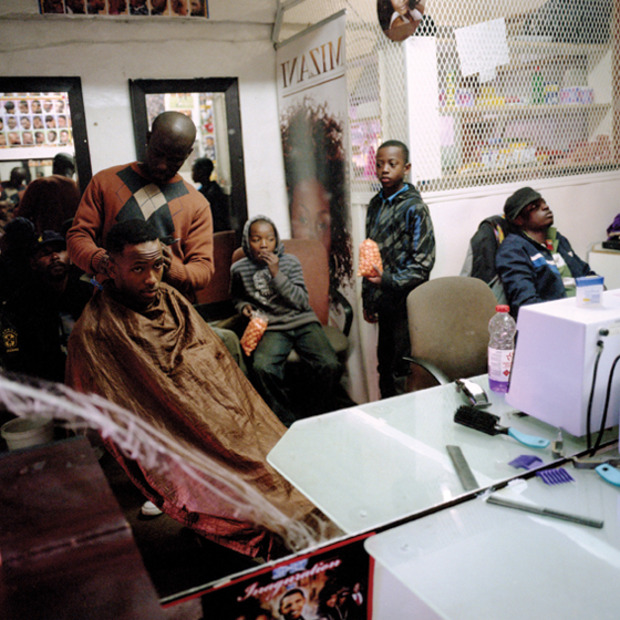
Mokgata’s father, Samuel, is not here. For the last two years, he’s worked in Telford, England, as an IT programmer and analyst, after stints in Australia and other parts of the UK. He’s been traveling for work since 2000, and is still married to Mandisa. “He comes back every couple of months,” Mokgata says. “He’s like me. And we always miss each other.”
For the last year and a half, Mokgata has bounced from Jo’burg to Cape Town, toured all over Europe and settled in Malmö, Sweden, with his wife of one year, Ana Rab aka Gnucci Banana, a tall Croatian girl who records and performs with him occasionally, though she’s a schoolteacher by trade. He encouraged her to join him after sharing many a conversation about grime and hyphy and hearing her dead on impersonation of Bay Area-croaker Keak da Sneak. They both say how much they enjoy spending time together, and their collaboration is just another way to make that happen. “I’m newly in love every day with him,” Rab says. “I hear everything from scratch, and he still manages to surprise me. We’re always curious together because we do a lot of things together, we talk about a lot of things. He’s just… special. I can’t imagine myself without him.” They had two weddings, one in Malmö, one in Soweto. He met her entire family (they loved him), and she met his (they loved her). Mokgata’s mother, grandmothers and sisters all say Rab is one of those people who immediately fit in, not a second of awkwardness or discomfort, just family. Rab’s grandmother said she’d found herself an “equal man.”
Mokgata’s reasons for leaving South Africa are probably no different than any other young, intelligent and creative person’s reasons for leaving anywhere. But his time in Malmö seems well-spent, and, like his dad, he’s rarely gone for long. It allows him the space and perspective that exclusive time at home or away might not. As a result, Mshini Wam sounds dissident, but in the way that someone might get up-in-arms reading their local paper on vacation. It’s removed, but not totally acclimated. Its productions, largely co-created by Mokgata and his Cape Town bandmates Richard Rumney and Jake Lipman, sound like South Africa—twerked kwaito (the mid-tempo dance staple of SA), the pulse of house, a mishmash of the Zulu, Sothu, Xhosa and English slang Mokgata knows from the neighborhood.
On the other hand, they don’t sound like South Africa at all. Bits of his teenage obsession (he had a zine) with experimental hip-hop like Clouddead and Anti-Pop Consortium flecks the songs as often as English accents like dubstep and a deranged cover of Joy Division’s “She’s Lost Control.” No one else is making music like this in Jo’burg, Durban, Cape Town. Ask a sample of people at his SA shows what they think and the unanimous answer is “it sounds weird.” Mokgata knows this: “I was trying to make something that is like, Damn, this is the newest South African music out. This is what it should sound like: urgently progressive. How much do I want to play into the fact that my culture’s been so much of my life, and how much do I want to say fuck it, I want to do something completely and utterly reactionary, basically? React against global culture, react against globalization, react against sounding similar to M.I.A?”
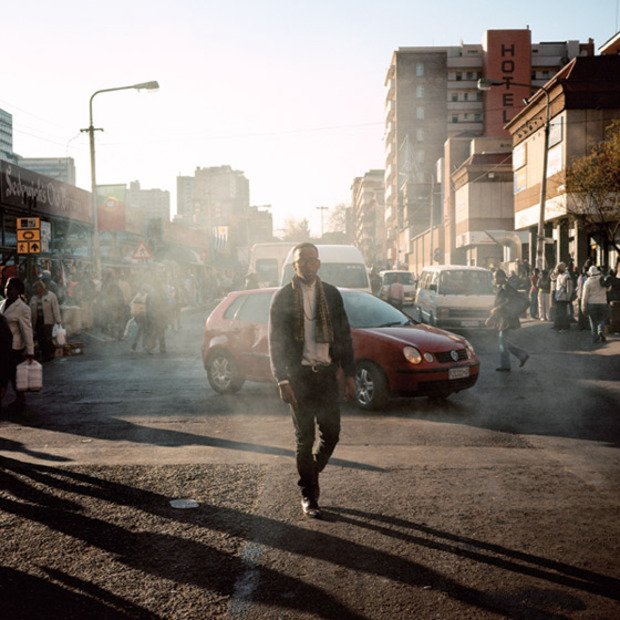
The answer is to do both. Spoek Mathambo is the action and the reaction. At 25, Mokgata is on the cusp of the generational split in South Africa, where those older than him share specific memories of the bad old days and the younger ones, while not exactly blissfully ignorant, certainly don’t bear the psychological scars of direct exposure. He bridges that gap. He joins his knowledge of the past with a vision of the future in a way that makes him odd to a 30-year-old and awesome to a kid, but familiar to both. His music is the next, somewhat illogical step in the evolution from funk to kwaito to house, and the younger kids are there to verify its progressive merit. His politics are not hackneyed radical slogans used to sell records or grab headlines, they’re real, and South Africans of a certain age (namely his grandmothers) would not let him get away with anything less. Everyone hears something in his songs that they can relate to, whether it’s the sharp lyrics or hectic music, and is thrown off balance by the other. Either way, he’s opening them up to something they may not have heard before. And that applies to people outside of South Africa, as well.
As Mokgata walks through his old neighborhood, pointing out where he wooed girls with juice boxes as a five-year-old and where his best friend used to live, a few people stop to talk to him. They don’t know him, and it’s not because he’s famous, they just see a dapper dude being interviewed and want to know what’s up. One kid does know him though. He pulls up in a souped ’90s Volkswagen—“Spoek Mathambooooo”—and asks when the next show around here will be. Mokgata promises “soon soon, man” and the kid drives off happy.
Spoek Mathambo, in any incarnation, has never been on the radio, is not part of the industry and doesn’t really take part in any Jo’burg scene. “I’ve been such a loner,” Mokgata says. “There are a couple people but nobody knows.” People do know, but they’re scattered across Sweden, England, New York, Paris and Johannesburg. He’s trying to consolidate their support now to get the broader attention of South Africa, and then the world. A few decades ago, a young Sowetan intellectual with something to say would have had plenty of people listening to his every word, Mokgata probably would’ve been dangerous. Now, with things not as bad as they used to be, Spoek Mathambo has to fight to be heard.