 Tyler Smith


Where were you in the summer of 2019?
I remember where I was. Meandering down salad day SoCal streets. Working in a mid-city book store. Still smoking too much weed and licking my wounds from a semi-freeing first year in college. I was listening to Choker.
The Detroit-born, Los Angeles-based artist, whose real name is Christopher Lloyd, released three EPs that winter that captured the pain and possibility of pop music. They were tragic, sunny, often roundabout pieces of sonic diarism. I played each of them — Forever & A Few, Dog Candy, and Mono No Moto — in my mom’s rumbling iron red Honda Element. I’d keep the windows up, the space warm and cozy, as I turned up the volume.
Those EPs were a distillation of the frothy musical concoctions Choker swirled up on 2018’s Honeybloom. That album churned between R&B, acoustic folk and cloud rap, Choker fitting into each sound via his slippery vocal shifts. It was co-produced by Michael Uzowuru (Frank Ocean, Vince Staples, and Childish Gambino) and Jeff Kleinman (FKA Twigs, Frank Ocean and Kevin Abstract). When it arrived in August 2018 amid a flurry of press and online buzz, the industry saw visions of a new crooner in the vein of Miguel, Maxwell, and Ocean.
Ocean was heavily invoked in the press surrounding Choker during the period, and it’s not hard to understand why. The blonde singer was at the peak of his cultural omnipresence and it seemed only natural that another “Ocean-type” — in crude industry parlance, an alternative Black male R&B-esque singer and auteur — would emerge and earn a major’s backing. Choker’s voice, heartfelt, subtle, and prone to surprising moments of expansion, was not dissimilar to Ocean’s nor was his musical eclecticism. Reductive as it may be, such archetypes are the stuff of record deals and major careers.
The path was laid. Choker’s music was featured in the soundtrack for the Lena Waithe-penned thriller Queen & Slim. He booked a Sprite commercial. He played Flog Gnaw and toured Europe. But then releases completely halted after 2019, as did almost all social media posts save for the scant anniversary post or reminder that yes, he was still working on music. By 2025, it was widely assumed that the experiment known as Choker was a brief albeit meaningful Harvard study. Those who listened, listened. The music would live on in perpetuity, available to stream for the heads.
Then, in late 2025, Choker began to post some teasers on Instagram and send postcards to fans. On December 8, Choker announced his return with a new album, HEAVEN AIN’T SOLD, expected February 20, 2026 — seven years and two weeks after he released his last EP.
 Tyler Smith
I call Lloyd in early February, a few weeks out from his album release. He’s in his studio in Alhambra — a prototypical Los Angeles suburb, located just south of the verdant and historic South Pasadena neighborhood. Behind him is a wall of keyboards, synths, and soundproof panels.
I’d expected him to be as mysterious in demeanor as his internet presence has been this past near decade, but instead he’s open and relaxed, wearing a trucker hat and square-framed glasses. There’s a twinge of wistful California upspeak in his voice despite his Midwest roots. “I guess the natural fear is that n****s are just like, This shit sucks,” he laughs, discussing the new album. “You took over half a decade to just drop a dud, you know?” Despite his calm, he’s terrified about the pending release. “I definitely wouldn't be stoked on that. But it's not gonna shatter my life. That's just part of making art.”
Lloyd’s right. Waiting for new music is just a part of being a fan of any artist. But a seven-year hiatus in a music economy where attention is fleeting and fandom is fickle can be detrimental. The more pressing question isn’t how Choker’s music will be received but whether it will be received at all. How many are still waiting for Choker?
 Tyler Smith
 Tyler Smith
Lloyd grew up in Detroit among a family of music lovers. His earliest musical memories were of listening to the radio while en route to soccer or basketball practice. Local jockeys would broadcast mixes that merged local ghettotech and techno with Miami Bass, Atlanta Bass, and House music from nearby Chicago. That, combined with his brother’s love for Midwest Emo and Frou Frou, made up his music taste. “I was eight years old, listening to both ghetto tech and Bjork,” he says. “It was just a big cacophony of influences.”
Lloyd first considered himself a writer. He wrote short stories, poems and scripts. But eventually his curiosity around music led him to apply his pen to songwriting. Around the same time, he began frequenting music blogs and digital magazines like 2DopeBoyz, Pigeons and Planes, and this very publication. It was the tail end of 2010s, he remembers, when blogs and digital magazines were still breaking new artists like Odd Future, Chance The Rapper, and Mac Miller everyday.
“There were teenagers just throwing their music on the internet and then actually being able to have careers after,” he says. “[Seeing that] was huge for me.”
I guess the natural fear is that n****s are just like, This shit sucks. I definitely wouldn’t be stoked on that. But it’s not gonna shatter my life. That’s just part of making art.
That same ecosystem, however, would soon break him. After he released his pop-sensible debut album, Peak, in 2017, he flew to Los Angeles, “took some meetings,” and met up with Uzowuru, who, as the producer behind songs like Ocean’s “Nights” and “Chanel,” was establishing himself as someone who could push the boundaries of popular music in strange and surreal directions. Lloyd met more new friends and posted up in an Airbnb to begin making what would become Honeybloom. “I was just on some young, natural, rebellious energy,” he says. “I was very much like, ‘Yo, I want to get out of Michigan.’”
One of those new friends was Roy Blair, who was also releasing music in L.A. and ran in similar circles. “People were throwing the label ‘bedroom pop’ on stuff [when Honeybloom came out, ] but you can’t apply that to what Choker was making,” Blair says. “It felt like the first time I had heard the music that inspired me when I started making music,”
A few EPs later, Lloyd embarked on his first tour, and the odd reality of the newfound attention he’d amassed began to dawn on him. Those were the first shows he ever played, and by that point he had skipped some steps, like finding his bearings for the limelight first as an opener.
“Being in a room with a bunch of people staring at you, expecting something … It made me reckon with the idea of myself beyond being just Chris,” he says.
For the longest time, perhaps due to his humble, midwest roots, he’d partitioned his music career in the same category as an accountant, as someone working in a trade. But after standing in front of a fawning crowd, that illusion suddenly shattered. “I realized I have this artist persona, this other version of myself: Choker,” he says. “I’m not a brand. I’m a very anxious person. I’m a big over-thinker.”
 Tyler Smith
This seed of discomfort grew into something sturdier after the pandemic. He initially planned to use that quiet time to “transition into a different way of putting out music,” but the slowdown morphed into a complete stasis as longstanding realities began to surface. In 2018, a close friend of Lloyd’s had committed suicide and the emotional impact of that event, which Lloyd says he had not fully processed, manifested into “a lot of negative effects of depression.”
“I was brute force using my career as a crutch rather than actually focusing on any inner turmoil. I reached a point where I needed to stop and deal with — not only this grief that I have, but — this fog that has plagued my life, which is depression and anxiety,” he says of that time. “I was just running on empty.”
Luckily, Lloyd had the benefit of time. He had never signed a record deal (and still hasn’t, despite the offers), and gets to claim the rare status of being an independent artist who’s able to fully live off of his music, albeit modestly. The freedom was a blessing, but at times destabilizing for him as he tried to regain a sense of routine and purpose. “You know those memes about your unemployed friend on a Tuesday,” he says, “I was just up to some bullshit.”
He began to re-find his creative and personal footing in 2022 after zeroing in on a healthier routine (a more typical sleep and social schedule rather than nonstop studio toiling). When I remind him that that was still a whole four years ago, he chalks the remaining years to his new album to the “time sink” of perfectionism. He looked to his idols Stevie Wonder and Joni Mitchell; and the passing of D’Angelo was especially piercing for him given the fact that the soul titan was one of his North stars. But after banging his head against the wall for seven years, Lloyd eventually had to accept the statue he’d chipped away at, and unveil it.
The portrait Lloyd paints on his new album HEAVEN AIN’T SOLD is emotionally thick. Deep and warm pianos blanket the record, as do layers of his voice which feels more worn and weary than when we last heard him. The music strikes you, but the lyrics are still hazy and ambiguous. “I don't want to be a phantom,” he coos on opener “Gepetto.”
Lloyd says that the album is about the pitfalls of being an adult, of “making mistakes, of having really big feelings.” Of feeling desperate and embarrassed. The embarrassment is a product of desire, but maybe most importantly, it’s the embarrassment of feeling chronic disconnection. “Of being like, I'm so pitiful right now,” he says.
It’s also about loss: grief, heartbreak, and losing former versions of yourself. “Losing your spark,” he adds. Ambiguous as it is, that word — “loss” — is big enough to carry the cloudy grief of the record.
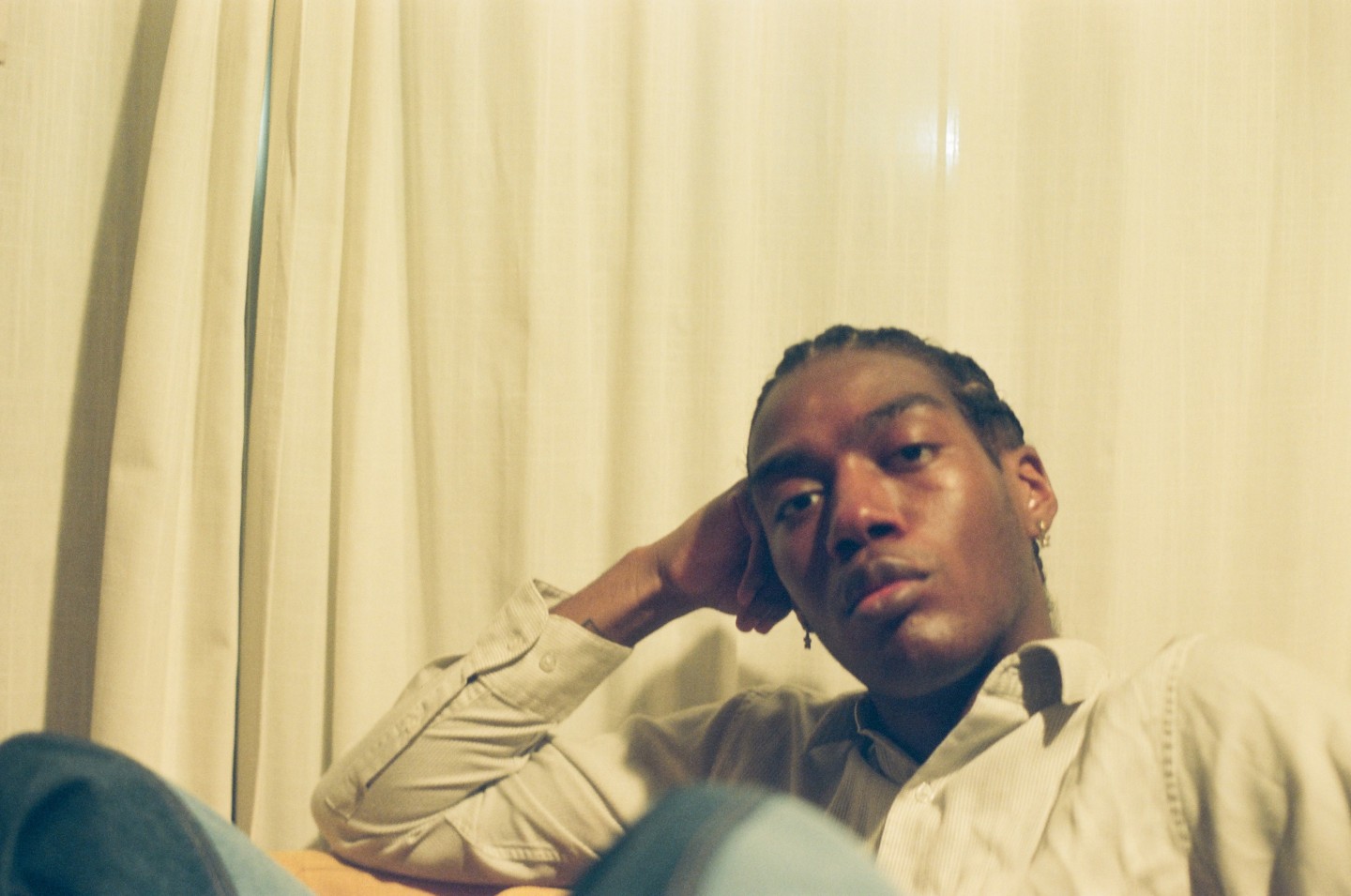 Tyler Smith
When we talk, Lloyd has already released the first singles. The lead, “Proof,” the most bulletproof track on the record, is inspired by the new jack swing of the ’90s and is a lyrical one-shot about the pain of yearning. If old Choker was prone to ramblings, this song’s directness seemed to show restraint.
He’s pleased, he tells me, with the response it’s received. On YouTube, the top comment reflects on how “Listening to choker [...] just gets better and better.” And Blair, who’s also not immune to long waits between projects, is all compliments. “The proof is in the pudding. I took my time and maybe it didn’t benefit my career in terms of [Spotify] monthly listeners, but I’ve retained the same fanbase because my fans grew up with me. Chris’s fans are exactly the same.”
One of my favorite songs on the record is “Uneven.” Lloyd worked on his piano skills for the making of the album and on this track his playing veers between buoyancy and drama. Its chorus swells with thunderous chords: “Let me in / It’s not my fault / I’m scratching at your door like a dog,” he sings, his voice peaking with falsetto. The image it evokes is of pitiful desperation, like the one Lloyd told me about earlier, but expressed simply, resonant, and true. I can’t claim I had been consciously waiting for Choker throughout this long near-decade, but when I hear his words, the feelings envelop me like I’m 19 again.
I ask him about the heaven invoked in the album title. He describes it as a kind of contentment. A peace that’s earned and can’t be sold. Has he found it?
“Not at all.” He laughs. “I feel a lot closer. That’s all you can ask for.”