 Ashlan Grey.
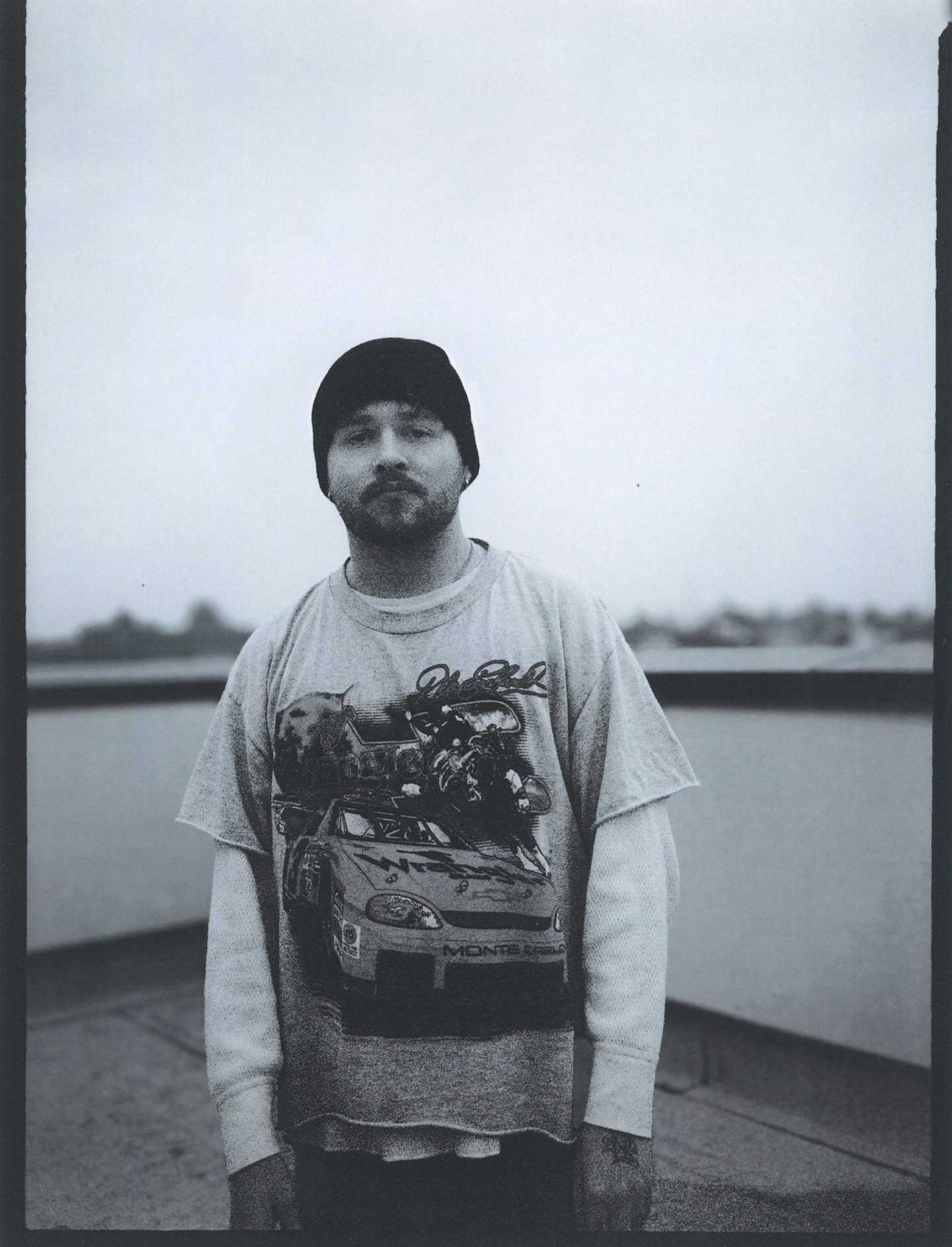
Ciarán walks up to my table at a Fort Greene pub with a Guinness in hand and a gold pendant emblazoned with the word “Palestine” draped around his neck. He’s dressed in a heavy black hoodie, although it’s a hot August day. The elusive musician is reserved, but not cold: he smiles a lot, but rarely makes direct eye contact. “I've been a shy person my entire life,” he says. “I’m not good at talking myself up.”
I realize I’ve never heard the Belfast-born crooner speak before, despite listening to his melodious vocals for the better part of a decade. The world first met him as the BROCKHAMPTON member Bearface, but even in the late 2010s at the height of the group’s acclaim, Ciarán was shrouded in mystery: he was the scraggly-faced, sweet-voiced vocalist best-known (or known only) for closing out BROCKHAMPTON albums with powerhouse ballads.

But in the nearly four years since BROCKHAMPTON broke up in 2022, no one had heard anything from Bearface — until this July, when he announced his return with a name change. He would now be going by his first name, Ciarán. The news arrived with a debut of sorts, “K-Bar,” a swaying ballad that shows off Ciarán’s emotive falsetto over a drum beat that sounds like it was made with a toy machine. On it, he sings strikingly about romantic union and mutual transformation: “You let me wear your clothes, baby, we could both be girls.”
Two weeks before we speak, I saw Ciarán’s first live show in years at a packed Christ & St. Stephen's Church on the Upper West Side of Manhattan. Before the show, I waited at the back of a snaking line of hundreds of jittery fans in their mid to late 20s. When a woman driving by asked what the riff raff was about, an attendee screamed back, “We’re seeing Joni Mitchell!” Upon admission, our phones were locked away to prevent recording; I found a spare seat in the back, straining my neck to get a glance at the stage. Ciarán came onstage with a 10-piece band and the lights went out, a wash of dim blue light barely illuminating the musicians.
Without introduction or pomp, Ciarán began to play the entirety of his forthcoming album, Róisín, out November 6 via NinjaTune — jangly, enveloping R&B that’s heavy on texture and surprise. The audience sat rapt, largely silent until the show ended, when everyone rose for a rapturous standing ovation.
Ciarán was pleasantly surprised by the thunderous reception, both online and off. “I was prepping myself, like, All right. This is going to feel like a total flop initially, but like just keep going,” he says. It wasn’t. After the at-capacity show, fans reported on the epic line and told tale of his first solo set to thousands of views and comments expressing bone-deep FOMO.
 Chris Albo.
The elated response came despite BROCKHAMPTON's beleaguered last stretch as a group. In 2017, the 14 member collective, led by Kevin Abstract, released the SATURATION trilogy to rising online and IRL buzz from a growing crowd of art-y high schoolers and young adults. The music was hip-hop, but had an unabashedly pop sensibility — they sounded like a rap collective that genuinely fucked with One Direction. Listening back, the music still glows with the spirit of rapid creation and locked in collectivity, but its hyper-earnest sensibilities feels tied to a time. (Having a “BROCKHAMPTON phase” has become shorthand for an era in Gen Z culture of rabid, fleeting fanfare).
Most members of BROCKHAMPTON recorded in a circle with a microphone in one room, but Ciarán, living in Europe during the group’s beginning, recorded privately. When he did link up with them, he tried their collective method. “I didn't enjoy it,” he laughs, so instead, he would record entire songs on his own, like “WASTE” which became the soaring, guitar-led closer of the first SATURATION album. “Kevin Abstract’s way of working was very shooting from the hip. He was just kind of like, 'Oh, maybe it'll be cool to have everything end [with a Bearface solo song]. It was very spontaneous,” he says. “I was very very much a role player. I was just like, ‘All right, I'll do that.’"
BROCKHAMPTON notched major successes beginning in 2017, but things began to unspool after member (and cover star of all three SATURATION albums) Ameer Vann was publicly accused of physical and emotional abuse in 2018. Vann was hastily kicked out, but rifts reportedly remained. Eventually the group finished out their big bucks RCA contract via two albums in 2022, one of which was essentially a solo record by Abstract telling the story of the in-group tensions (The Family).
Ciarán’s primary musical contribution to the group being solo codas allowed him to develop a separate relationship with the group’s fanbase. Given that Bearface’s solo tracks were epic heart-tuggers, he was well-positioned to maintain a long-lasting emotional bond with his listeners — hence the long line of fans, even after a near half-decade of radio silence.
Ciarán grew up outside Belfast with parents whose music taste ranged from Lauryn Hill and Dr. Dre to Björk and Bruce Springsteen. Around 12, he picked up the guitar, and a few years later, began to produce on the computer. Ciarán says he never thought of himself as much of a singer, and still doesn’t, really. “I would love to be so much better,” he says modestly. “I have a very narrow window of what I'm comfortable doing. I would love to eventually break out of that and do more.”
He briefly attended university in Leeds, England, before dropping out after a year. Around the same time, he started putting out sample-heavy beats on Soundcloud and Bandcamp. That’s when the Bearface name came in.
“I had to come up with a name to upload shit on SoundCloud,” he smirks. “I didn't want to do my name … thought it'd be impossible to search for.”
Ciarán made €1,200 from one of those early Bandcamp projects and started fielding cold emails from record labels in the U.S. In 2013, he took his earnings and went to New York City for 10 days of A&R meetings. The trip was pretty much fruitless – outside of meeting BROCKHAMPTON producer Romil Hemani, with whom he kept in touch and traded beat ideas.
As BROCKHAMPTON came together in 2015, the faraway Irish producer slowly began contributing vocals. By the time he got his visa to come to the U.S. in 2017, the first SATURATION had come out to rising enthusiasm. He moved to Los Angeles, and it was off to the races.
 Caroline Waxse.
When the group disbanded in 2022, Ciarán was ready for the next chapter, though in no rush to release music. “I was kind of ready for it, I've always wanted to make my own music,” he says. “I'd put that on hold, if anything, to do BROCKHAMPTON, which was for the best, obviously. I learned so much.”
There was pressure after the group’s ending to “strike while the iron’s hot,” and release a solo project he recalls. “I didn't think the iron was pretty hot,” he laughs. “I rather take my time and make something which I'm confident in.”
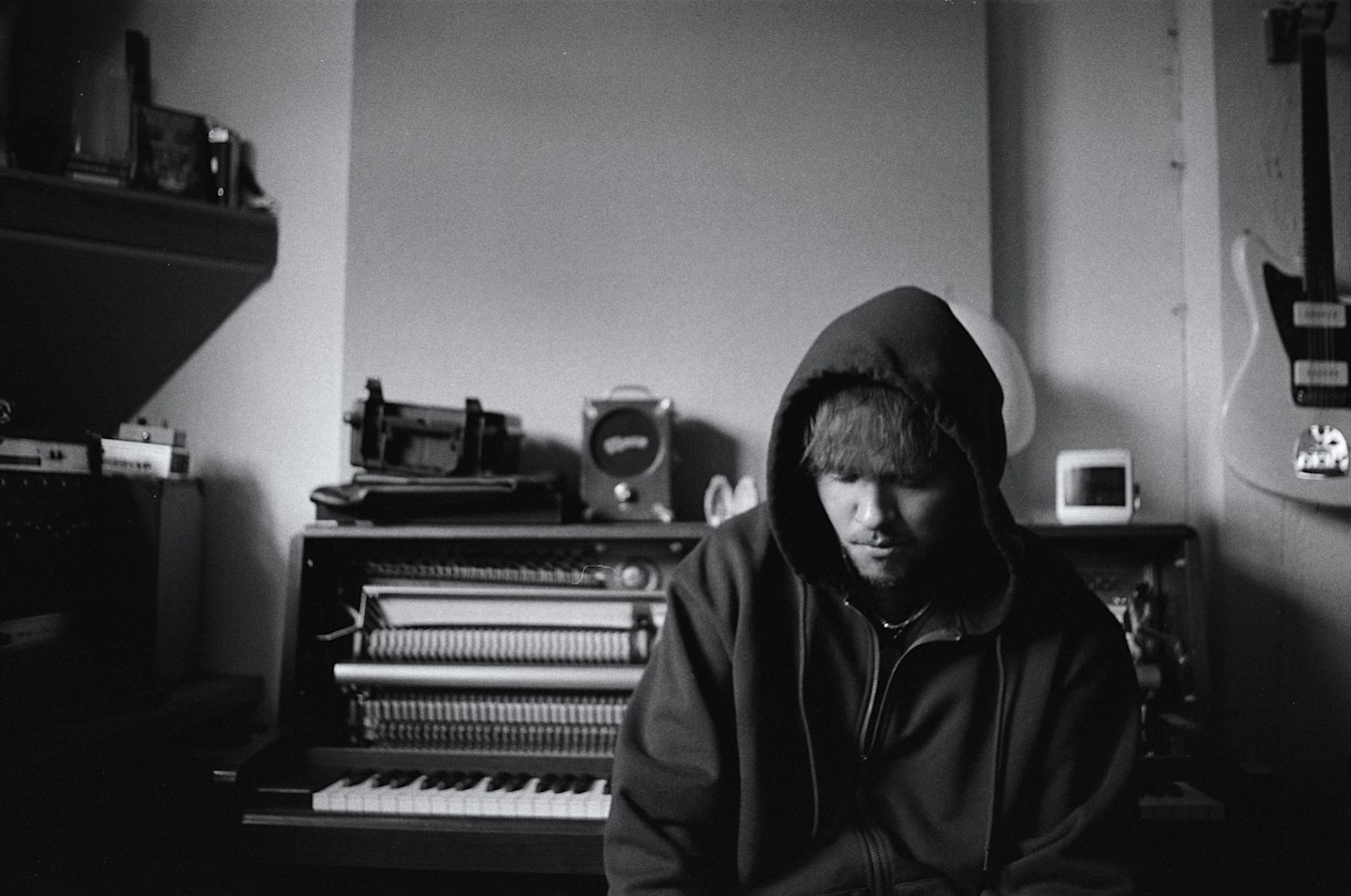
He moved to Bed Stuy, Brooklyn, and lived with Ryan Yoo (better known as boylife), the producer Nick Velez, and early Dijon collaborator Abhi Raju in a building that has since been condemned due to a severe rat infestation. (“The exterminator asked me, ‘How many rats do you think are in these walls?’” Ciarán recalled with a grim laugh. “He's like … ‘Thousands.’”) The quartet of collaborators eventually got the hell out of there, but they made good use of the apartment’s basement space for a while as a shared studio.
It took Ciarán years to sort out what he wanted to say on his solo debut, and how he wanted it to sound. “The music I made right after we broke up was terrible,” he laughs. “I hadn't found the thing that excited me yet.”
He developed an insular process with his tight musical comrades and housemates, working on new ideas and testing his demos against his roommates’ excitement. Over time, he began to lean into older references like Prince and D’Angelo. “Being more content with experimenting was a lot of fun, so I just wanted to chase that.” Point in case: “K-Bar” is inspired by Prince’s "If I Was Your Girlfriend" — namely its “small” and “constant” drums which still maintain a hypnotic groove.
The album’s central textures — funky, sparse, and emotive — partially came together during a cabin trip to Sparta, New Jersey. The weather was shitty and Ciarán – alongside James Ivy, Roy Blair, and D Chae (Daniel Chae), an engineer and mixer – was stranded amongst the rain and trees. The group ended up in a non-stop state of recording and experimentation. The sessions only yielded two full songs for the album, but the dayslong groove gave Ciarán a clear direction. “[After that,] We’d cannibalize old ideas into other elements, and take bits and pieces from there. It was reminiscent of BROCKHAMPTON, in a sense of being that collaborative,” he recalls fondly.
The resulting album is stuffed with fictional yarns and dreams. “It's so easy to just go to love songs,” he says. “That’s the baseline that everyone writes from. I liked the idea that songs don't have to be about you.” He found particular inspiration in “journeymen,” local boxers committed to the craft but who have no expectation for prize-winning greatness or glitzy success. “I love real stories.”
Róisín’s title is inspired by what his mother says would have been his name if born a girl: Ciara Róisín. Like an old tale, told over and over again, it has an intuitive progression, as funk grooves give way to haunting, Burial-esque production. Ciarán’s falsetto is a constant, save for brief and resonant respites where his voice takes on new form — like on single “Galvarino” (out today, September 9) where his voice mirrors more closely his Bearface-era’s sultrier and moody middle range.
With Róisín, the atmosphere is the message: a rainy cabin with friends, jamming their way through the mist; salad days aimlessly circling Belfast; years spent believing you’re not really famous, just some shmo with money from a past deal, singing music into the void. He’s content with the time it’s taken to get here (and the slow-moving rollout for his debut). “If you try to maximize a few streams, it comes at a greater cost,” he says. “I'd rather be able to look back and be like, ‘I did it exactly how I wanted to do it.’”
 Jack McKain.